Solar Panels for Rental Properties: South Africa 2026 Guide
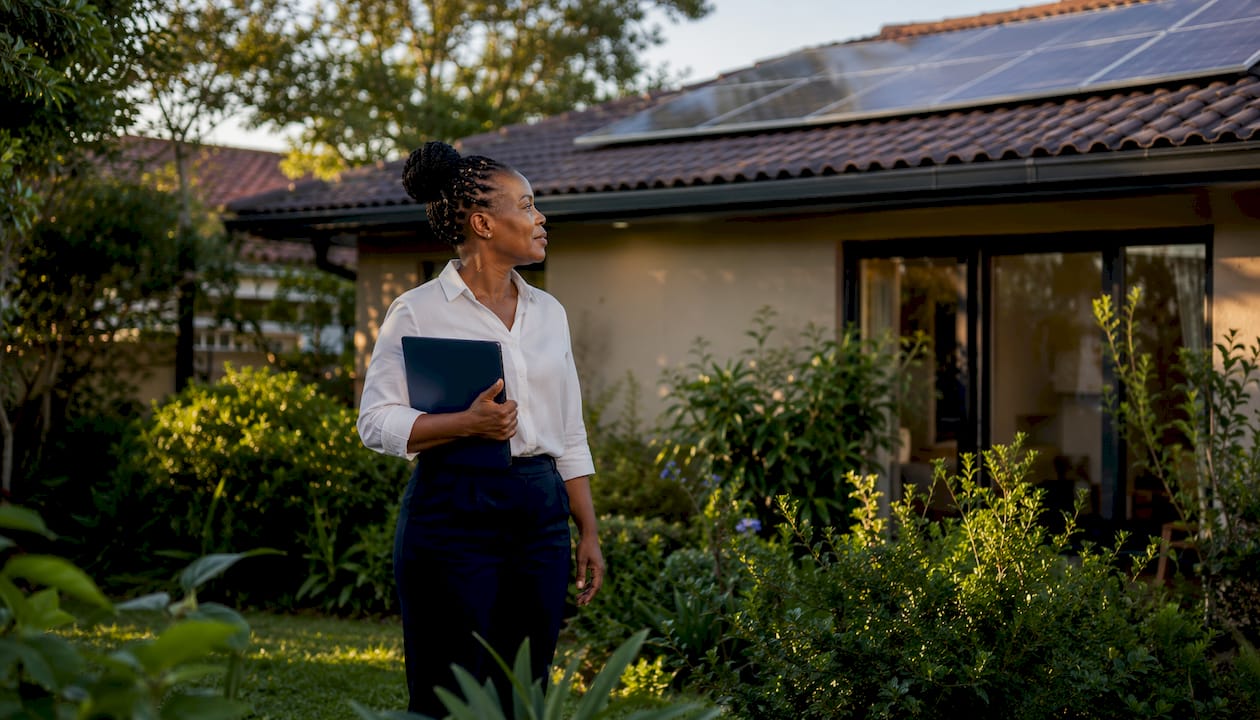
Solar panels on rental properties give South African landlords and tenants a real way to cut electricity costs, survive load shedding, and make a property more attractive. The core question is not whether solar makes sense. It is who owns the system, who pays for it, and what the lease needs to say before anyone drills a single hole in the roof.
Here is what you need to know upfront:
- Ownership defaults to the landlord. Unless a written lease addendum says otherwise, tenant-installed solar panels become the landlord's property when the lease ends.
- Sectional title properties require body corporate approval before any installation can proceed.
- Subscription models from providers like GoSolr and Versofy Solar let tenants or landlords access solar without large upfront costs.
- A Certificate of Compliance (COC) is legally required before a solar system can be switched on, and it affects insurance coverage.
- The South African Revenue Service offered a 25% solar tax rebate up to R15,000 in the 2023/2024 filing season; that rebate has since lapsed.
- Both parties benefit: tenants get uninterrupted power, landlords get a more marketable property.
What are the legal rules for installing solar on a rental property?
The legal picture depends heavily on the property type. A freehold landlord can generally approve an installation without outside permission, but a sectional title property is a different matter entirely.
In sectional title schemes, the roof is common property owned collectively by all members of the body corporate. No individual owner or tenant can install panels without written trustee consent under Prescribed Management Rule 4. If any owner objects within a 30-day notice period, a Special Resolution requiring 75% approval by number and value is legally required. Skipping this step risks enforcement action, fines, and a compulsory removal order from the Community Schemes Ombud.
The fixture-versus-movable distinction is the other critical legal point. Once a solar system is physically attached to a property, South African law treats it as a fixture. Without a signed addendum stating the tenant retains ownership and removal rights, the installation passes to the landlord at lease end. Attorney Stefan van Niekerk of Minitzers Attorneys has noted that a lease addendum explicitly naming the tenant as owner is the only reliable protection for a tenant's investment.
The South African Property Practitioners Act also requires solar installations to be disclosed as immovable property in both sale and lease agreements. This is not yet universally enforced, but the legal direction is clear.
Key legal points to confirm before any installation:
- Written landlord consent, signed by both parties
- Body corporate trustee approval for sectional title properties
- A lease addendum addressing ownership, maintenance costs, and removal rights
- A valid COC issued by a registered Installation Electrician or Master Installation Electrician
- Disclosure of the installation in any future sale or lease documentation
Pro Tip: Negotiate the lease addendum before installation, not after. Once panels are fixed to the roof, your legal leverage drops significantly.
How do the finances work for landlords and tenants?
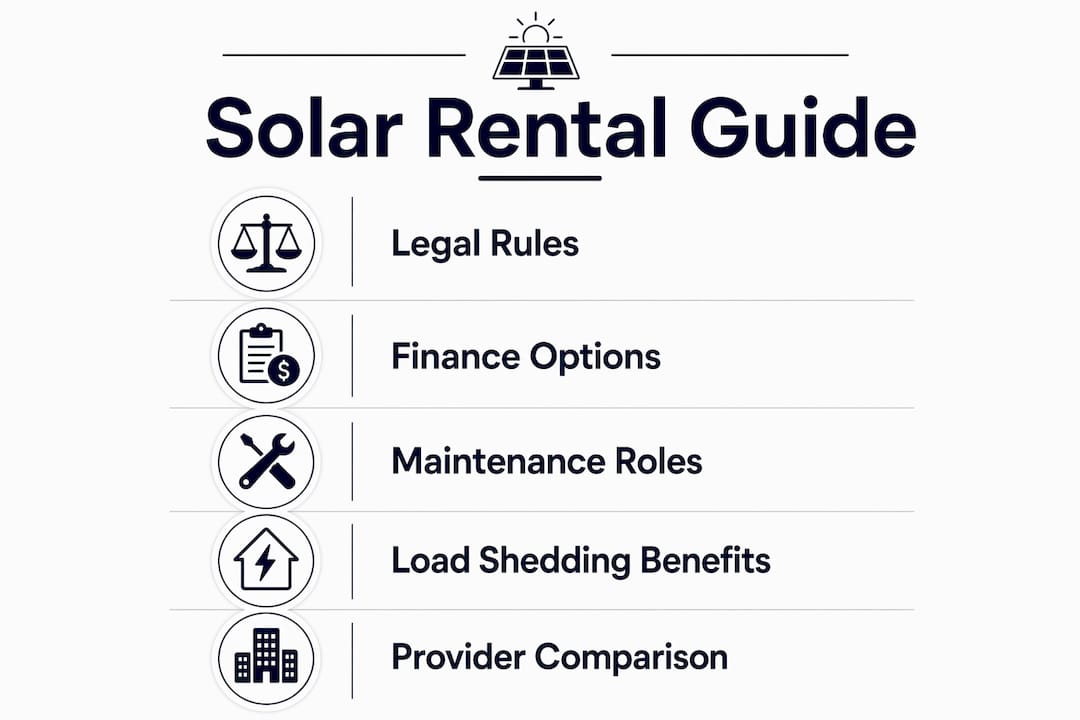
The cost structure for solar on a rental property depends on which model you choose. Outright purchase carries the highest upfront cost but delivers the best long-term savings. Subscription and rental plans shift that burden to a monthly fee, which suits tenants who cannot or will not invest in a property they do not own.

GoSolr starts at R1,299 per month with a once-off R1,299 admin fee, covering maintenance and insurance. Versofy Solar runs R1,799 to R4,199 per month inclusive of VAT, with installation, maintenance, and insurance included. MetSolar targets commercial and agricultural users with leases, power purchase agreements, and zero-down financing options. These subscription models mean a landlord or tenant can get a fully maintained system without a large capital outlay.
The now-lapsed SARS rebate applied only to the party who paid for the panels, and only under specific conditions. No equivalent national incentive currently replaces it, though municipal net-metering programs exist in some areas.
For landlords, the financial case rests on two things: lower vacancy rates because tenants actively seek load-shedding-resilient properties, and a measurable increase in property value. A solar-equipped property is easier to rent and, when sold, commands a premium because buyers factor in reduced Eskom dependence.
Financial considerations at a glance:
- Subscription plans avoid large upfront costs for both parties
- Landlords can recover solar costs via a submeter or a fixed monthly fee added to rent, but only with the tenant's written agreement
- The tenant cannot be charged unilaterally for a system the landlord installs
- Property value increases when a solar system is owned outright and disclosed correctly
Who handles maintenance, and what does insurance cover?
Maintenance responsibility typically splits along the lines of what caused the problem. Tenants handle routine upkeep: keeping panels clean, checking for obvious physical damage, and reporting faults promptly. Major repairs, inverter replacements, and structural issues generally fall to the landlord or, under a subscription plan, to the provider.
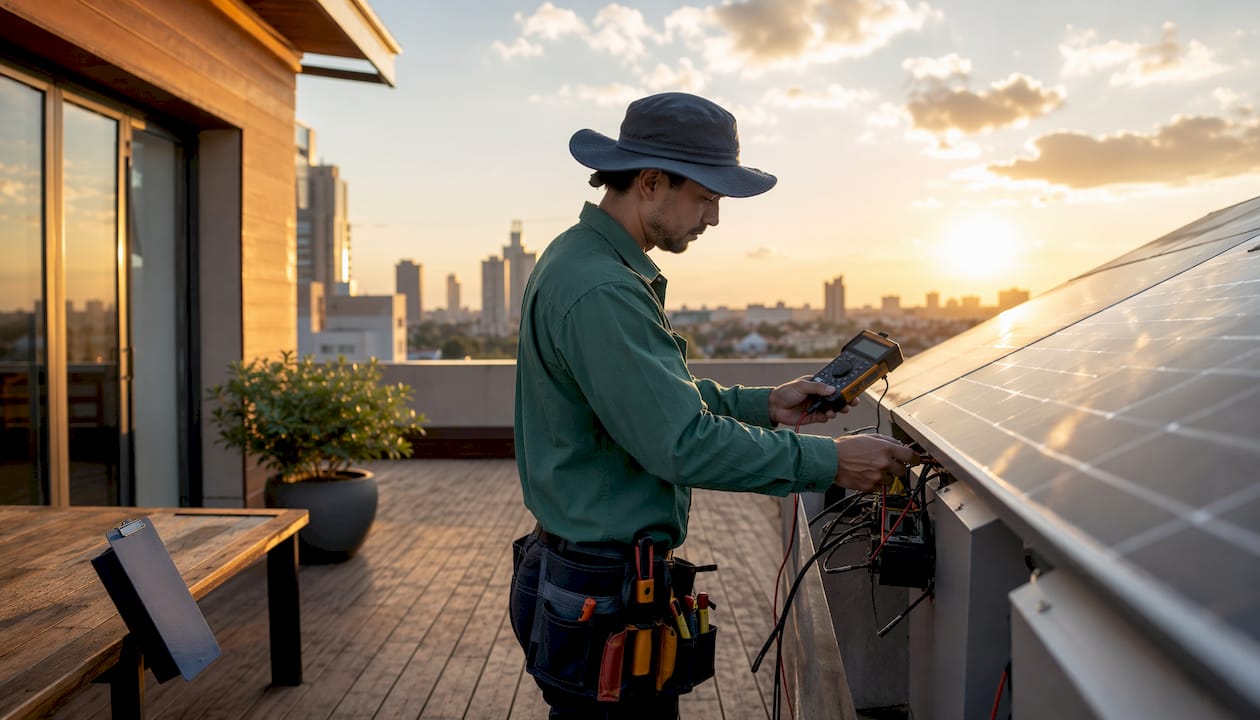
Insurance coverage for solar installations requires both parties to act. Tenants and landlords must notify their insurance providers that a system has been installed, and they must present a valid COC. Without that certificate, a claim can be denied. The COC is only valid for two years and must be reissued if the system is modified.
A solar COC is a separate document from the property's general electrical COC. Both are required for property transactions. Only a registered Installation Electrician or Master Installation Electrician can issue a solar COC; a PV GreenCard-accredited installer who is not a registered electrician cannot sign it off independently.
Maintenance and insurance checklist:
- Notify your insurer before the system is switched on
- Obtain and store the COC; renew it every two years or after any modification
- Clarify in writing who pays for panel cleaning, inverter servicing, and roof repairs caused by the installation
- Under subscription plans, confirm the provider's insurance covers the equipment on your specific property type
How do solar panels help during load shedding?
When the grid goes down, a solar system with battery backup keeps running. Panels generate electricity from sunlight, the inverter converts it to usable AC power, and the battery stores what is not immediately consumed. Tenants can power essential appliances continuously through a load shedding event without relying on a noisy generator.
A typical residential setup uses multiple 400W panels paired with a compatible battery bank. That combination can comfortably run a fridge, lights, phone chargers, and a router through most load shedding stages. Larger systems handle additional loads like a television or a small washing machine. The exact capacity depends on the inverter size and battery rating, not the panel wattage alone. Checking solar battery options before committing to a system size helps match the setup to actual household demand.
Load shedding benefits for rental properties:
- Tenants maintain comfort, productivity, and food safety during outages
- Landlords with solar-equipped properties face fewer complaints and lower tenant turnover
- Properties with battery backup are noticeably more attractive in a rental market shaped by frequent outages
- A well-sized system reduces dependence on Eskom entirely during daylight hours
Comparing leading South African solar rental and subscription providers
Seven verified South African providers cover the main options for solar panels on investment properties, from pure subscriptions to commercial financing.
| Provider | Service Type | Monthly Cost | Maintenance & Insurance | Battery Backup | Contract Flexibility | Best For | Rating |
|---|---|---|---|---|---|---|---|
| GoSolr | Subscription | From R1,299/mo + R1,299 admin fee | Included (maintenance & insurance) | Yes | Month-to-month | Residential rentals, no upfront cost | 3.8★ |
| Versofy Solar | Subscription | R1,799–R4,199/mo (VAT incl., includes installation, maintenance & insurance) | Included | Yes | Flexible packages | Homeowners wanting bank-accredited packages | 4.6★ (647) |
| Alumo Energy | Sale/Installation | Not publicly listed | Not included | Yes | Purchase-based | Landlords near Pretoria seeking local expertise | 4.9★ (976) |
| Metrowatt Head Office | Sale/Installation | Not publicly listed | Not included | Yes | Purchase-based | Reliable installation with strong service focus | 4.8★ (114) |
| Solar Advice | Sale/Installation | Not publicly listed | Not included | Yes | Purchase-based | Comprehensive residential and commercial solutions | 4.7★ (112) |
| MetSolar | Lease/Rental/PPA | Flexible; zero-down options | Varies by contract | Yes | Lease, rental, PPA | Commercial and agricultural rental properties | 5★ (6) |
| SOLAR LEASE (Pty) Ltd | Lease | Not publicly listed | Not publicly listed | Not publicly listed | Not publicly listed | Solar leasing arrangements | — |
Versofy Solar suits landlords who want a bank-accredited system with battery backup built into the package from day one. The tiered pricing from R1,799 to R4,199 per month (VAT inclusive) includes installation, maintenance, and insurance, letting you match the system size to the property's actual load.
Alumo Energy and Metrowatt Head Office are strong choices for Pretoria-area landlords who prefer outright purchase and want local installation expertise. Both focus on residential and commercial installations rather than subscription models.
MetSolar is the clearest option for commercial or agricultural rental properties. Its lease, rental, and power purchase agreement structures are designed for business-scale systems where zero-down financing matters.
Solar Advice covers a broad range of residential and commercial installations across South Africa. SOLAR LEASE (Pty) Ltd focuses on leasing arrangements; detailed plan terms are not publicly listed.
How to choose and manage solar for your rental property
Getting solar right on a rental property is mostly a documentation exercise before it is a technical one.
Before installation:- Confirm landlord consent in writing, even if you are the landlord and the tenant is requesting the system
- For sectional title properties, submit a formal application to the trustees and allow the 30-day notice period
- Choose a provider based on contract flexibility, whether maintenance is included, and whether battery backup is part of the plan
- Get at least two quotes; use a solar cost calculator to benchmark what you are being offered
- Add a lease addendum covering ownership, who pays for maintenance, and what happens to the system at lease end
- Require a COC from a registered Installation Electrician before the system goes live
- Notify your insurer and provide the COC as documentation
Solarza connects you with verified solar installers across South Africa
Finding a trustworthy installer for a rental property is harder than it looks. Subscription providers cover some of the market, but landlords who want to purchase a system outright need a vetted installer who understands both the technical and legal requirements for rental properties.
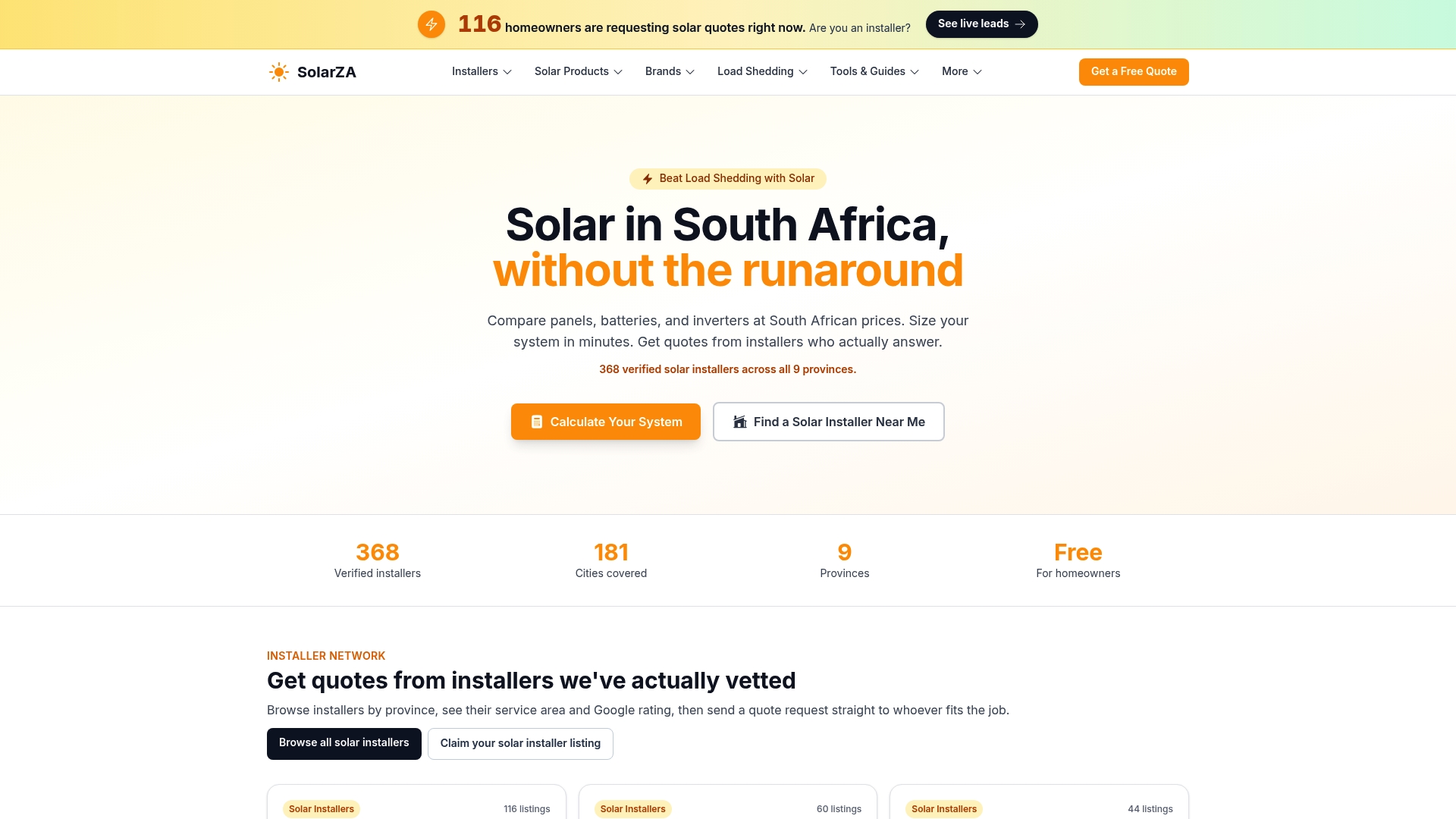
Solarza connects South African property owners with verified, rated solar installers across all nine provinces. You can search by city to find local professionals, compare panel and battery options, and request a tailored quote without committing to anything. The platform's solar calculator helps you size a system before you talk to a single installer, so you walk into those conversations knowing what you actually need. For rental properties specifically, getting the system size and the installer credentials right from the start avoids the COC and insurance complications that derail installations later.
FAQ
How much does it cost to rent solar in South Africa?
GoSolr subscriptions start at R1,299 per month with a once-off R1,299 admin fee, fully maintained and insured. Versofy Solar packages run from R1,799 to R4,199 per month including VAT, installation, maintenance, and insurance.
What is the 20% rule for solar panels?
The 20% rule generally limits a solar system's output capacity relative to the property's grid connection or energy demand. The exact threshold varies by municipality; confirm the applicable limit with your installer and local utility before finalizing system size.
Will a 400W solar panel run a fridge?
A 400W panel can power an energy-efficient fridge during daylight hours. Running it overnight or through load shedding requires a battery, sized to match the fridge's daily energy consumption.
How does rent-to-own solar work in South Africa?
Rent-to-own plans charge a monthly fee that counts toward eventual system ownership. Terms vary by provider; confirm the total payoff amount, what happens if the tenant moves, and whether the agreement transfers to a new occupant or owner.
Key Takeaways
Solar panels on South African rental properties deliver real benefits, but only when ownership, compliance, and contracts are handled correctly before installation begins.
| Point | Details |
|---|---|
| Ownership defaults to landlord | Without a signed lease addendum, tenant-installed solar becomes landlord property at lease end. |
| COC is non-negotiable | A valid Certificate of Compliance from a registered electrician is required before the system can be switched on and for insurance coverage. |
| Subscription plans start at R1,299/mo | GoSolr from R1,299/month with a R1,299 admin fee (maintenance and insurance included), and Versofy Solar from R1,799/month (VAT, installation, maintenance, and insurance included) offer maintained, insured systems with no large upfront cost. |
| Sectional title needs trustee approval | Body corporate consent and possibly a 75% Special Resolution are legally required before any roof installation in a sectional title scheme. |
| Solarza for installer matching | Solarza connects landlords and tenants with verified, rated solar installers by city across all nine South African provinces. |