Solar on tile roof: what actually works and what it costs
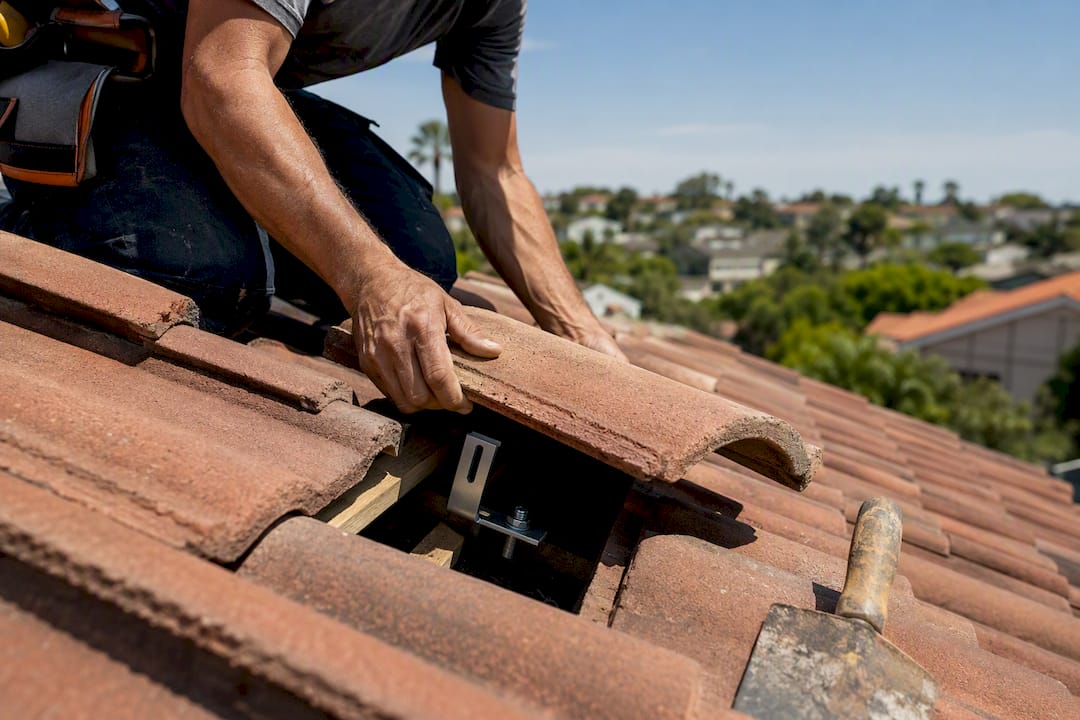
Yes, you can put solar on a tile roof, whether it's clay or concrete. Standard framed panels and integrated solar tiles (BIPV) both work on tiled roofs, but the installation method has to match the tile, not fight it. Expect a cost and time premium over a shingle or metal roof job, because installers need tile-specific brackets, careful lifting, and proper flashing to keep water out.
The trade-off comes down to this: framed panels give you more power per rand and cost less to install, while solar tiles blend into the roofline and make the most sense when you're replacing the roof anyway. Before you call an installer, gather a few basics:
- Roof age and last re-tiling date
- Tile material and profile (flat concrete, curved clay, S-tile, barrel)
- Photos of the attic or rafters if accessible
- Roof pitch, orientation, and any shading from trees or neighbouring structures
Key Takeaways
Solar works on tile roofs when the mounting method, hook clearance, and flashing technique match the specific tile profile, not a generic template.
| Point | Details |
|---|---|
| Panels beat tiles on cost | Framed panels cost less per watt and suit most existing tile roofs; BIPV suits new builds or full re-roofs. |
| Hook clearance is non-negotiable | Maintain roughly 5mm clearance between hooks and tiles to prevent cracking under wind uplift. |
| Three-course flashing wins long-term | It outlasts simpler tile-replacement pans and better preserves the roof's original appearance. |
| Expect a real time premium | Tile installs typically take 30 to 50% longer than shingle roof installs due to careful tile handling. |
| Match hardware to your climate | A4 stainless suits coastal exposure; A2 stainless works for most inland installs. |
| Solarza matches vetted installers | The platform connects you with rated installers experienced in tile roof mounting and helps you compare tailored quotes. |
Table of Contents
- How to check if your tile roof can handle solar panels
- Tile-specific mounting methods explained
- Waterproofing and how to avoid leaks and broken tiles
- What solar on a tile roof typically costs and how long it takes
- Installer checklist: what to ask before signing
- How Solarza helps you get a safe, leak-free tile roof install
- The perspective conventional solar advice misses on tile roofs
- Get matched with a vetted tile roof solar installer
- Sources
- FAQ
How to check if your tile roof can handle solar panels
Start with area. A practical rule of thumb for rooftop crystalline panels is about 10 square metres of roof per kilowatt of installed capacity, though higher-efficiency modules shrink that footprint. A 5 kW system, common for a mid-sized household, needs roughly 50 square metres of usable, unshaded roof space.
Tile type changes the mounting hardware you'll need. Flat concrete tiles accept a wider range of brackets. Curved clay tiles, especially barrel or S-profiles, need hooks shaped to match that curve, or you risk cracking tiles or leaving gaps for water.
Work through this before requesting quotes:
- Confirm your roof pitch meets the minimum slope most tile and BIPV systems require, usually around 15 to 18 degrees for adequate drainage and mounting stability.
- Check orientation and shading. North-facing (Southern Hemisphere) roofs with minimal midday shade perform best.
- Look at tile condition. Cracked, brittle, or heavily weathered tiles are harder to lift without breaking.
- If your roof is older than 20 years or you're unsure about rafter spacing, order a structural check before signing anything.
Pro Tip: Take photos of your attic space, including rafter spacing and any water stains, before your first installer call. It speeds up quoting and helps installers flag issues over the phone instead of during a site visit.
Tile-specific mounting methods explained
There's no single way to mount panels on tile, and the method your installer picks should depend on your tile profile, not convenience.
Hook and rail is the most common approach on clay and concrete roofs. Installers lift the tile, install a hook that anchors directly to the rafter or batten below, then lower the tile back over or around the hook. A minimum clearance of about 5 millimetres between hook and tile prevents point-loading that cracks tiles under wind uplift. Rails then bolt across the hooks, and panels clamp to the rails.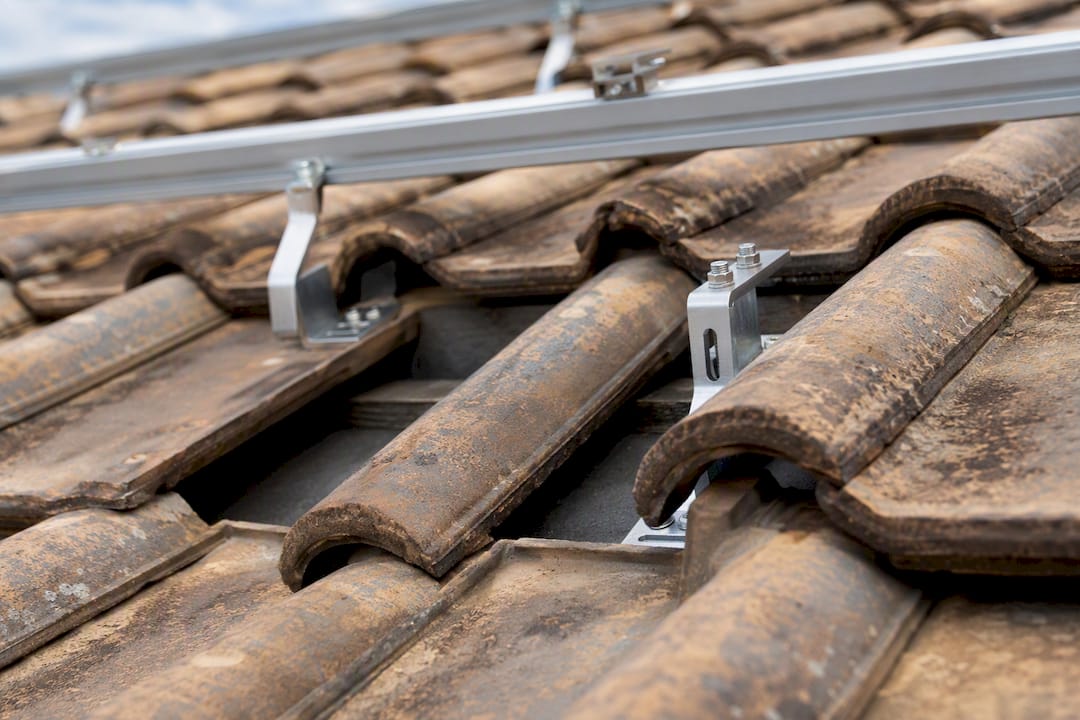 Tile-replacement flashings, sometimes called tile-replacement pans, swap a section of roofing tile for a metal or composite flashing piece that both anchors the mount and sheds water. It's faster to install than traditional flashing, but it leaves a visible metal patch that doesn't always match aged clay tile.
Rail-less or low-profile mounts work on some flat concrete tiles where the hardware sits nearly flush. They generally aren't suitable for curved clay profiles, where the mismatch between a flat bracket and a curved surface creates gaps.
Integrated solar tiles (BIPV) replace the tile itself with a photovoltaic unit. They make the most sense on a new build or when a roof needs replacing anyway, since installing BIPV on an otherwise sound roof means tearing out good tile for a lower power density and higher cost per watt than framed panels.
Tile-replacement flashings, sometimes called tile-replacement pans, swap a section of roofing tile for a metal or composite flashing piece that both anchors the mount and sheds water. It's faster to install than traditional flashing, but it leaves a visible metal patch that doesn't always match aged clay tile.
Rail-less or low-profile mounts work on some flat concrete tiles where the hardware sits nearly flush. They generally aren't suitable for curved clay profiles, where the mismatch between a flat bracket and a curved surface creates gaps.
Integrated solar tiles (BIPV) replace the tile itself with a photovoltaic unit. They make the most sense on a new build or when a roof needs replacing anyway, since installing BIPV on an otherwise sound roof means tearing out good tile for a lower power density and higher cost per watt than framed panels.
Mounting systems should always transfer load to the rafters and structure below, never to the tiles themselves. Specialist brackets need to match the tile profile, and a generic "universal" hook that doesn't fit your specific tile shape is one of the fastest ways to end up with cracked tiles six months after installation.
Waterproofing and how to avoid leaks and broken tiles
Waterproofing is where cheap tile installs go wrong, and it's usually invisible until the first heavy rain finds the gap.
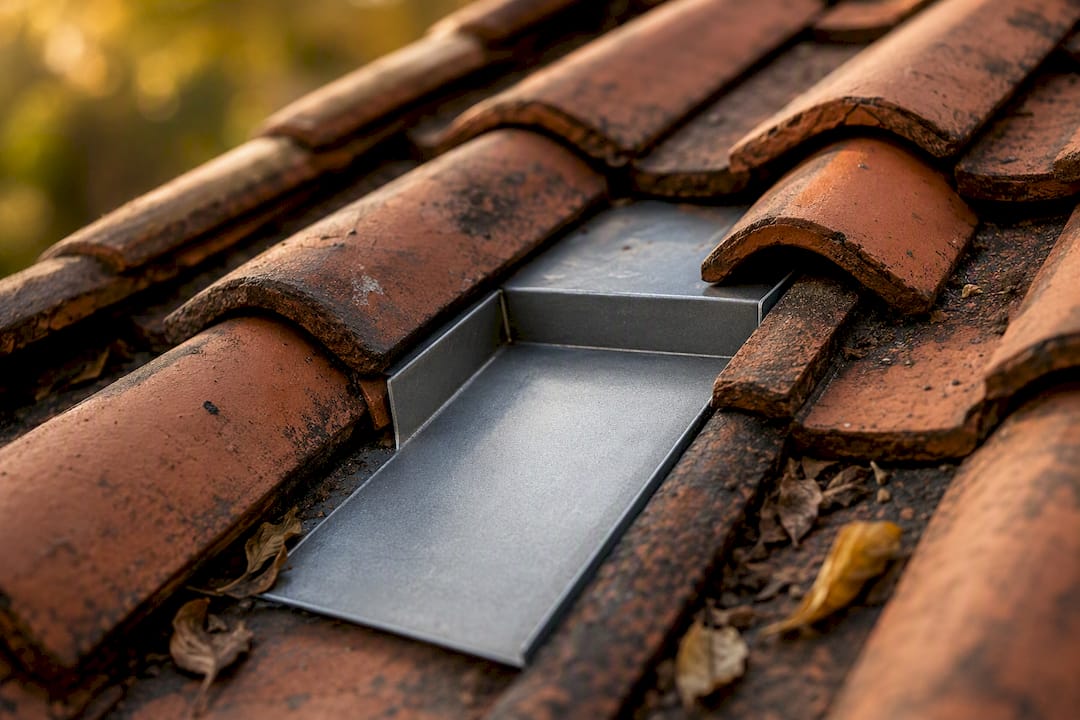 Three-course flashing is the industry-preferred method for clay tile penetrations. It layers flashing material in three stages around the mounting point, directing water around the hardware rather than letting it pool. Three-course flashing tends to outlast simpler patch methods and, on heritage or closely matched tile roofs, preserves the original look far better than a tile-replacement pan.
Most leaks and cracked tiles trace back to a short list of causes:
- A hook or bracket making direct contact with the tile instead of clearing it
- Flashing installed too shallow or without enough overlap
- Sealant that degrades faster than expected in UV or salt exposure
- Corroding hardware, particularly mismatched metals that react over time
Hardware choice matters more near the coast. Installers typically specify A4 stainless steel for coastal exposure and A2 stainless further inland, along with a wiring plan drawn up before mounting begins to avoid rework or exposed cabling that arcs over time. Ask your installer for an annual visual inspection, checking flashing seals and hardware corrosion, especially after the first rainy season.
What solar on a tile roof typically costs and how long it takes
Tile roofs cost more to fit with solar than shingle or metal roofs, mainly because of the extra labour and hardware involved.
- Specialised hooks, brackets, and rails priced for tile profiles rather than generic mounts
- Extra labour hours for lifting, repositioning, and occasionally replacing tiles during installation
- Flashing materials and the added time three-course flashing takes over a simple patch.
- Potential cost of matching or sourcing replacement tiles if any crack during the work
Because of this, tile installations often take 30 to 50% longer than the same-sized system on a shingle roof. That premium narrows only when you're already replacing the roof or building new, since combining a re-roof with BIPV lets you offset the roof replacement cost against the solar tile expense.
When comparing quotes, ask each installer to break out labour, mounting hardware, flashing, and any anticipated tile replacement as separate line items. A quote with one lump sum makes it impossible to tell whether you're paying for premium waterproofing or just a wider margin.
Installer checklist: what to ask before signing
Bring this list to every quote call or site visit.
- Which mounting method do you use for my tile profile, and why?
- What hook clearance do you maintain, and how do you verify it on-site?
- What waterproofing method will you use: three-course flashing or a replacement pan?
- Can you provide hardware datasheets showing stainless steel grade and manufacturer specs?
- Do you have current licences and insurance covering both roofing and electrical work?
- Can you show a portfolio of completed tile roof installs and speak to references?
- What's your workmanship warranty, and who handles a tile crack or leak after installation?
Request a signed install plan, attic and rafter photos, and a written, line-itemed quote before committing. Reviewing structural signals ahead of time, roof age, ventilation, and shading patterns, gives you a stronger footing for that conversation. Pro Tip: Ask for the name of the specific technician who'll handle the tile lifting, not just the company. On tile roofs, experience with your exact tile profile matters more than the installer's overall years in business.
How Solarza helps you get a safe, leak-free tile roof install
Solarza connects you with vetted, rated installers across South Africa, matched by location and the equipment brands they work with. That matters most on tile roofs, where the wrong bracket or a rushed flashing job causes problems that surface months later.
Through the platform, you can:
- Compare tailored quotes from installers with documented tile roof experience
- Use the solar calculator to estimate system size and cost based on your roof area
- Access guides that explain mounting, flashing, and warranty terms in plain language
- Cross-check installer credentials and ratings before committing to a contract
The perspective conventional solar advice misses on tile roofs
Most solar guides treat roof type as a footnote. That's backwards for tile. The mounting method and flashing choice matter more to your long-term outcome than the panel brand you pick, yet homeowners spend hours comparing panel wattage and almost none scrutinising hook clearance or flashing technique.
The industry standard, three-course flashing with tile-profile-matched hardware, exists precisely because the cheaper shortcuts (tile-replacement pans, universal hooks) fail quietly. A leak from a rushed flashing job doesn't show up at handover. It shows up two rainy seasons later, after the workmanship warranty window has narrowed.
My honest read: prioritise the installer's tile-specific track record over the lowest quote. Ask to see photos of a completed three-course flashing job, not just a finished roof from the ground. If an installer can't explain their hook clearance method without checking a manual, that's a signal to keep shopping. The panels matter less here than the hands lifting your tiles.
Get matched with a vetted tile roof solar installer
Tile roofs punish generic installs, so the installer's specific experience with your tile profile matters more than almost any other factor in this decision. Solarza is built around that problem: instead of cold-calling companies and hoping they've handled clay or concrete tile before, you get matched with verified, rated installers who already have that track record, compared side by side across provinces.

The platform's solar cost calculator helps you estimate system size against your actual roof area before you talk to anyone, so you walk into quote conversations already knowing roughly what you need. From there, you can browse residential solar installation services to understand typical scopes, then request tailored quotes from installers matched to your province and tile type. Start by requesting a free solar quote and comparing verified installers before you commit to any single company.
Sources
For deeper technical detail, see the SAPVIA PV installation guidelines, SolarReviews on clay tile installs, and SurgePV's flashing and hardware guide.
- SAPVIA PV guidelines (tile roof mounting and installation notes)
- Considerations for roof tiles solar panels — Zephyr Solar Technologies
- Solar Panels on Clay Tile Roof: Complete Guide to Hooks, Flashing & Waterproofing — SurgePV
FAQ
Can solar panels be installed on a tile roof?
Yes, both clay and concrete tile roofs can support solar panels using tile-specific hooks, rails, and flashing designed to match the tile profile and protect against leaks.
What is the 20% rule for solar panels?
What is the price of solar roof tiles in South Africa?
Integrated solar tiles (BIPV) cost more per watt installed than standard framed panels, since they replace the roofing material itself; framed panels remain the lower-cost option for most existing tile roofs. Solarza's solar calculator gives a tailored estimate based on your specific roof and location.
How do you put solar panels on a roof without drilling into tiles?
Hook and rail systems lift the tile, anchor the hook directly to the rafter or batten beneath, then reseat the tile around the hardware, avoiding drilling through the tile itself. Tile-replacement flashings take a similar approach by swapping a tile section for a purpose-built mounting flashing.