Solar maintenance cost: what to budget every year
Most homes with rooftop solar spend somewhere between R1,500 and R5,000 a year on routine maintenance, and where you land in that range depends on three things: how often the panels need cleaning, how old your inverter and battery are, and whether you do the basic work yourself or pay a technician for every visit. That figure covers cleaning, a yearly inspection, and the odd small repair. It does not cover replacing an inverter or swapping out a battery bank, which are separate, occasional costs you should budget for on their own.
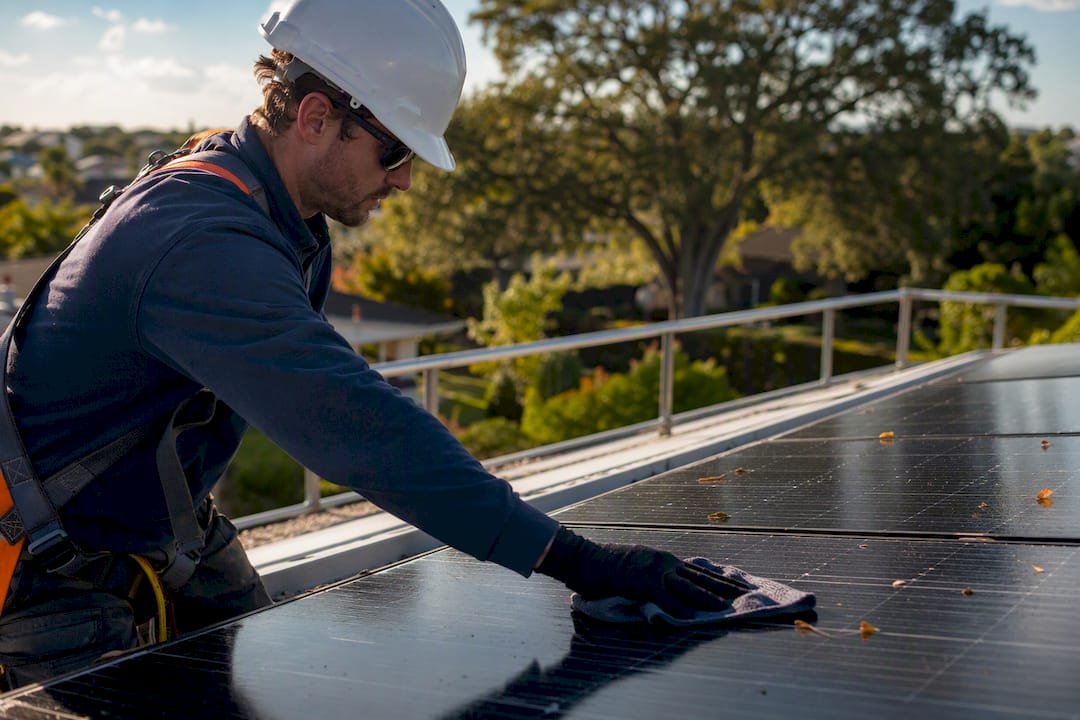
The biggest swing factor is usually access and soiling. A single-storey roof in a low-dust suburb costs far less to maintain than a steep double-storey roof near the coast, where salt spray builds up fast and every clean needs safety gear and often a second person.
- Cleaning and inspection combined: roughly R1,500 to R5,000 per year for most residential systems
- Main cost drivers: roof access and soiling rate, component age (especially the inverter), and DIY versus professional labour
- Getting quotes: comparing verified local installers through Solarza's maintenance directory is the fastest way to see what your specific roof and system will actually cost, separate from any future inverter or battery replacement
Key Takeaways
Annual solar maintenance cost typically runs R1,500 to R5,000 for cleaning and inspection, while major component replacements need their own separate savings reserve.
| Point | Details |
|---|---|
| Budget routine costs separately | Set aside R1,500 to R5,000 a year for cleaning, inspection, and small repairs. |
| Match cleaning frequency to environment | Clean once or twice a year at minimum, more often near coast, dust, or trees. |
| Reserve for major replacements | Plan for inverter replacement around year 10 to 15 and treat it as a separate fund. |
| Keep DIY to ground-level tasks | Leave roof access, wiring, and inverter work to insured, certified technicians. |
| Compare before you commit | Request quotes from multiple vetted providers before booking any service contract. |
Table of Contents
- Solar maintenance cost breakdown: cleaning, inspections, and repairs
- How often should you clean and inspect your solar panels?
- DIY solar upkeep versus hiring a professional
- Budgeting for inverter, battery, and panel replacement
- Turning maintenance costs into a simple annual budget
- Finding a vetted technician without the guesswork
- What homeowners consistently get wrong about solar upkeep
- Sources
- FAQ
Solar maintenance cost breakdown: cleaning, inspections, and repairs
Routine solar upkeep splits into four line items, and each one has its own price logic worth understanding before you sign anything.
Cleaning is the most frequent expense. A single professional visit for an average residential array typically runs from around R800 to R2,500, with providers in South Africa often pricing single call outs in the R1,092 to R1,725 range for a standard clean and check, according to figures cited by solar servicing company Alumo Energy. Price depends heavily on the number of panels, roof pitch, and whether scaffolding or harness access is needed. A ground-mounted array or a low-slope single-storey roof sits at the bottom of that range; a steep double-storey roof with 20+ panels sits at the top. Inspections go deeper than a wipe-down. A proper technical inspection includes a visual check for cracked glass or hot spots, electrical testing of connections and earthing, and increasingly a thermal imaging scan that flags failing cells or loose junctions before they cause an outage. Local guides put full inspection packages in the R1,000 to R3,000 range depending on system size, a figure echoed by SolarPowerGuide's maintenance overview. Many installers bundle the annual clean and the inspection into one visit, which usually costs less than booking them separately. Monitoring subscriptions are not universal, but they are becoming more common on newer hybrid and battery systems. Some installers include app based monitoring free with the system; others charge a small monthly or annual fee for a managed service that watches production data remotely and flags anomalies. Centralised monitoring support has been shown to catch faults early and cut down on unnecessary technician callouts, a point the U.S. Department of Energy's rooftop PV research backs up from a program design perspective. Minor repairs are the wildcard. Common failure points include a loose MC4 connector, a tripped or faulty isolator switch, a failed cooling fan on an inverter, or a rodent-chewed cable. Labour for this kind of work generally runs at an hourly or call out rate on top of parts, and a single minor fix rarely exceeds a few hundred rand in parts.- Cleaning: R800–R2,500 per visit
- Inspection: R1,000–R3,000 per visit
- Monitoring: free to a modest monthly fee, where offered
- Minor repairs: call out fee plus parts, usually under R1,000 for small fixes
How often should you clean and inspect your solar panels?
There is no single answer, because your ideal schedule depends on where you live and what surrounds your roof. Here is a baseline you can adjust from:
- Visual self-check monthly. Look for obvious soiling, bird droppings, leaf litter, or shading from new tree growth. This costs nothing and takes five minutes from the ground.
- Professional clean once or twice a year. South African cleaning guidance from Kränzle South Africa recommends at least one to two cleans annually, with the higher frequency reserved for dusty inland areas and homes near the coast, where salt spray builds a film that plain rain will not rinse off.
- Full technical inspection annually. This is the visit where a technician checks wiring, earthing, and inverter performance, ideally timed before summer when your system works hardest.
- Extra cleans if you're near heavy dust, industry, or large trees. Farms bordering gravel roads and homes under bird roosting trees often need three or four cleans a year, not two.
Your monitoring app is your best early warning system. Anything involving rooftop access on a steep or high roof, or work near the distribution board and inverter isolators, should go to a qualified professional. That is not a suggestion born of caution alone. It is where DIY attempts most often cause injury or void a warranty.
DIY solar upkeep versus hiring a professional
Cleaning ground-level or single-storey panels yourself with a soft brush, deionised water, and a standard hose costs next to nothing beyond your own time and maybe a R200 to R400 cleaning kit. That is a legitimate way to cut your annual solar maintenance cost if your roof is low, gently pitched, and safely accessible without a ladder that requires a second person to hold it.
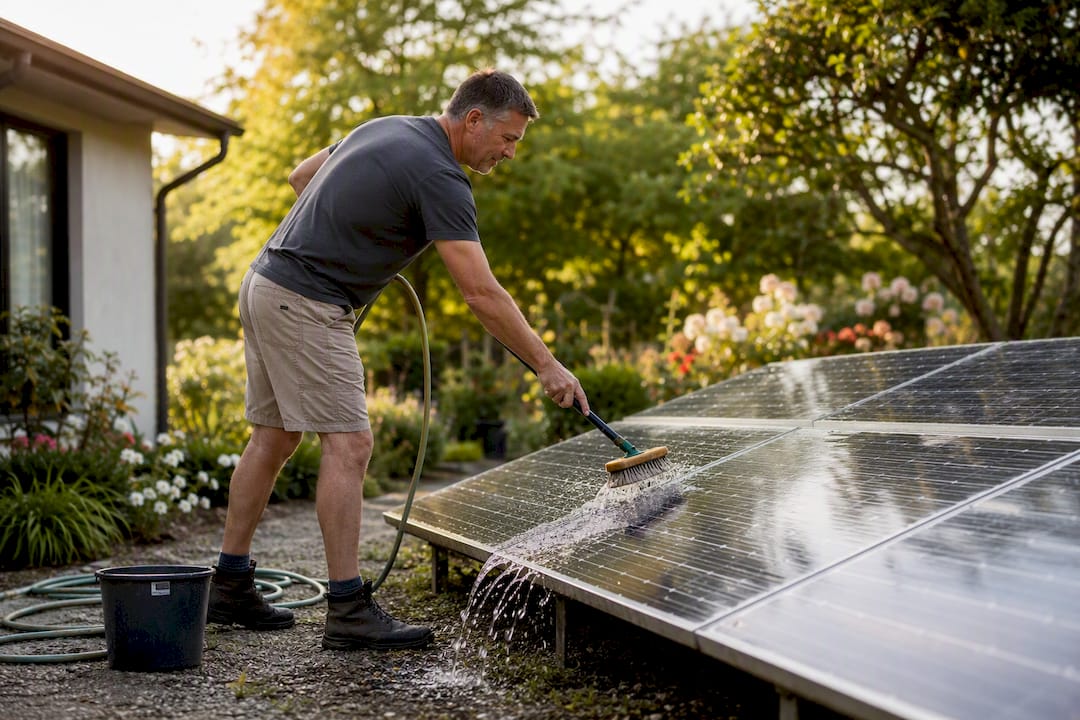
Where DIY stops making sense is anything involving height, electrical work, or your inverter casing. Walking on panels can crack cells you cannot see cracking, and most manufacturer warranties explicitly exclude damage caused by unauthorised access or improper cleaning methods. Opening an inverter or working near the distribution board is also a shock and fire risk that a professional visit, priced at a few hundred to a couple of thousand rand, is cheap insurance against. Industry commentary on maintenance responsibility, including guidance from SolarAfrica's maintenance checklist, notes that owner-managed cleaning can save money short term but that skipping professional annual checkups tends to catch up with homeowners through avoidable failures later.
Before booking anyone, ask a few direct questions:
- Are you insured for work on my roof and my electrical system?
- What certifications do your technicians hold, and can I see them?
- Does the visit include a thermal imaging scan, or is that extra?
- Will I get a written report with photos I can keep for warranty purposes?
Pro Tip: If your system already has remote monitoring, share app access with your chosen technician before the visit. Many issues can be pre-diagnosed remotely, which shortens the callout and sometimes avoids a second trip entirely.
Budgeting for inverter, battery, and panel replacement
Routine maintenance is the easy part to plan for. The expense that catches homeowners off guard is a major component failing outside its expected lifespan, or right on schedule but without any savings set aside for it.
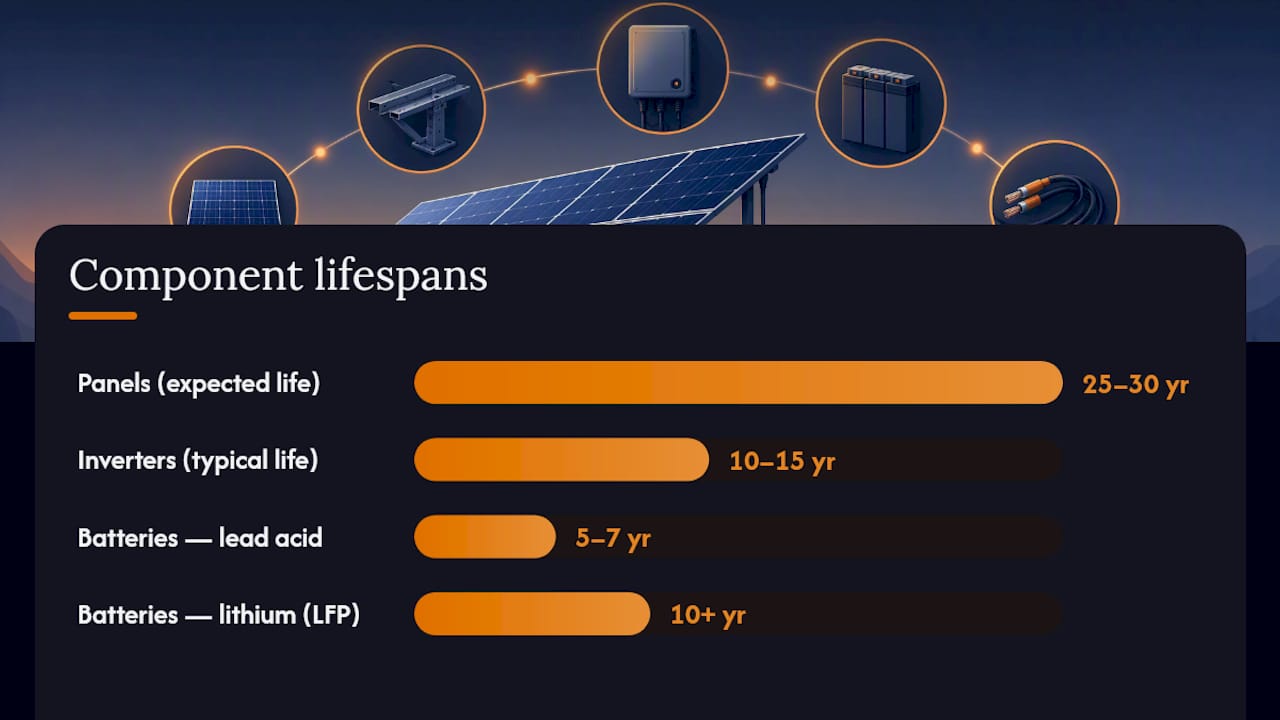
Panels themselves are the most durable part of the system, typically rated for 25 to 30 years with a gradual, predictable output decline rather than sudden failure. Inverters are the weak link: most last 10 to 15 years before needing replacement, and because they contain the most electronics of any component, they are also the most likely part to fail early. Batteries vary widely by chemistry, but lithium iron phosphate units common in newer installs are generally rated for 10 or more years of daily cycling, while older lead acid setups often need replacing closer to the 5 to 7 year mark.
Replacement costs vary by system size and brand, but as rough planning ranges: a residential inverter swap including labour often falls in the tens of thousands of rand, and battery replacement costs scale directly with the storage capacity you are replacing. These are budgeting ranges, not fixed quotes. Get a current quote for your specific setup rather than relying on any single number.
- Panels: 25 to 30 year expected life, gradual output decline
- Inverters: 10 to 15 years, the most common early-failure component
- Batteries: 5 to 7 years for lead acid, 10 plus years for lithium
A valid manufacturer warranty is your best defence against paying for a premature failure out of pocket, and staying current on your annual professional inspection is often a condition buried in the fine print for keeping that warranty valid. If a component does fail, your written inspection reports and any monitoring data showing the performance drop become your evidence when filing a claim, so keep them on file from day one rather than scrambling to reconstruct a history after something breaks.
Turning maintenance costs into a simple annual budget
Two methods work well for converting an irregular expense pattern into something you can actually plan around.
- Percent of capex rule of thumb. Set aside roughly 1% to 2% of your original system cost every year. On a R150,000 system, that is R1,500 to R3,000 annually, a range that lines up closely with the routine cleaning and inspection figures above.
- Itemised reserve method. Add your expected annual cleaning and inspection cost to a monthly set-aside amount for the next major replacement. If your inverter cost R35,000 and you expect to replace it in 12 years, that is roughly R243 a month set aside, on top of your R1,500 to R5,000 annual routine spend.
- Fold in monitoring and insurance. If your policy or installer charges a monitoring fee, add it to the routine bucket rather than treating it as a surprise.
- Decide contract versus pay-per-visit. A fixed annual service contract suits owners who want predictable costs and zero admin. Pay-per-visit suits owners with a low-maintenance, easily accessed system who are comfortable booking services as needed.
Pro Tip: Run your numbers through Solarza's solar calculator alongside your maintenance reserve. Seeing the two side by side makes it obvious how small the maintenance line is compared to what you are saving on your electricity bill.
Finding a vetted technician without the guesswork
Comparing maintenance providers usually means calling around, waiting for callbacks, and hoping the quote you get reflects what the job actually needs. Solarza shortcuts that by matching homeowners directly with installers and maintenance providers who have already been vetted and rated across all nine provinces.
From the platform you can browse installers by city to find someone who actually services your area, use the solar calculator to sanity check your budget, or request a quote and receive tailored pricing from more than one verified provider. A homeowner in, say, Worcester could pull up a local professional cleaning listing to see exactly what a service package includes, then request a second quote through the platform to compare scope and price before booking either one. Getting two inspection reports side by side, rather than one quote taken on faith, is the simplest way to avoid overpaying or missing a fault the first technician glossed over.
What homeowners consistently get wrong about solar upkeep
The conventional advice on solar maintenance treats it as an afterthought, a line you glance at once a year when the invoice for cleaning shows up. That framing undersells the actual decision homeowners face, which is not "should I clean my panels" but "how do I turn an unpredictable expense into a predictable one." The research on this is fairly consistent: scheduled maintenance adds only a small amount to total ownership cost over a decade, and it is dwarfed by what you save on grid electricity in the meantime.
Where most guidance falls short is treating DIY as either always fine or always risky. It is neither. Ground-level cleaning on an accessible roof is genuinely sensible DIY territory. Anything involving height, wiring, or your inverter is not a place to save a few hundred rand.
If there is one thing to prioritise, it is building the reserve fund before you need it, not after your inverter dies at year eleven with nothing set aside. Comparing quotes through a platform like Solarza before you're in a crisis, rather than during one, is what actually protects the investment you made.
— Kobus Kohvik
Sources
- Maintenance scheduling and lifecycle cost analysis for rooftop PV systems (2025)
- EERE success story: DOE funding helps build one-stop shop for rooftop PV systems
- Monitoring and Maintaining Your Solar PV System | SolarPowerGuide
- Solar panel cleaning guide | Kränzle South Africa
FAQ
How often do solar panels need maintenance?
Most systems need a visual check monthly, a professional clean once or twice a year, and a full technical inspection annually, with frequency rising in dusty or coastal areas.
Is solar cheaper than Eskom?
Over the system's lifetime, yes. Lifecycle cost modelling shows that even with regular cleaning and servicing factored in, solar remains substantially cheaper than equivalent grid electricity over a 10-year period.
What happens after 20 years of solar panels?
Panels are typically rated for 25 to 30 years with gradual output decline rather than sudden failure, though by year 20 you should expect your inverter and possibly your battery to have already been replaced once.
What is the 20% rule for solar?
Definitions of this rule vary by source and context, so treat any specific figure with caution and confirm details with your installer rather than relying on a generic online rule of thumb.
Does DIY cleaning void my solar warranty?
It can. Many manufacturer warranties exclude damage from unauthorised roof access or improper cleaning, so check your warranty terms before cleaning anything beyond ground-level, easily accessible panels yourself.
Recommended
- Solar Cost Calculator South Africa 2026 - Estimate Your System | SolarZA
- Solar Calculator South Africa 2026 - Calculate Your Savings | SolarZA
- Where to Buy Solar Equipment South Africa 2026 - Retailers & Suppliers | SolarZA
- Solar Maintenance Solar Installers in South Africa | Compare Quotes | SolarZA