Solar insurance in South Africa: what to declare and why
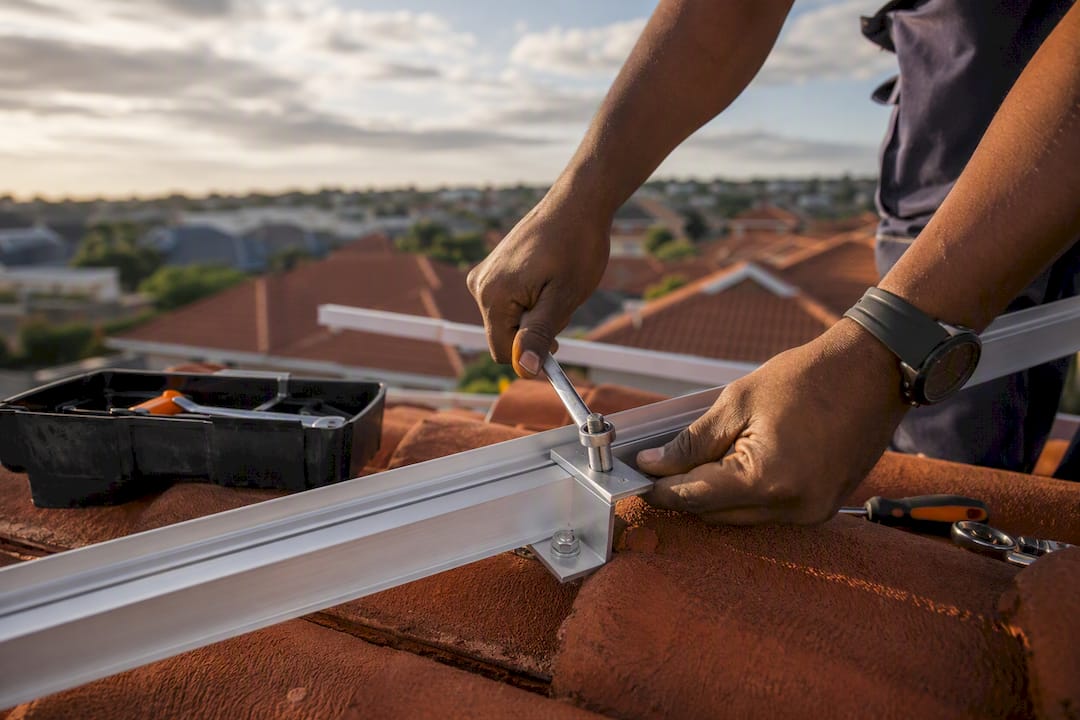
If your solar panels are fixed to your home, declare them to your insurer and add them to your buildings sum insured. Don't assume they're covered automatically. In South Africa, insurers treat roof mounted panels as a permanent building fixture, which means an undeclared system is one of the fastest routes to a rejected claim.
Before you do anything else, gather three documents: a detailed invoice listing every component and its cost, an electrical certificate of compliance (CoC) from a registered electrician, and the installer's qualification details. Insurers use these to set the correct replacement value and to confirm the work was done legally.
Skip this step and you risk two outcomes: a payout reduced through underinsurance, or a claim thrown out entirely because there's no proof the installation was compliant.
- Notify your insurer within days of installation, not months.
- Update your buildings sum insured to reflect the full system cost, including labour and VAT.
- Keep the invoice, CoC, and any structural sign off in one folder, digital or physical.
Key Takeaways
Solar insurance in South Africa hinges on prompt notification, a correctly itemised sum insured, and an installer who can supply a valid CoC before anything goes wrong.
| Point | Details |
|---|---|
| Declare your system immediately | Notify your insurer and update your buildings sum insured as soon as installation is complete. |
| Keep three documents ready | Store your invoice, electrical CoC, and any structural sign off together for fast claim access. |
| Match cover to system type | Fixed rooftop systems belong on buildings insurance; portable units may qualify for contents. |
| Update valuations annually | Review your sum insured every year, especially after adding batteries or expanding panel capacity. |
| Check body corporate rules | Sectional title owners should get written confirmation on solar cover before assuming it exists. |
Table of Contents
- Which policy covers solar insurance in South Africa: buildings, contents, or standalone cover
- What does solar insurance in South Africa cover, and what's excluded?
- What paperwork do insurers require for a solar claim?
- How does adding solar change your premiums and sum insured?
- Sectional title and rental properties: who insures the panels?
- How do you make a solar insurance claim, and what usually goes wrong?
- How Solarza helps you get compliant installations and the right paperwork
- Does system size or battery capacity change your insurance cover?
- Grid-tied vs off-grid: does your setup change how you're covered?
- How do you choose the right insurer or policy for solar in South Africa?
- What does the solar insurance claim process actually look like, step by step?
- An editorial take on what homeowners actually get wrong
- Sources
- FAQ
Which policy covers solar insurance in South Africa: buildings, contents, or standalone cover
The answer depends almost entirely on whether the system is bolted to your roof or sitting loose in your garage.
A permanent installation (panels fixed to the roof structure, an inverter mounted to a wall, a battery wired into the distribution board) is treated the same way as a geyser or a built in aircon unit. It becomes part of the building. That means it belongs on your buildings insurance, and insurers generally agree this is the correct home for rooftop arrays, since removing the system would damage the structure it's attached to.
A portable system is different. Think of a small plug and play solar kit, a portable power station, or panels that sit freestanding on a stand and can be unplugged and moved without touching the building. These often qualify as contents, and some insurers will accept them as such, though you should confirm this before you buy rather than after a hailstorm.
- Buildings insurance: rooftop panels, wall mounted inverters, batteries wired into the home's electrical system.
- Contents insurance: portable solar kits, freestanding units, panels not fixed to any structure.
- Standalone or specialist endorsement: some insurers offer a separate line item for solar equipment rather than folding it into a general buildings figure, which gives clearer proof of value at claim time.
Getting this classification wrong is a common and avoidable mistake. A homeowner who lists a R180,000 rooftop system under contents, assuming it's "equipment," may find the claim redirected or delayed while the insurer works out which policy actually applies.
What does solar insurance in South Africa cover, and what's excluded?
Once your system is correctly declared, cover generally follows the same logic as the rest of your home. Insurers typically cover hail, storm and wind damage, fire, and theft for a listed solar installation, along with damage from falling trees or vehicles and malicious damage in most standard policies.
Where homeowners get caught out is the exclusions list, and it's worth reading before you sign, not after a claim.
- Defective design or installation is almost always excluded. If a component fails because it was wired wrong, that's a workmanship issue, not an insurable event.
- Wear and tear is never covered. Panels degrading over 15 years, or a battery losing capacity with age, is normal life cycle behaviour.
- Manufacturer faults under warranty typically route back to the manufacturer or installer, not your home policy.
- Grid related electrical failures, including surge damage during load shedding switching, are handled differently across insurers. Some cover surge as standard, others treat it as an add on, so check the wording rather than assuming.
Pro Tip: Ask your insurer directly whether surge damage from grid switching (common during load shedding stage changes) is included as standard or needs to be added. This one clause causes more disputes than almost any other part of a solar policy.
What paperwork do insurers require for a solar claim?
Insurers don't just want to know you have solar. They want proof it was installed legally, by someone qualified, and that the value on your policy matches what's actually on your roof. A registered electrician's certificate of compliance is treated as close to mandatory for any claim involving a solar installation.
Three pieces of paperwork matter most:
- Electrical Certificate of Compliance (CoC). Issued by a registered electrician, it confirms the wiring meets South African electrical standards. Without it, insurers have grounds to question whether the system was ever safe to operate, let alone insurable.
- Detailed invoice. This should itemise every panel, inverter, and battery, with serial numbers, labour costs, and installation fees separated out. This figure is what sets your replacement value, so a vague one line quote works against you later.
- Structural or engineer sign off. Structural sign off and the electrical CoC serve different purposes: one confirms your roof can bear the mounted weight, the other confirms the wiring is safe. Insurers may ask for one, both, or neither depending on the array's size and your roof type.
Keep all three together, ideally scanned and stored somewhere you can retrieve them in minutes, not weeks, because claim timelines move fast once you notify an insurer.
How does adding solar change your premiums and sum insured?
Installing solar adds real value to your home, and your insurer needs to know the number, not just the fact. Solar equipment should be insured at current replacement value, including installation and VAT, because standard annual inflation adjustments on a buildings policy rarely keep pace with what a full system actually costs to replace.
Expect your premium to rise. Adding solar generally increases monthly premiums because it raises your total rebuild value, and insurers price cover against that higher number. That's not a penalty, it's the same math that applies when you add a pool or a granny flat.
Underinsurance is the risk most homeowners don't see coming. If your policy reflects R50,000 in solar equipment but the real replacement cost is R150,000, most insurers apply average or proportional payout rules. That means a partial claim, say hail damage to two of ten panels, gets paid out at a fraction of its actual cost, not the full repair value.
- Use your installer's itemised quote as the baseline figure for your sum insured, not a rough estimate.
- Ask your insurer to specify the solar system as a distinct line item rather than folding it into a general buildings number.
- Review the valuation every year, especially after adding batteries or expanding panel capacity.
Sectional title and rental properties: who insures the panels?
Ownership gets murky fast in shared or rented properties, and this is where claims most often stall.
If you own a unit in a sectional title scheme, don't assume the body corporate's building policy extends to your rooftop panels. Body corporate policies frequently exclude privately installed solar systems, since the scheme's insurance was written before you added anything to the roof. Ask the trustees for written confirmation, not a verbal assurance, on whether your system falls under the scheme policy or needs its own cover.
If you rent, the split is usually straightforward but often skipped: get the landlord's written permission before installing anything, and agree upfront who insures the equipment. A tenant funded system is typically the tenant's responsibility to insure under a contents policy, while a landlord funded system belongs on the landlord's buildings cover.
- Sectional title owners: request written confirmation from the body corporate before assuming any cover exists.
- Tenants: clarify ownership and insurance responsibility with the landlord in writing before installation.
- Disputes usually arise when nothing was documented at the time of installation, so put the agreement in an email at minimum.
How do you make a solar insurance claim, and what usually goes wrong?
A solar claim follows the same basic path as any other home claim, but the paperwork requirements are stricter.
- Notify your insurer immediately after damage occurs, ideally within 24 to 48 hours.
- Submit your CoC, invoice, and photos of the damage alongside your claim form.
- Cooperate with the assessor, who may want to inspect the installation in person before approving payout.
Most rejected claims trace back to the same handful of causes: no CoC on file, an installation that wasn't actually compliant, visible lack of maintenance, notification submitted weeks late, or a sum insured that didn't reflect the system's real value. Poor workmanship is one of the most consistent reasons claims fail, and it's almost entirely avoidable by choosing a properly certified installer from the outset. Pro Tip: Ask your installer directly whether they carry professional indemnity insurance. If a claim gets rejected due to a workmanship dispute, that cover is what protects you from footing the bill twice.
How Solarza helps you get compliant installations and the right paperwork
Most of the friction in solar insurance claims traces back to one thing: an installer who didn't provide proper documentation in the first place.

Solarza's installer directory connects you with vetted, rated installers across all nine provinces, so you're not relying on a stranger's WhatsApp quote for a job that determines whether your future claim gets paid. Verified profiles mean you can check ratings and installer history before anyone touches your roof.
Solarza's solar calculator also gives you a realistic estimate of system cost and size, which is exactly the figure you'll need when you go back to your insurer to update your sum insured.
Practical next steps through Solarza:
- Get matched with verified installers who routinely supply CoCs, structured invoices, and warranty documents.
- Use the request a quote tool to receive itemised pricing you can hand straight to your insurer.
- Store every document, invoice, CoC, and any structural sign off, together before your installation is even finished.
| Point | Details |
|---|---|
| Find verified installers | Solarza's directory helps you avoid uncertified installers whose work insurers routinely reject. |
| Get itemised quotes | Use Solarza's calculator and quote tool to produce the exact figures insurers need for your sum insured. |
| Keep documents together | Store your invoice, CoC, and any structural sign off in one place before your installer leaves the site. |
Does system size or battery capacity change your insurance cover?
A 5kW rooftop array insures very differently from a 15kW system with three lithium battery banks, and insurers price the difference accordingly.
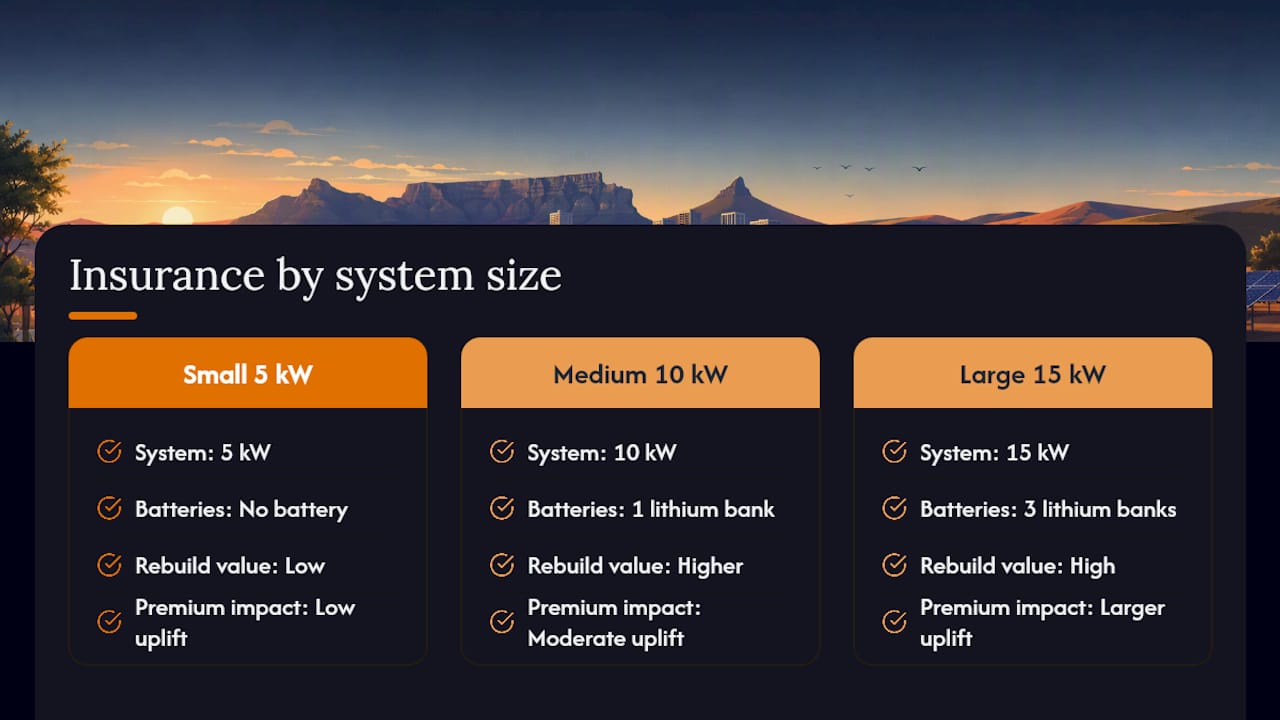
Larger arrays mean a higher rebuild value, which pushes your buildings sum insured up and, with it, your premium. A bigger system also tends to draw more scrutiny at claim time: insurers are more likely to ask for structural sign off on a large, heavy array than on four panels bolted to a carport.
Batteries add a separate layer of complexity. Lithium battery banks are expensive, often costing more than the panels themselves, and they carry their own fire risk profile depending on installation location. A battery mounted in a garage away from living spaces is generally viewed more favourably than one crammed into a hallway cupboard, though insurers vary in how explicitly they price this in.
Hybrid inverters, which manage both grid and battery input, also need to be itemised separately on your invoice. Treating your entire system as one lump sum figure, rather than breaking out panels, inverter, and batteries individually, makes it harder to prove value if only one component is damaged. A hailstorm might take out panels while leaving your inverter and batteries untouched, and your claim should reflect that split rather than an average across the whole system.
The practical takeaway: the bigger and more complex your system, the more important an itemised invoice becomes, because it's the only thing standing between you and a partial payout on equipment that was only partially damaged.
Grid-tied vs off-grid: does your setup change how you're covered?
Most residential solar in South Africa is grid-tied, meaning the system works alongside Eskom or municipal power rather than replacing it entirely. Off-grid systems, fully independent with battery storage covering all your needs, are far less common for homes but do exist, particularly in rural areas.
For insurance purposes, the physical components are underwritten the same way regardless of whether you're grid-tied or off-grid. Panels, inverters, and batteries are still assessed on replacement value, and the same CoC and invoice requirements apply either way.
Where it differs is in risk profile and underwriting attention. An off-grid system with a large battery bank represents a bigger single asset with no grid fallback, which can prompt insurers to ask more detailed questions about installation and storage conditions. A grid-tied system with a smaller battery buffer, used mainly to ride out load shedding, tends to draw less scrutiny simply because the financial exposure is lower.
One thing worth checking either way: some policies distinguish between damage caused by the grid itself (a surge during a municipal fault) and damage from your own equipment failing. If you're grid-tied, ask specifically how grid-related surge damage is treated, since this is one of the more inconsistent clauses across South African insurers. Off-grid homeowners can generally skip that question, since there's no grid connection to cause the issue.
How do you choose the right insurer or policy for solar in South Africa?
Not every insurer treats solar the same way, and the differences show up in exactly the moments that matter: at renewal and at claim time.
Start by asking your current insurer three direct questions before switching anything: do they require a CoC for every claim regardless of system size, do they ask for structural engineer sign off above a certain array size, and can they list your solar system as a distinct, itemised entry on your policy rather than folding it into a general buildings figure. Requirements for structural sign off vary meaningfully between insurers, so an answer that satisfies one insurer may not satisfy another.
A policy that itemises your solar system separately, rather than lumping it into an overall buildings sum insured, is generally easier to work with at claim time. It gives you a clear number to point to when a hailstorm damages three panels rather than the whole roof.
It's also worth asking whether the insurer differentiates between grid surge damage and equipment failure, and whether portable battery units can be added under contents if you also own a standalone power station. Insurers who can answer these questions clearly, without hedging, are usually the ones with more solar claims experience behind them. That experience matters more than a slightly cheaper premium quoted by someone who's never processed a solar claim before.
What does the solar insurance claim process actually look like, step by step?
Timelines matter more than most homeowners expect going in. Most South African insurers want notification within 24 to 48 hours of damage, and delays beyond that window are one of the most common reasons a claim gets flagged for extra scrutiny or denied outright.
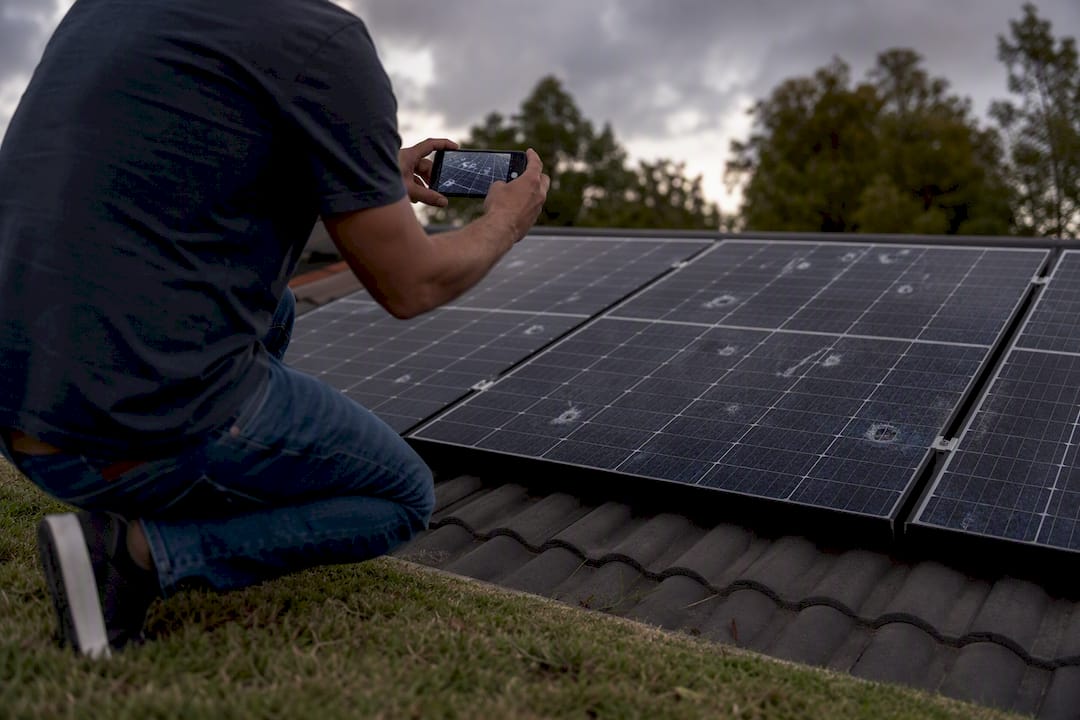
Once you've notified your insurer, the typical sequence runs: submit your claim form along with your CoC, invoice, and photographs of the damage, then wait for an assessor to either approve the claim on paperwork alone or schedule a site visit. Straightforward hail or storm claims with full documentation on file often move faster, sometimes within a couple of weeks. Claims involving disputed workmanship, missing paperwork, or a system that was never formally declared can stretch into months while the insurer investigates.
The pitfalls repeat across almost every rejected claim: a missing CoC, a sum insured that hasn't been updated since installation, notification that came in weeks after the damage occurred, or an assessor finding evidence the system wasn't properly maintained. None of these are unusual insurer behaviour. They're standard practice applied to a product category, solar, where documentation habits still lag behind adoption rates.
The fix is almost entirely preventative rather than reactive. Notify promptly, keep your paperwork current, and never let months pass between installation and updating your buildings sum insured.
An editorial take on what homeowners actually get wrong
The conventional advice on solar insurance treats it as a paperwork exercise: get a CoC, update a number, move on. That undersells the real problem. Most South African homeowners don't fail because they skip the paperwork entirely, they fail because they treat it as optional until a claim forces the question, by which point the installer who did the work is unreachable and the invoice was never itemised properly.
What the research actually supports is a sequencing issue, not a knowledge gap. Homeowners know solar should be declared. What they don't do is treat documentation as part of the installation itself, something to demand at the point of purchase, not scramble for after a hailstorm.
If you take one thing from this article, prioritise the installer conversation before the insurer conversation. A certified installer who hands you a proper CoC and an itemised invoice on day one solves most of the problems this piece covers. Finding that installer through a vetted directory rather than a referral of unknown quality is the single highest leverage decision in the entire process.
Sources
- Solar panels, inverters & sum insured: What SA homeowners must include
- Warning about solar power systems in South Africa
- Insurance for alternative energy solutions
- Why you should insure your solar installation
FAQ
How much does it cost to insure a solar system in South Africa?
There's no fixed rand figure. Your premium increase depends on your system's replacement value, since insurers price cover against the higher rebuild cost that solar adds to your home.
What is the 20% rule for solar in South Africa?
This typically refers to underinsurance penalties some policies apply when your declared sum insured falls significantly below actual replacement value, though the exact threshold and rules vary by insurer. Check your specific policy wording rather than assuming a standard percentage applies.
Do I still have to pay Eskom or my municipality if I have solar?
Yes, if you remain connected to the grid you'll still pay for whatever electricity you draw from it, along with any fixed municipal charges. Solar reduces your usage but doesn't automatically remove grid-related fees unless you disconnect entirely.
How can I insure my solar system in South Africa?
Notify your insurer that you've installed solar, provide your invoice and electrical certificate of compliance, and ask them to update your buildings sum insured to reflect the full replacement value, including installation costs.
Does solar insurance cover theft in South Africa?
Yes, theft is typically included alongside hail, storm, and fire damage for a properly declared and documented solar installation.
Recommended
- SolarZA — Solar Installers, Prices & Load Shedding Solutions South Africa
- Solar Installers by Province in South Africa | SolarZA
- Residential Solar Installation Solar Installers in South Africa | Compare Quotes | SolarZA
- Photovoltaic Module Testing in South Africa - Solar Installer in Summerstrand, Eastern Cape | SolarZA | SolarZA