Solar battery replacement cost in South Africa: 2026 guide
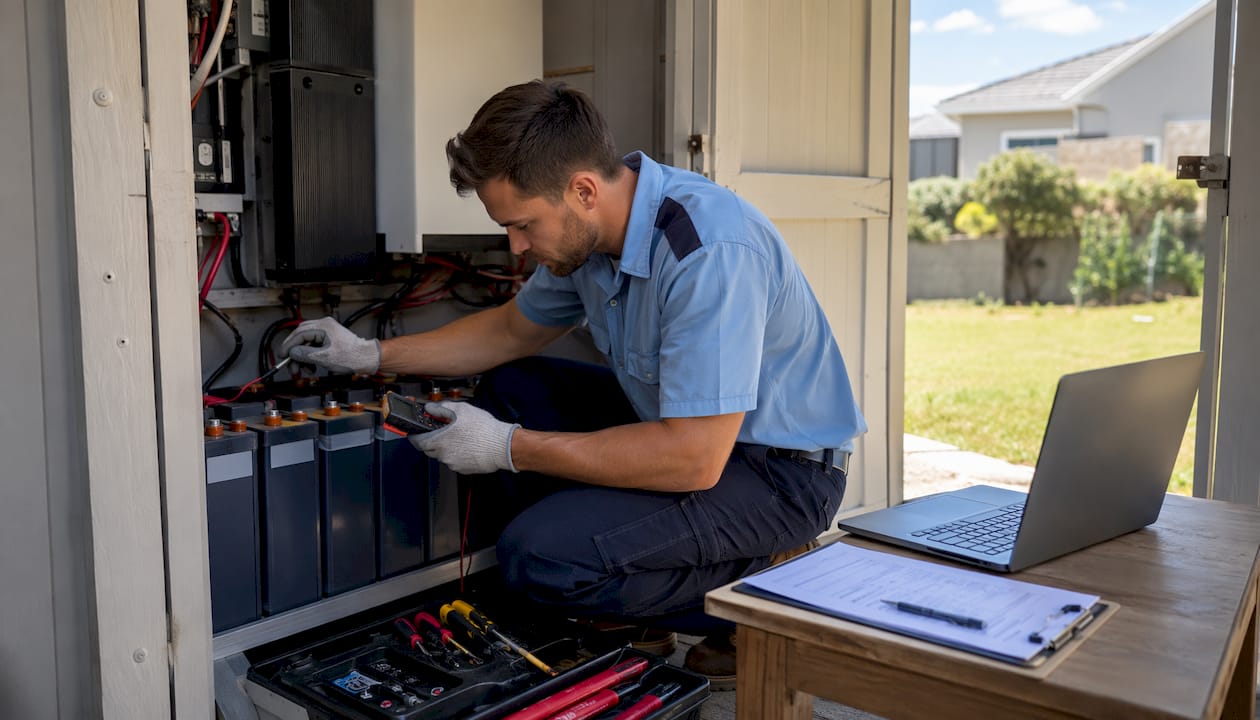
Replacing a home solar battery in South Africa typically costs vary widely installed, depending on chemistry, capacity, and whether your inverter needs upgrading. That wide range narrows fast once you know your system's usable kWh requirement. Use Solarza's solar cost calculator to convert a per-kWh figure into your total expected cost, then request an itemised quote from a verified local installer before committing to anything.
Table of Contents
- What does solar battery replacement cost, line by line?
- How battery chemistry, usable capacity, and warranty drive price
- How to tell whether your battery needs replacing or just servicing
- What happens during replacement and how long it takes
- How to dispose of or recycle an old solar battery legally in South Africa
- What a trustworthy quote looks like, and installer red flags
- Ways to reduce replacement cost or spread payments
- Key takeaways
- Why the cheapest battery quote is usually the most expensive decision
- Solarza makes getting verified replacement quotes straightforward
- Useful sources
- FAQ
What does solar battery replacement cost, line by line?
The battery module is only part of the bill. A realistic replacement invoice has six cost categories, and skipping any one of them in a quote is a red flag.
| Cost category | What it covers | Typical range |
|---|---|---|
| Battery unit (installed) | The cell or module itself, delivered and mounted | — |
| Electrical upgrades (BMS/inverter) | BMS or inverter reconfiguration or replacement | R1,500 |
| Labour & commissioning | Installation hours, wiring, load testing | R2,500 |
| Shipping/import & duties | Freight, clearing, import VAT if applicable | R2,500 |
| Disposal/recycling | Safe removal and certified recycling of the old unit | — |
When you receive a quote, it should itemise every line above and include:
- Warranty duration in years and cycle count covered
- Capacity retention guarantee (typically 70–80% at end of warranty)
- A commissioning report and post-install test results
- Written confirmation of who handles disposal
How battery chemistry, usable capacity, and warranty drive price
Two chemistries dominate the South African home market: lead-acid and lithium iron phosphate (LiFePO4). Lead-acid costs less upfront but delivers fewer usable cycles and a lower depth of discharge, meaning you pay for capacity you cannot actually use. Lithium batteries cost more at purchase but last roughly twice as long as comparable lead-acid units, which cuts the lifetime cost per kWh considerably.
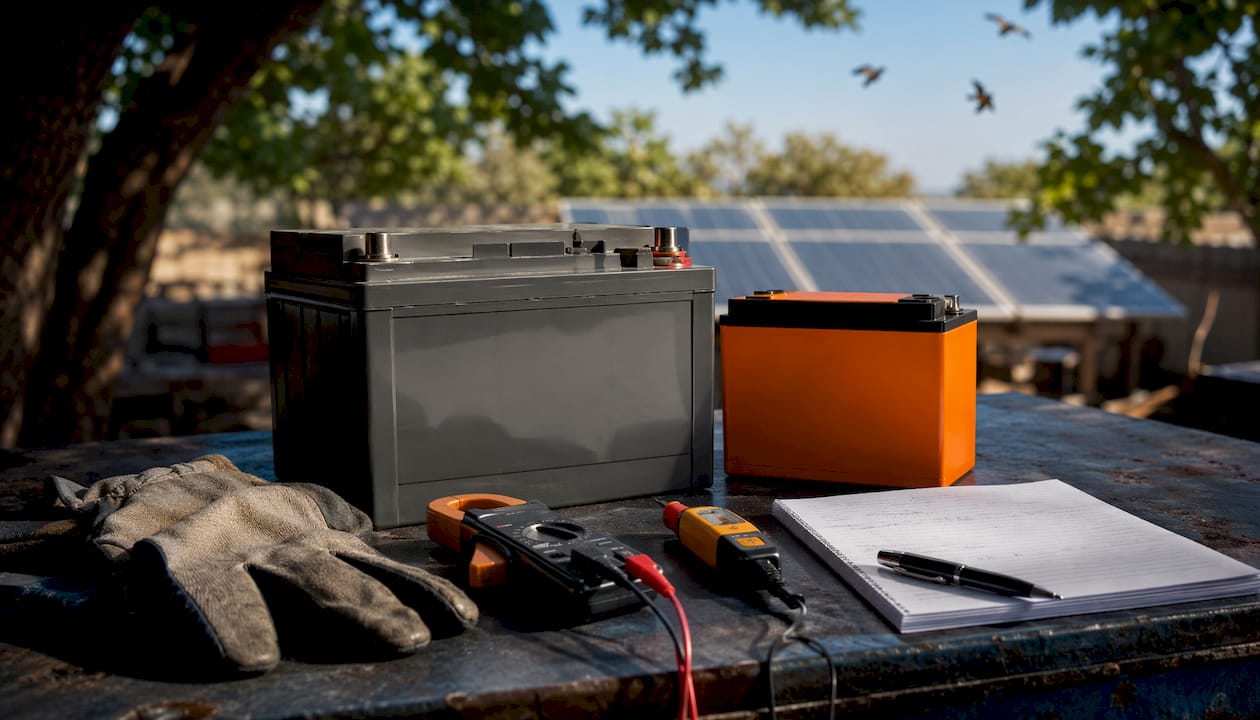
Usable capacity is the number that matters for cost comparisons, not the nominal Ah figure on the label. A 200Ah lead-acid battery at 50% depth of discharge gives you 100Ah of usable energy. A 200Ah LiFePO4 at 90% depth of discharge gives you 180Ah. Same label, very different value.
| Dimension | Lead-acid | LiFePO4 lithium |
|---|---|---|
| Cost per usable kWh (installed) | Lower upfront | Higher upfront, but often lower over lifetime |
| Usable capacity (kWh) | 50% of nominal | 80–90% of nominal |
| Expected lifespan | Several years in reasonable use | Longer lifespan with higher cycle counts |
| Warranty | Shorter terms typical | Longer warranty terms typical |
| Maintenance | Regular water top-up (flooded), terminal checks | Minimal; BMS handles cell balancing |
| Installation complexity | Low; often inverter-compatible | May require BMS or inverter upgrade |
How to tell whether your battery needs replacing or just servicing
Many homeowners call for a full replacement when a service visit would solve the problem. The distinction saves real money.
Signs that point toward replacement:
- Backup runtime has dropped significantly compared to when new
- The battery takes significantly longer to reach full charge than it used to
- Your inverter displays persistent error codes related to the battery or BMS
- The unit shuts down unexpectedly under moderate loads
- Visible swelling, corrosion, or any sign of electrolyte leakage
Signs that a service visit may be enough:
- Slightly reduced runtime after a period of heavy use or irregular charging
- One or two error codes that cleared after a reset
- No physical damage and the battery is within its warranty period
A qualified installer will run a capacity test under load, check cell voltages, review the BMS diagnostic log, and compare the measured cycle count against the manufacturer's rated lifespan. That test takes an hour and costs far less than a new battery. According to Greenability Solar Installations, servicing lithium systems every 6–12 months can prevent premature cell degradation and extend usable life well beyond standard warranty periods. A well-maintained battery can last 10–15 years; a neglected one may fail within 3–5 years. Pro Tip: Request an on-site diagnostic before agreeing to any replacement quote. Ask the installer to provide a written diagnostic report, including cycle count and capacity test results. Keep that report with your warranty documents.
What happens during replacement and how long it takes
The process runs in five stages, and knowing each one helps you plan for downtime.
Diagnose: The installer runs a full battery test and confirms replacement is necessary. This typically happens on a first site visit. Get itemised quotes: Collect at least two or three written quotes. Factor in lead times before comparing prices. Order components: Stocked batteries ship within 1–3 days. Special-order or imported units can take 2–4 weeks. That gap is when you are without backup, so ask upfront. Installation day: The installer isolates the system, removes the old battery, mounts the new unit, reconfigures the BMS or inverter settings, and runs a full load test. Most residential replacements take several hours. Commissioning and testing: A post-install commissioning report confirms the system is operating within spec. Do not accept a completed job without one.How to dispose of or recycle an old solar battery legally in South Africa
Old batteries, particularly lead-acid units, are classified as hazardous waste under South African environmental regulations. Dumping them is illegal and carries real penalties.
Safe disposal options:
- Ask your installer to arrange certified removal as part of the job (include it in the quote)
- Return lead-acid batteries to a registered battery recycler or scrap dealer, many of whom offer a small trade-in credit
- Contact your local municipality's hazardous-waste facility for drop-off points
- Check with the South African National Biodiversity Institute (SANBI) or your provincial environmental department for authorised recyclers in your area
Request a waste disposal certificate from whoever handles the old battery. That document protects you if questions arise later about how the unit was disposed of. A reputable installer will provide this without being asked.
What a trustworthy quote looks like, and installer red flags
A solid quote is itemised, written, and specific. Here is what to require:
- Battery unit cost (installed), listed separately from labour
- Electrical upgrade costs (BMS, inverter reconfiguration) itemised
- Labour hours and rate
- Warranty terms: years, cycle count, and capacity retention floor
- Disposal cost and confirmation of certified recycling
- Commissioning report and test results included
Questions worth asking every installer: Are you registered and rated? Can you provide references from recent battery replacements in my area? Is the warranty transferable if I sell the property? What is the expected downtime during installation? Red flags: A quote that bundles everything into one line item, no written warranty, pressure to pay cash only, or an installer who cannot explain what commissioning involves. Pro Tip: Insist on a post-install commissioning report before you sign off on the job. A written warranty that specifies cycle count or capacity retention is far more useful than one that simply states a number of years.
Use Solarza's request-quote tool to collect itemised, comparable proposals from verified installers across all nine provinces.
Ways to reduce replacement cost or spread payments
A few options genuinely move the needle on total cost:
- Service before replacing: A R500–R1,500 service call can add years to a lithium battery's life.
- Choose lithium for the long run: Higher upfront cost, but the lower lifetime cost per kWh usually wins over a 10-year horizon.
- Trade in the old battery: Lead-acid units have scrap value. Ask your installer or a local recycler.
- Extended warranties: Some suppliers offer extended coverage for an additional fee. Compare the premium against the cost of a replacement.
- Payment plans: Several solar installers offer finance through third-party lenders. Check the interest rate, term length, balloon payment clauses, and whether the plan includes instalment protection.
On government incentives: South Africa's Section 12B tax incentive has historically allowed businesses to deduct renewable energy investments, and the 2023 residential solar tax rebate allowed individuals to claim 25% of the cost of new solar panels (not batteries) against personal income tax. Battery-specific rebates at the residential level are not currently confirmed for 2026. Check with SARS or a tax practitioner for your specific situation, as incentive structures change.
Key takeaways
Replacing a home solar battery in South Africa costs vary widely installed, influenced by chemistry, capacity, and inverter work required., and the single most useful comparison metric is cost per usable kWh, not the sticker price on the battery alone.
| Point | Details |
|---|---|
| Ballpark installed cost | Installed cost ranges widely depending on chemistry, capacity, and inverter work required. |
| Best comparison metric | Cost per usable kWh (installed) gives a true like-for-like view across battery types. |
| Service vs replace | A 6–12 month servicing schedule can extend lithium battery life to 10–15 years; always test before replacing. |
| Disposal obligation | Old batteries are hazardous waste; require a disposal certificate from your installer. |
| Solarza next step | Use Solarza to request itemised quotes from verified local installers across all nine provinces. |
Why the cheapest battery quote is usually the most expensive decision
The South African solar market has matured fast, and that has brought both good installers and opportunistic ones. The homeowners who end up paying twice are almost always the ones who accepted a single-line quote with no commissioning report and no written warranty. The battery itself is only part of the story. Inverter compatibility, BMS configuration, and the quality of the installation work determine whether that battery lasts three years or twelve.
Lithium LiFePO4 is the right chemistry for most homes today, not because it is fashionable, but because the lifetime cost arithmetic is hard to argue with once you run the numbers. The upfront premium pays for itself in avoided replacement cycles. What most guides miss is that the servicing gap matters just as much as the chemistry. A lithium battery that never gets a professional check-up will degrade faster than a lead-acid unit that does. Budget for annual servicing from day one, and treat it as part of the replacement cost calculation, not an afterthought.
Solarza makes getting verified replacement quotes straightforward
Replacing a battery is one of the bigger decisions a homeowner makes about their solar system, and the difference between a good outcome and a costly one usually comes down to the quality of the installer and the detail in the quote. Solarza connects you directly with verified, rated installers across all nine provinces, so you are not starting from scratch with an unknown contractor.

Through Solarza, you can request tailored, itemised quotes, compare battery options and pricing, and use the cost calculator to check whether a quote's per-kWh figure is reasonable before you sign anything. Installers listed on Solarza are vetted and rated by other homeowners, which means you can see their track record before they arrive on site. Find verified installers by city or browse by installer services to match your specific replacement needs. Request your free, itemised quote today at solarza.co.za/request-quote.
Useful sources
- Battery servicing guide | Greenability Solar Installations — advice on servicing intervals and degradation prevention
- Inverter battery lifespan in South Africa | Livguard Africa — chemistry comparisons and lifespan guidance for SA homeowners
- Solar batteries guide | Solarza — local pricing context, lithium and deep-cycle options
- Solar cost calculator | Solarza — convert per-kWh figures into total installed cost estimates
- Request a free quote | Solarza — itemised quotes from verified local installers
- How solar batteries store energy | Helioses — technical primer on battery storage for homeowners
FAQ
How much does solar battery replacement cost in South Africa?
Expect to pay a wide range for a typical home battery replacement, depending on chemistry, usable capacity, and any inverter or BMS upgrades needed.
How long does a solar battery replacement take?
Most residential replacements take 3–6 hours on installation day, but total time from diagnosis to commissioning can run 1–4 weeks if the battery needs to be ordered rather than sourced from local stock.
Is it worth servicing a solar battery instead of replacing it?
Often, yes. Industry experts recommend servicing lithium systems every 6–12 months; a well-maintained battery can last 10–15 years, while a neglected one may fail in 3–5 years.
What is the best way to compare replacement battery costs?
Use cost per usable kWh (installed) rather than the nominal Ah rating or sticker price. Solarza's cost calculator helps you convert any per-kWh figure into a total installed cost estimate.
How do I dispose of an old solar battery in South Africa?
Old batteries are classified as hazardous waste. Ask your installer to arrange certified removal, return lead-acid units to a registered recycler, or contact your local municipality's hazardous-waste facility. Always request a disposal certificate.