Best Solar Battery Alternatives for South African Homes in 2026
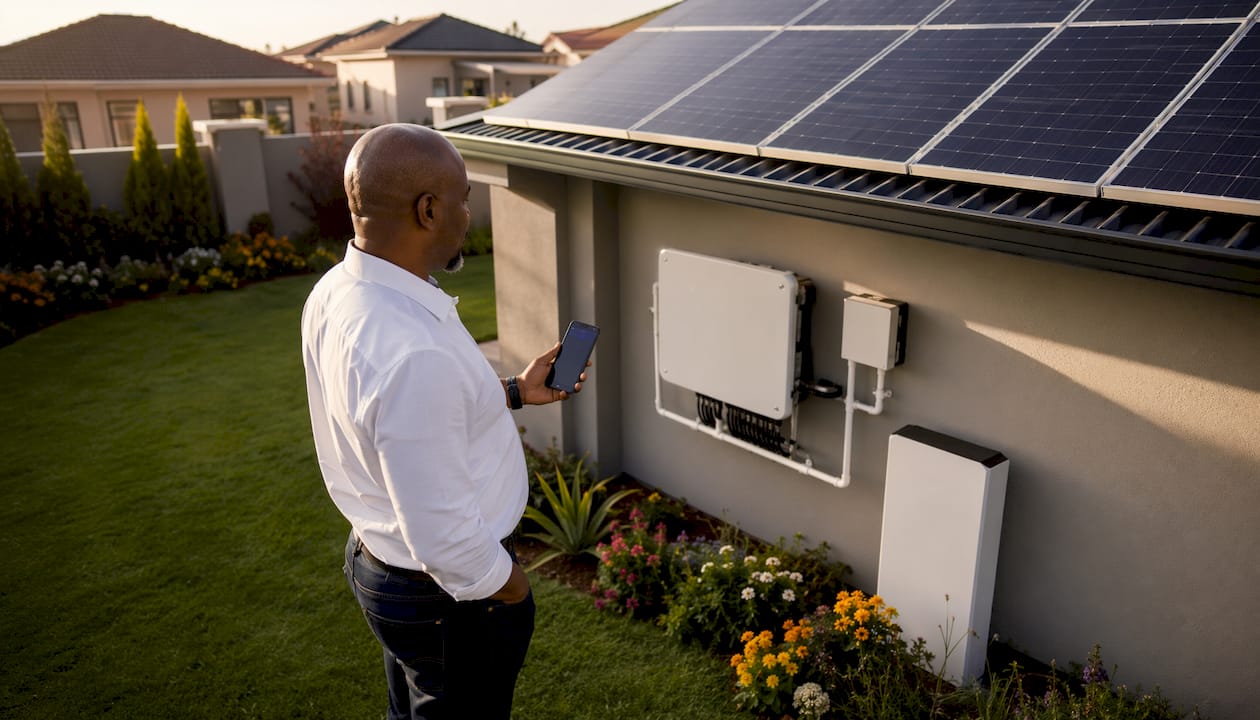
The strongest solar battery alternatives available to South African homeowners right now are LiFePO4 lithium systems from Freedom Won, Pylontech, Hubble Lithium, and BYD Battery-Box, supplied locally by verified distributors including Segen Solar Johannesburg, Lithium Batteries SA, and EnergyTechStore. For homeowners who need backup power during load shedding without committing to a full lithium system, UPS units and portable power stations cover critical loads for short outages. The table below maps the key local providers against the specs that actually determine value.
| Provider | Technology | Capacity | DoD | Cycle Life | Warranty | Local Support | Scalability | Best For | Rating |
|---|---|---|---|---|---|---|---|---|---|
| Segen Solar Johannesburg | LiFePO4 / Li-ion | Multiple | Varies | Varies | Varies | Yes | High | Installers and homeowners needing broad product range | 3.9★ (263) |
| Lithium Batteries SA | LiFePO4 (Hi/Lo V) | Multiple | 90%+ | 3,000–6,000 | Varies | Yes | High | Businesses and large residential needing finance | 4.9★ (112) |
| EnergyTechStore | LiFePO4 / Li-ion | Multiple | Varies | Varies | Varies | Yes (Pretoria) | Medium | Homeowners wanting localized Pretoria service | 4.9★ (71) |
| Freedom Won | LiFePO4 | 5–200+ kWh | 95% | 4,000+ | 10 years | National | High | Long-term residential and commercial storage | 3.9★ (81) |
| Create Energy | LiFePO4 / Li-ion | Multiple | Varies | Varies | Varies | Randburg | Medium | Integrated UPS and solar backup | 4.7★ (60) |
| Battery Fix & Solar | LiFePO4 / Lead Acid | Multiple | Varies | Varies | Varies | Yes | Medium | Easy purchase, trade-in, and installation | 4.1★ (43) |
| bHg Power | Lead Acid | Multiple | 50–80% | 500–1,200 | Varies | Local | Low | Budget-conscious traditional backup | 4.8★ (21) |
| Freedom Won (Pty) Ltd | LiFePO4 | 5–200+ kWh | 95% | 4,000+ | 10 years | National | High | Engineered storage at all scales | 3.9★ (81) |
Which local solar battery brands and providers stand out in South Africa?
South Africa's battery market has matured fast. You now have access to globally recognized brands alongside locally engineered solutions, all supported by a growing network of certified installers.
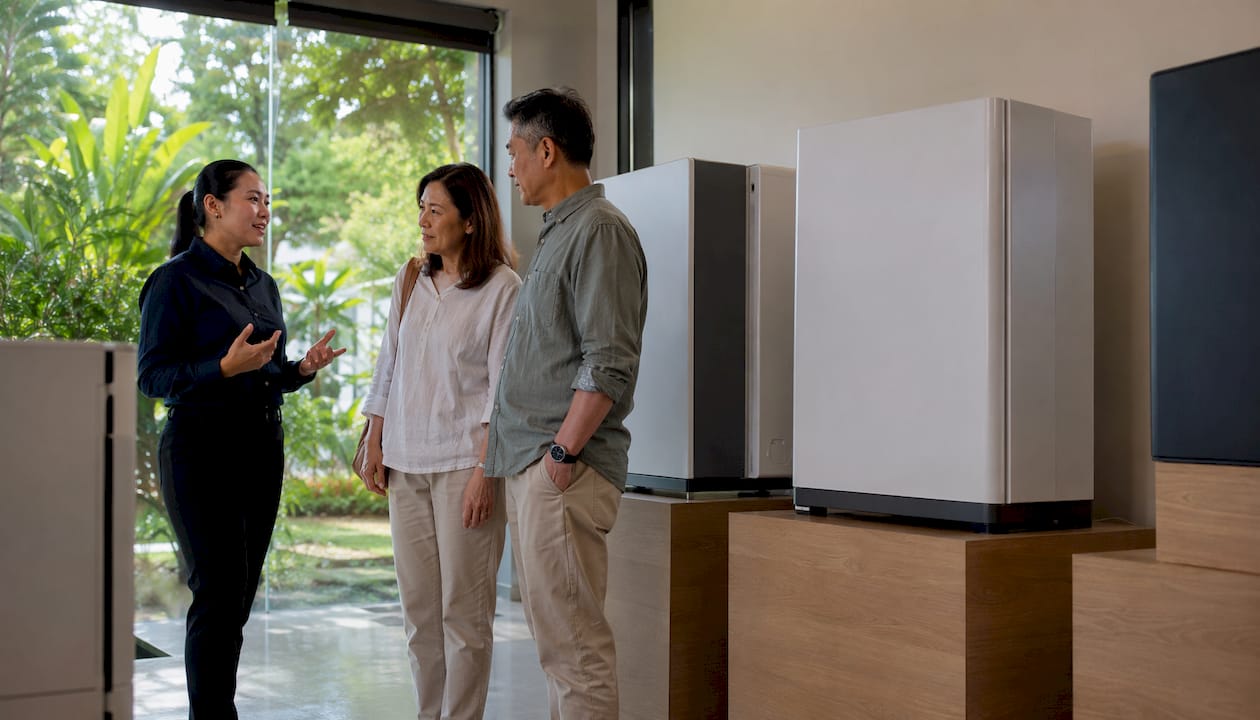 Freedom Won is the standout local manufacturer. The company holds the SANEA Industry Leadership Award 2025 and two AFSIA awards for service excellence and innovation in 2025. Its LiFePO4 systems target residential, commercial, and utility-scale applications with national technical support. For homeowners who want a battery built and backed in Africa, Freedom Won is the clearest choice.
Lithium Batteries SA earned the LBSA Battery Safety Innovator of the Year 2026 and holds SAPVIA membership, two credentials that matter when you are putting a high-voltage system inside your home. The company offers 6 and 12-month payment plans for businesses, which makes larger installations more accessible.
Pylontech, BYD Battery-Box, Hubble Lithium, and Dyness are all widely available through local distributors. Pylontech's US series and Hubble's AM-5 (5.12 kWh, 100% DoD) are popular rack-mount options that stack easily for growing households. BYD's Battery-Box HVS and HVM lines suit high-voltage hybrid inverter setups. Solar MD and Dyness round out the mid-range with competitive pricing and solid warranty terms.
Freedom Won is the standout local manufacturer. The company holds the SANEA Industry Leadership Award 2025 and two AFSIA awards for service excellence and innovation in 2025. Its LiFePO4 systems target residential, commercial, and utility-scale applications with national technical support. For homeowners who want a battery built and backed in Africa, Freedom Won is the clearest choice.
Lithium Batteries SA earned the LBSA Battery Safety Innovator of the Year 2026 and holds SAPVIA membership, two credentials that matter when you are putting a high-voltage system inside your home. The company offers 6 and 12-month payment plans for businesses, which makes larger installations more accessible.
Pylontech, BYD Battery-Box, Hubble Lithium, and Dyness are all widely available through local distributors. Pylontech's US series and Hubble's AM-5 (5.12 kWh, 100% DoD) are popular rack-mount options that stack easily for growing households. BYD's Battery-Box HVS and HVM lines suit high-voltage hybrid inverter setups. Solar MD and Dyness round out the mid-range with competitive pricing and solid warranty terms.
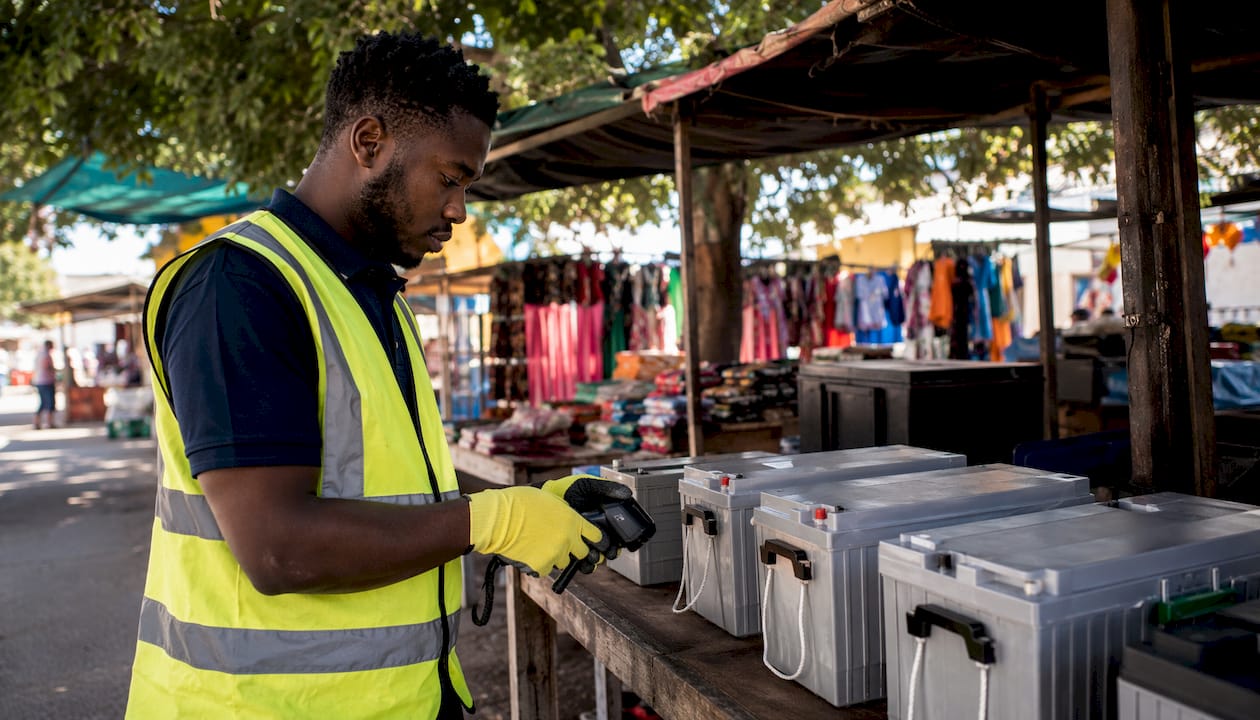 Segen Solar Johannesburg distributes across all these brands and adds technical training support for installers, making it a practical first stop when you want to compare options and get professional guidance in one place. You can browse local battery suppliers on Solarza to see current pricing and availability.
Battery Fix & Solar suits homeowners who want a straightforward purchase with fast delivery, free car battery installation, and trade-in credit on old units. bHg Power handles lead-acid backup installations for customers who prefer the lower upfront cost of traditional technology, accepting that cycle life and DoD will be lower than lithium alternatives.
Pro Tip: LiFePO4 chemistry is the safest and most cycle-stable option for home use. It does not carry the thermal runaway risk associated with older lithium-ion chemistries, and most quality LiFePO4 packs carry 10-year warranties.
Segen Solar Johannesburg distributes across all these brands and adds technical training support for installers, making it a practical first stop when you want to compare options and get professional guidance in one place. You can browse local battery suppliers on Solarza to see current pricing and availability.
Battery Fix & Solar suits homeowners who want a straightforward purchase with fast delivery, free car battery installation, and trade-in credit on old units. bHg Power handles lead-acid backup installations for customers who prefer the lower upfront cost of traditional technology, accepting that cycle life and DoD will be lower than lithium alternatives.
Pro Tip: LiFePO4 chemistry is the safest and most cycle-stable option for home use. It does not carry the thermal runaway risk associated with older lithium-ion chemistries, and most quality LiFePO4 packs carry 10-year warranties.
For a broader look at home energy storage types, the chemistry landscape is shifting fast, with sodium-ion entering the conversation.
How do you size and choose the right solar battery for your home?
Getting the size wrong is the most expensive mistake South African homeowners make. A battery that is too small leaves you in the dark after two hours of load shedding; one that is too large wastes capital that could fund more panels.
Step-by-step sizing approach:- Calculate your daily load. Add up the wattage of every appliance you need during an outage and multiply by the hours you run each. A typical South African home running lights, a fridge, a TV, and a router uses roughly 5–10 kWh per day.
- Factor in autonomy. Load shedding stages 4–6 can mean 8–12 hours without grid power per day. Size for at least one full outage cycle, ideally two.
- Apply the DoD rule. Batteries with 90–95% DoD deliver more usable energy per cycle and last longer over a 10-plus-year lifespan. A 10 kWh battery at 95% DoD gives you 9.5 kWh; the same capacity at 50% DoD gives you only 5 kWh.
- Check cycle life. A battery rated for 4,000 cycles at 80% DoD, used once daily, lasts over 10 years. Lead-acid units rated for 500–1,200 cycles may need replacement within 3–5 years.
- Confirm inverter compatibility. Most LiFePO4 packs communicate via CAN bus or RS485. Verify your inverter supports the battery's BMS protocol before purchasing.
For retrofitting an existing solar PV system, AC-coupled battery systems are usually the better path. They do not require replacing your existing string inverter, which cuts installation cost and complexity significantly.
Financing and incentives: Section 12B of the Income Tax Act allows South African businesses to deduct renewable energy assets. Homeowners can claim a solar panel tax rebate under the 2023 government incentive program. Lithium Batteries SA offers business payment plans; Battery Fix & Solar makes it easy to browse and compare batteries for individual needs and budgets.What are the real alternatives to a traditional solar battery?
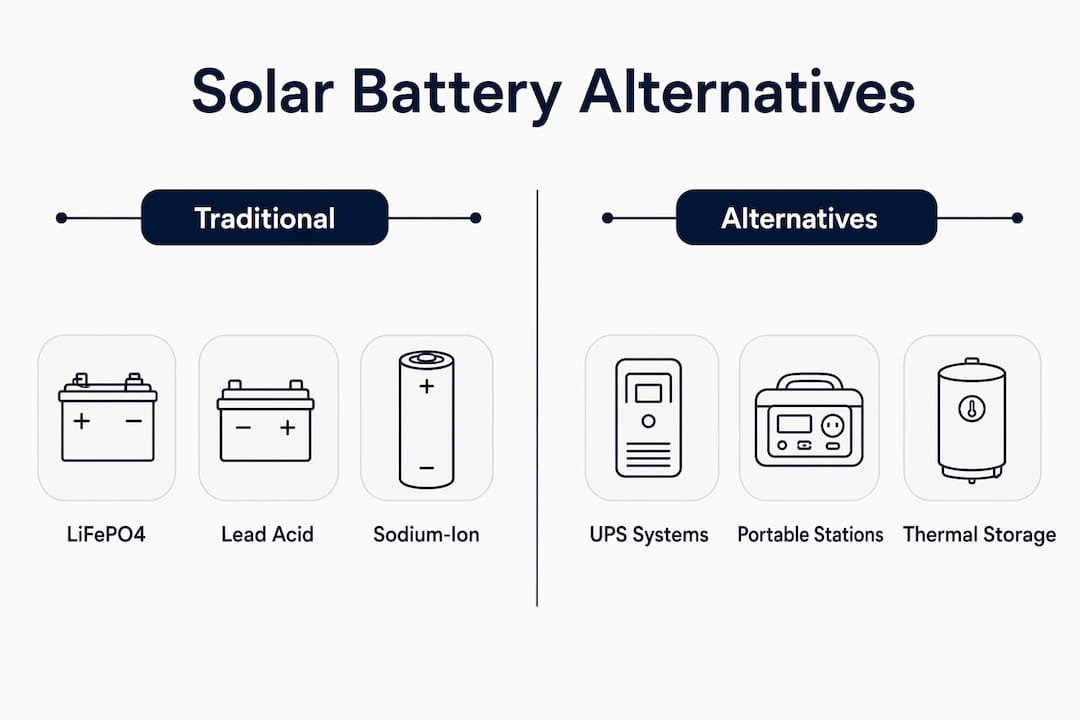
Not every home needs a full lithium battery bank. Several solar battery alternatives cover specific scenarios at a fraction of the cost.
UPS systems keep computers, modems, and routers running during short outages. They are not designed for high-power loads or extended duration, but for a home office they are practical and affordable. Create Energy stocks UPS units alongside solar products for exactly this use case. Portable power stations (units like Bluetti or EcoFlow, available through local retailers) store 0.5–2 kWh and can run a laptop, phone charger, and LED light through a two-hour outage. They charge from solar panels or the grid and require no installation. Thermal storage is a legitimate load-shifting tool. Heating your geyser during peak solar production hours and insulating it well reduces evening grid draw without any battery at all. It does not provide backup power, but it cuts electricity bills. Large-scale thermal or mechanical storage options like pumped hydro are impractical at residential scale for full backup during load shedding. Sodium-ion batteries are the most promising emerging alternative. UNIGRID's Na+Casa residential battery, now shipping in Europe, stores 9.25 kWh and is designed for a 25-year lifespan with no thermal runaway risk. It is not yet available in South Africa, but it signals where the market is heading.Why does solar battery storage matter so much in South Africa?
Eskom's load shedding has made battery storage less of a luxury and more of a practical necessity for millions of households. Stages 4–6 can cut grid power for 8–12 hours daily, making a reliable storage system the difference between a functioning home and a frustrating one.
Beyond load shedding, pairing solar panels with storage lets you use the energy your panels generate during the day at night, when Eskom's time-of-use tariffs are highest. Homeowners with well-sized systems commonly report significant reductions in electricity bills. Property valuers increasingly factor solar and battery installations into home appraisals, adding measurable resale value.
How long do solar batteries last, and what maintenance do they need?
LiFePO4 batteries require almost no active maintenance. Keep terminals clean, ensure the BMS firmware is updated when your installer recommends it, and avoid storing the battery at 0% charge for extended periods. Most quality units carry 10-year warranties with cycle guarantees of 4,000 or more.
Lead-acid batteries need more attention: check electrolyte levels monthly on flooded units, keep terminals corrosion-free, and avoid deep discharges below 50% to protect cycle life. Expect a lifespan of 3–5 years under daily load-shedding use.
UPS units and portable power stations have shorter lifespans, typically 3–5 years for the internal cells, and replacement batteries are often available separately. Sodium-ion technology, once it reaches the South African market, promises a lifespan matching a rooftop solar system at roughly 25 years.
Solarza connects you with verified solar installers across South Africa
Choosing the right battery is only half the equation. Getting it installed correctly by a qualified professional determines whether your system performs as promised for the next decade.
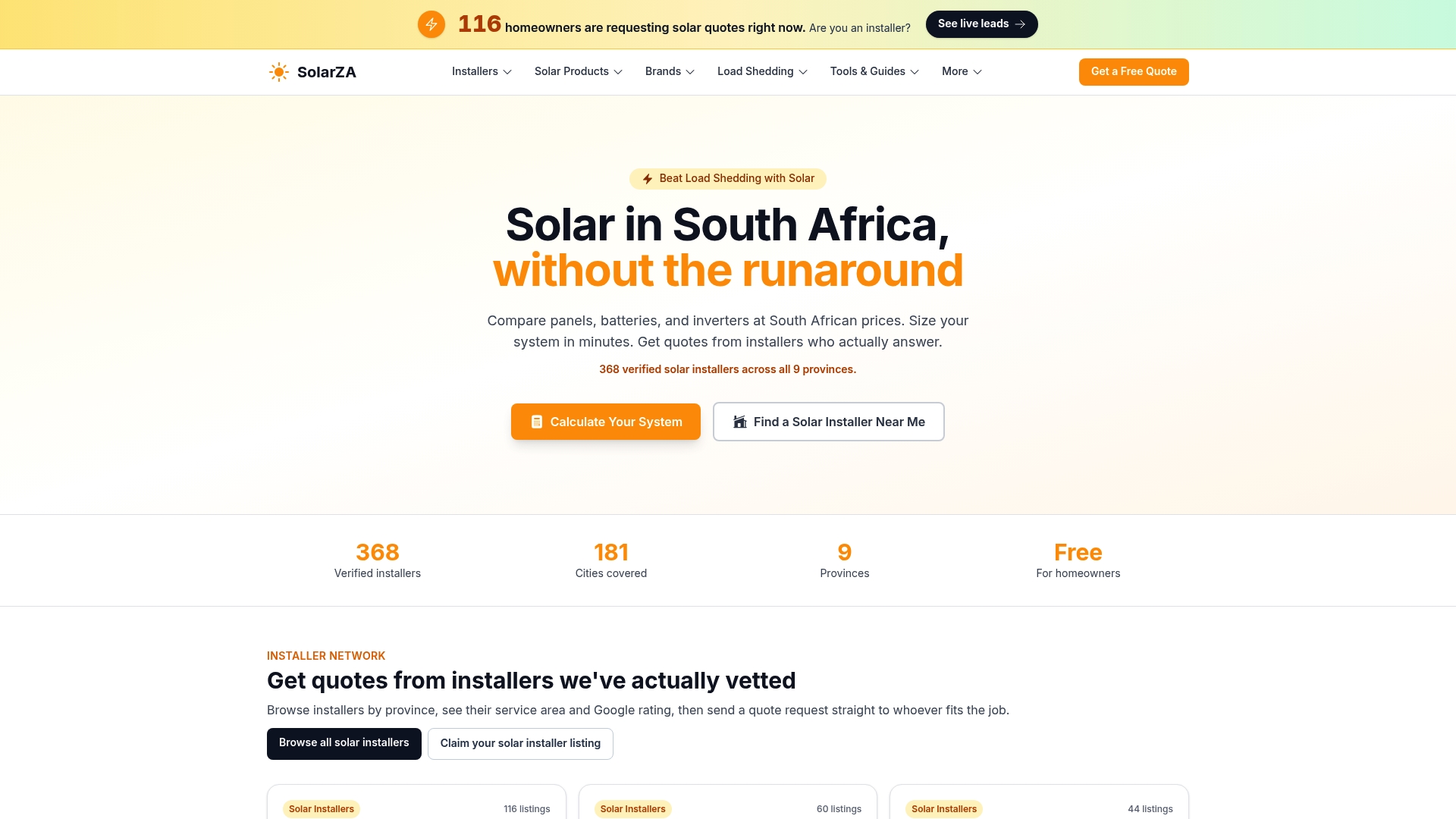
Solarza connects South African homeowners with vetted, rated solar installers across all nine provinces. You get tailored quotes from installers who specialize in the brands and battery types covered in this guide, whether you are in Johannesburg, Cape Town, or a smaller town. The platform's solar calculator helps you estimate savings before you commit to anything, and the installer directory by city makes it easy to find a local professional who knows your grid conditions. Homeowners who install through Solarza's network often report large reductions in electricity bills and measurable increases in property value.
FAQ
Which solar battery is best in South Africa?
Freedom Won's LiFePO4 systems are the top locally engineered option, backed by SANEA and AFSIA awards. Pylontech, Hubble Lithium, and BYD Battery-Box are the most widely installed imported brands, available through distributors like Segen Solar Johannesburg and Lithium Batteries SA.
Can you buy a battery without solar panels?
Yes. Battery-only backup systems paired with a suitable inverter can charge from the grid during off-peak hours and discharge during load shedding. Providers like Battery Fix & Solar and bHg Power supply standalone battery solutions without requiring a full solar installation.
What are the main alternatives to solar power for backup?
UPS systems cover short outages for critical electronics, portable power stations handle small loads for a few hours, and thermal storage (geyser heating) shifts daytime solar energy into hot water without any battery. None of these replace a full battery system for whole-home backup during extended load shedding.
How do you run solar without batteries?
A grid-tied solar system without batteries exports excess power to the grid and draws from it at night, but provides no backup during outages. Adding an AC-coupled battery to an existing grid-tied system is the most cost-effective way to gain backup capability without replacing your inverter.
Key Takeaways
LiFePO4 batteries with 90–95% DoD and 4,000-plus cycle ratings deliver the best long-term value for South African homeowners managing daily load shedding.
| Point | Details |
|---|---|
| DoD determines real capacity | A battery at 95% DoD gives nearly twice the usable energy of a lead-acid unit at 50% DoD. |
| Freedom Won leads locally | Freedom Won holds the SANEA Industry Leadership Award 2025 and two AFSIA 2025 awards for South African-engineered storage. |
| Sodium-ion is the next shift | UNIGRID's Na+Casa stores 9.25 kWh and is designed for a 25-year lifespan with no thermal runaway risk. |
| Alternatives suit short outages only | UPS systems and portable power stations cover critical electronics but cannot replace a full battery bank for extended load shedding. |
| Solarza simplifies the process | Solarza connects homeowners with vetted installers by city and brand, with a free solar calculator to estimate savings before committing. |