Single phase vs three phase: which power supply do you need?
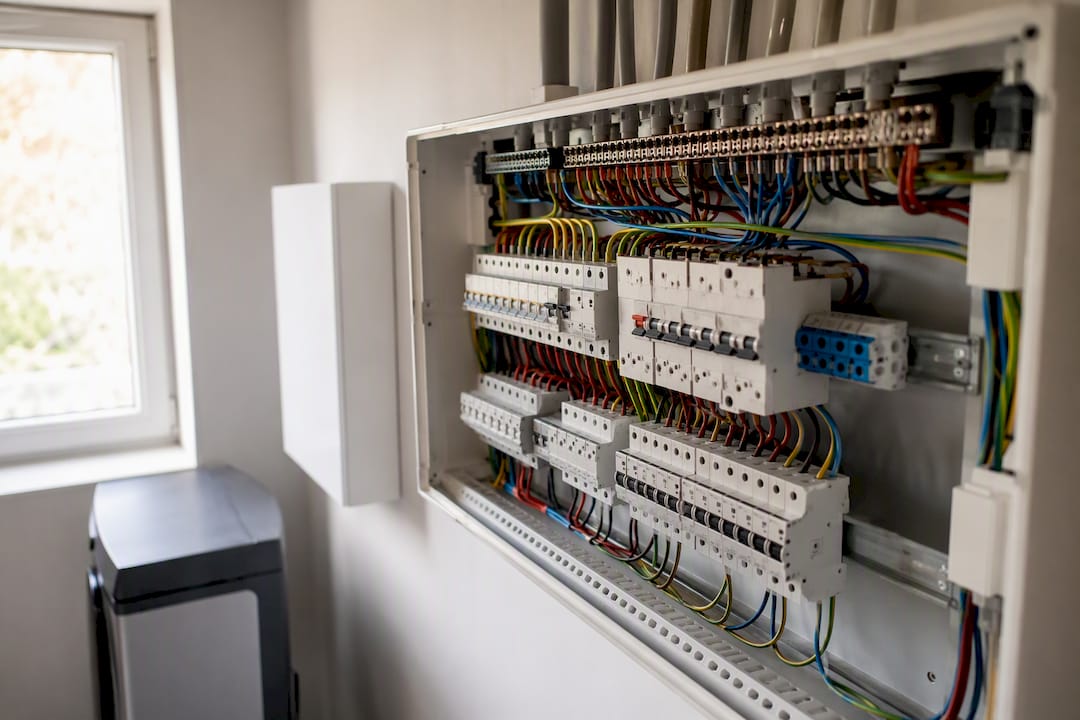
Single-phase power runs one alternating current on two wires (line and neutral) and covers almost every home. Three-phase power runs three currents offset by 120 degrees on three or four wires, and it's built for heavy motors, industrial equipment, and fast EV charging.
The quick verdict: if you're running a typical house, single-phase almost certainly does the job. If you're running a workshop with big motors, a 22 kW EV charger, or a large heat pump, three-phase is worth investigating.
- Single-phase: one wave, one live wire plus neutral, standard for homes
- Three-phase: three waves 120 degrees apart, standard for motors and heavy loads
- Most homes: stick with single-phase unless you have a specific heavy-load need
- Next steps: check your breaker poles, meter label, and inverter nameplate before buying equipment (covered below)
Key Takeaways
Three-phase power delivers steadier output and lower per-conductor current than single-phase, but most homes never need it unless they run heavy motors, fast EV chargers, or large heat pumps.
| Point | Details |
|---|---|
| Most homes stay single-phase | Standard appliances, lighting, and typical solar inverters run fine without three-phase. |
| The √3 factor drives cable sizing | Three-phase conductors carry significantly less current than a single-phase conductor for equal power. |
| Check before you buy | Count breaker poles, read the meter label, and check nameplates before requesting equipment quotes. |
| Upgrades require distributor involvement | Moving to three-phase means board rewiring and formal approval, not a DIY project. |
| Solarza matches supply to installer | Solarza connects homeowners with vetted installers who size inverters and chargers around your confirmed phase type. |
Table of Contents
- Single phase vs three phase power: how the waveforms actually differ
- Voltages and wiring: what's actually behind your wall
- When you actually need three phase at home
- How to check your own supply before you buy anything
- Phase type and your solar setup: inverters, EV chargers, and what to check first
- Comparing installation and running costs across the two systems
- Does phase type change your electricity bill?
- Safety issues to watch for with each system
- The gap between what most guides tell you and what actually matters
- Sources
- FAQ
Single phase vs three phase power: how the waveforms actually differ
A single-phase supply sends one alternating current wave that rises, falls, and crosses zero twice every cycle. During those zero crossings, delivered power actually dips to nothing for an instant, then climbs back up. It's not a problem for a kettle or a laptop charger, but it becomes a real limitation once you're driving a large motor.
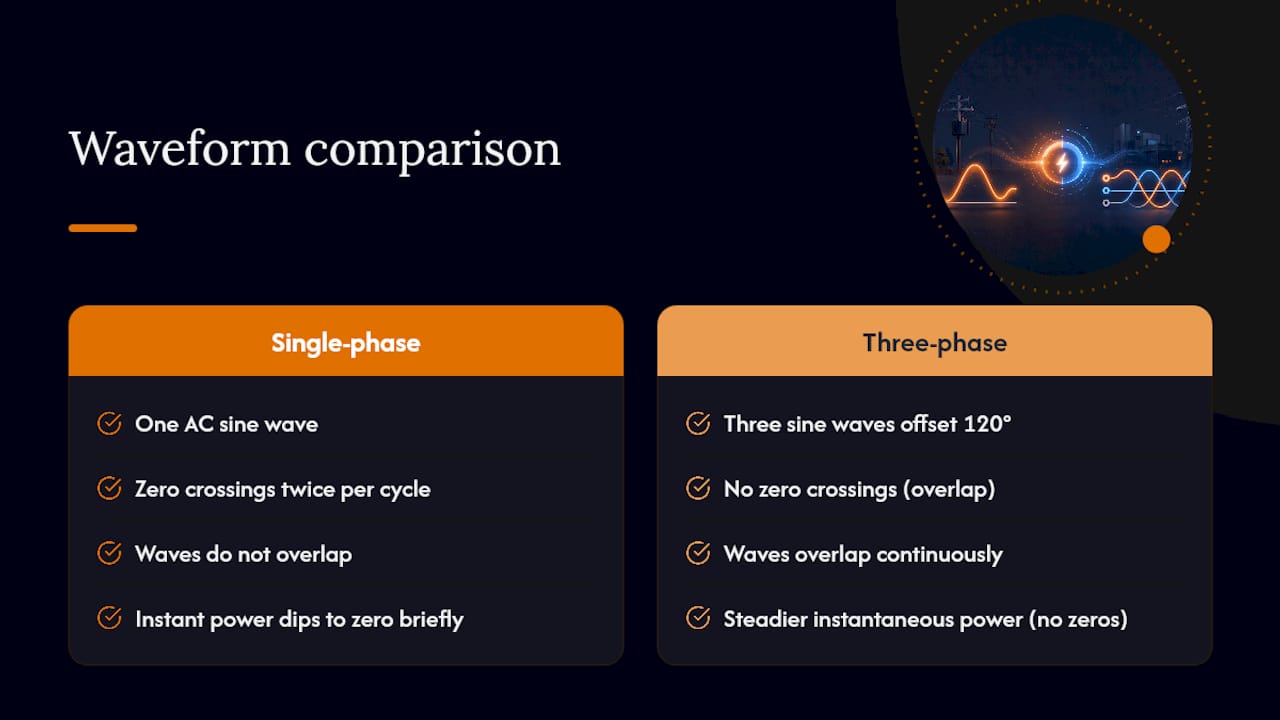
Three-phase power runs three separate sine waves, each offset by 120 degrees. Because the waves overlap, at least one of them is always delivering meaningful power. That's why three-phase power delivers steadier instantaneous power with no zero crossings, which is exactly why industrial motors run on it. They self-start more reliably and vibrate less than single-phase motors of comparable size.
The formula difference explains the practical payoff. Single-phase power is P = V × I × PF. Three-phase power is P = V × I × PF × √3. That √3 factor (roughly 1.732) is the whole story.
For equal delivered power, a three-phase conductor carries significantly less current than a single-phase conductor. That's the direct result of dividing total load across three offset waveforms instead of one. Lower current per conductor means smaller, cheaper cable can carry the same power, which is one reason three-phase scales so well for heavier loads.Voltages and wiring: what's actually behind your wall
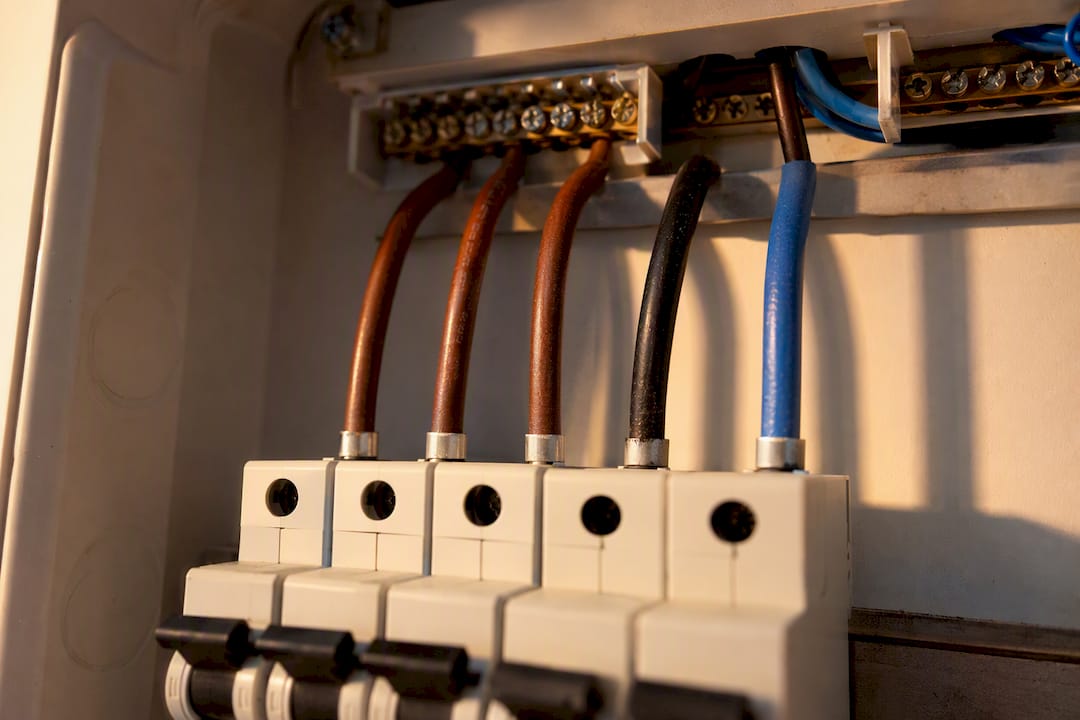
Most residential single-phase setups use one live conductor (L) and one neutral (N), with 230V line-to-neutral common under IEC-style systems. Three-phase systems typically run three live conductors plus a neutral, wired in either a wye (star) configuration or a delta configuration. In a wye setup, line-to-line voltage often runs around 400V while line-to-neutral sits near 230V. Delta systems skip the neutral for some configurations, which is one reason three-phase wiring diagrams look more complicated on paper than they are on a distribution board.
Some residential systems use a split-phase arrangement, where a single transformer secondary is centre-tapped to create two 120V legs that combine to 240V. It looks superficially similar to three-phase because it also uses more than two wires, but it's still fundamentally a single-phase supply. This confusion sends more homeowners down a rabbit hole of misidentifying their supply than almost anything else in residential electrics.
What to look for physically:
- Single-phase: typically 2 incoming conductors at the cutout (line and neutral)
- Three-phase: typically 4 incoming conductors (three lines and a neutral)
- Consumer unit or distribution board: pole count on the main isolator tells you a lot before you even open the meter box
When you actually need three phase at home
Single-phase covers the overwhelming majority of household needs: lighting, heating, standard appliances, air conditioning units under a few kilowatts, and most solar inverter setups. There's no efficiency or performance reason to chase three-phase if none of your equipment demands it.
Three-phase becomes relevant in a specific, fairly narrow set of cases:
- Motors above roughly 2 to 3 kW — workshop equipment, large pumps, and compressors run smoother and start more reliably on three-phase.
- Fast EV charging — a 22 kW home charger typically requires a three-phase connection. Single-phase chargers usually cap out well below that.
- Large heat pump systems — bigger residential and light-commercial heat pumps often specify three-phase for stable startup current.
- Commercial and small industrial loads — multiple simultaneous motor loads or heavy machinery.
Upgrading from single-phase to three-phase is not a weekend DIY job. It's a technical modification that typically requires distributor approval and rewiring at the distribution board, and the cost can be significant depending on how far your property sits from three-phase infrastructure. Pro Tip: Before assuming you need three-phase, check whether a smaller-capacity single-phase version of the same equipment exists. Plenty of heat pumps and EV chargers ship in both configurations, and the single-phase version often meets typical household usage without the upgrade cost.
How to check your own supply before you buy anything
You don't need an electrician's toolkit to get a strong first read on what you have. Work through this in order.
- Open the distribution board and count breaker poles on the main isolator. A single wide switch or a double-pole unit usually points to single-phase or split-phase. A triple-pole isolator is the fastest visual sign of three-phase service.
- Read the meter label. Meters are typically marked 1P (single-phase) or 3P (three-phase) directly on the faceplate.
- Count incoming conductors at the cutout. Two wires in usually means single-phase; four wires in usually means three-phase.
- Check equipment nameplates. Existing appliances, pumps, or inverters are marked 1-PH or 3-PH, which can confirm what your property was originally wired for.
- If it's still unclear, measure or ask. Confirming supply type by inspecting the distribution board and nameplates is the standard reference approach, and if that inspection leaves you uncertain, contacting your electricity retailer or a licensed electrician is the safest way to settle it before you spend money on equipment.
Phase type and your solar setup: inverters, EV chargers, and what to check first
Solar inverters come in single-phase and three-phase versions, and the wrong choice creates real headaches. A single-phase inverter feeding into a three-phase board can work, but it concentrates all your solar generation onto one leg, which sometimes triggers export limits set by the distributor. Homes with three-phase supply and larger systems often use three separate single-phase inverters or a dedicated three-phase inverter to balance generation evenly across all three lines.
EV chargers follow the same logic. A 22 kW charger generally needs three-phase to hit that output; on single-phase, most home charging needs are still met by a 7.4 kW charger overnight, so a full three-phase upgrade only pays off for high-mileage or fleet-style charging.
Before requesting quotes, gather:
- Your meter label (1P or 3P)
- Main breaker pole count
- Nameplate details from any existing inverter or major appliance
Solarza's role in confirming your setup and finding the right installer
Solarza connects homeowners with vetted, rated installers across every province, backed by a free solar calculator and tailored quotes for panels, batteries, and inverters. Compiling your meter and breaker details before requesting quotes speeds up installer sizing and avoids costly phase mismatches.
Gather your meter label and breaker pole count, then request quotes through Solarza's installer directory to get equipment sized correctly the first time.
Comparing installation and running costs across the two systems
Single-phase installations are cheaper to install almost every time. Wiring is simpler, boards are smaller, and most standard household inverters and appliances are designed around it from the factory, so there's no premium for compatibility.
Three-phase installation costs more upfront because it requires heavier cable, a larger distribution board, and often a formal application to the local distributor to confirm the property can actually receive a three-phase feed. If three-phase infrastructure doesn't already run to your street, that connection cost alone can dwarf the price of the equipment you're trying to run.
Maintenance costs tell a slightly different story. Three-phase motors and equipment tend to experience less mechanical wear over time because smoother torque delivery reduces vibration-related stress on motor components. For a workshop running motors daily, that lower wear can offset some of the higher installation cost over the equipment's lifespan. For a household with no motor-heavy equipment, that advantage never materializes, and the extra installation spend buys nothing.
The practical rule: price the actual equipment you plan to run under both scenarios before deciding. A three-phase heat pump might cost more to connect but less to maintain over a decade; a three-phase upgrade for a house with no heavy motors is close to pure added cost with no offsetting benefit.
Does phase type change your electricity bill?
Phase type itself doesn't directly change your tariff rate. Both single-phase and three-phase customers are typically billed on the same per-unit rates for the same tariff category. What changes is how efficiently your equipment converts that electricity into useful work, and that's where phase type actually shows up on your bill.
Motors on three-phase supply generally run more efficiently at higher loads because the steadier power delivery means less energy lost to vibration, heat, and mechanical resistance. A single-phase motor of the same rated output typically has to work harder to smooth out the pulsing power it receives, and some of that extra effort shows up as wasted heat rather than useful output.
For solar households, phase type affects efficiency in a different way. A single-phase inverter feeding a three-phase board concentrates generation on one line, and if that line hits its export limit before the others, some potential generation gets curtailed even though total demand across the property could absorb it. Balancing generation across all three phases with the right inverter configuration avoids that waste, which matters more as system size grows.
For a typical household with standard appliances and no heavy motor load, the efficiency gap between phase types is negligible. The bill impact comes almost entirely from system sizing, tariff structure, and how much solar generation actually offsets grid draw, not from which phase configuration feeds the property.
Safety issues to watch for with each system
Single-phase systems carry familiar residential risks: overloaded circuits, worn insulation, and DIY wiring mistakes on lighting or socket circuits. These are common because single-phase boards are the ones most homeowners feel confident opening themselves, which is exactly when small mistakes turn into shock or fire risks.
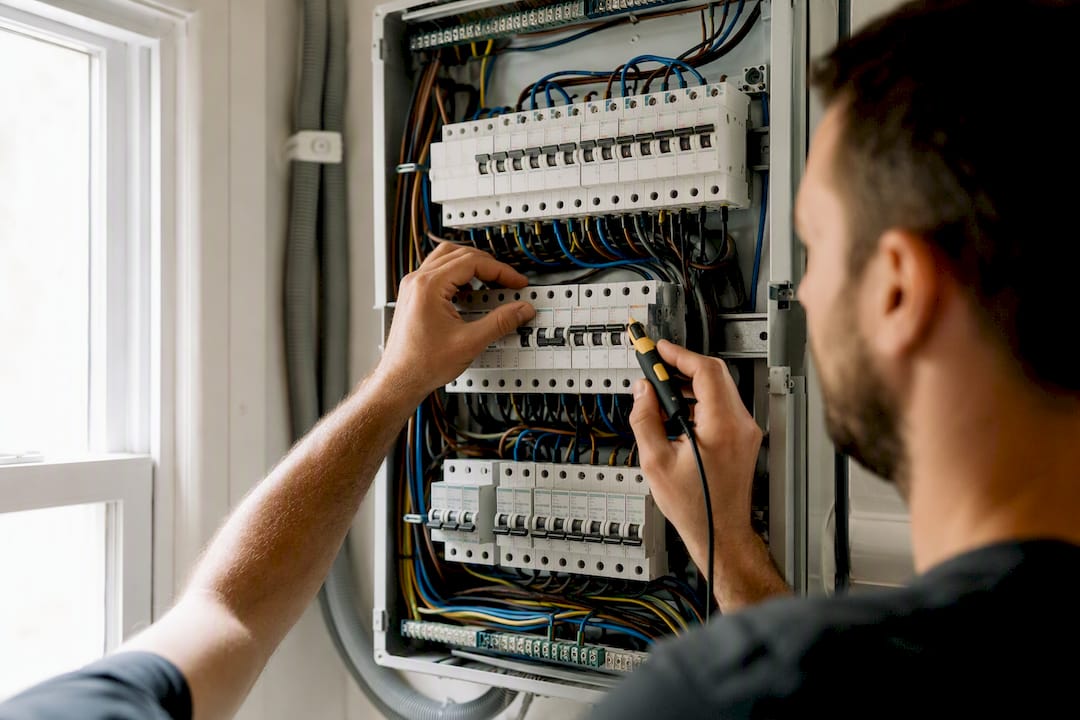
Three-phase systems carry higher stakes because of the voltage present between phases. Line-to-line voltage on a three-phase board runs meaningfully higher than any single line-to-neutral measurement, and miswiring during an upgrade or repair can put a live phase where a neutral is expected. That's a serious hazard for anyone other than a licensed electrician working on the board.
A recurring issue on three-phase installs is phase imbalance, where load isn't distributed evenly across all three lines. It doesn't usually pose an immediate safety risk, but it can cause a neutral conductor to carry more current than expected and lead to unnecessary tripping or premature wear on that leg over time. Solar installers watch for this specifically when wiring multiple single-phase inverters onto a three-phase supply.
The one safety step that applies to both systems equally: never attempt to identify supply type by opening a live board yourself if you're not confident reading it. Breaker pole counts and meter labels can be checked visually with the board closed. Anything beyond that, including voltage measurement between phases, belongs to a licensed electrician.
The gap between what most guides tell you and what actually matters
Most explainers on this topic spend all their time on the electrical theory and almost none on the decision homeowners actually have to make: is this upgrade worth it for me specifically. The theory matters, but it's not where people get stuck.
What's underrated is how much clarity you get just from opening your own distribution board and counting poles before calling anyone. That five-minute check, cross-referenced against your meter label, resolves most of the uncertainty that sends people searching for explainers in the first place. It also means you walk into a conversation with an installer already knowing your starting point instead of guessing.
The conventional advice tends to frame three-phase as a straightforward upgrade path once you've decided you want it. It isn't. Distributor approval, board rewiring, and infrastructure availability on your street all sit between wanting three-phase and having it, and that reality gets glossed over more often than it should.
My take: solve the identification question first, size your actual equipment needs second, and only then weigh whether an upgrade earns its cost. Skipping straight to "should I get three-phase" without doing the first two steps is how people spend money solving a problem they didn't actually have.
— Kobus Kohvik
Get the right inverter and installer once you know your supply
Once you've confirmed whether you're on single-phase or three-phase, the equipment decision gets a lot simpler; you're no longer guessing at inverter compatibility or charger sizing. Solarza is built for exactly this handoff: instead of researching installers one by one, you submit your meter label, breaker pole count, and any existing nameplate details once, and Solarza matches you with vetted, rated installers in your province who already know how to size systems around your actual supply.

That matters most when you're comparing inverter options, since single-phase and three-phase units aren't interchangeable and picking wrong means a return trip and a second invoice. Solarza's tailored quote process also flags whether your property's setup supports the battery and panel combination you're considering, based on real answers from local installers rather than generic sizing charts.
Gather your meter label and breaker pole count now, then request quotes from vetted installers in your city to get equipment sized correctly on the first visit.
Sources
- Single vs Three Phase Power — UTI blog
- SANS 10142-1 (electrical wiring code) — archived copy
- Three‑phase power: what it is and the benefits it brings — Vertiv
FAQ
Is 240V single-phase or three-phase?
240V can be either. It's common as a single-phase household voltage, but it also appears as the line-to-neutral or line-to-line value within some three-phase configurations, which is why voltage alone doesn't tell you the phase type.
Which is better, single-phase or three-phase?
Neither is universally better; it depends on the load. Single-phase suits standard household demand, while three-phase suits heavy motors, fast EV chargers, and large heat pumps because it delivers steadier power at lower current per conductor.
How can I tell if my property is three-phase or single-phase?
Check your distribution board: a triple-pole main isolator and four incoming conductors point to three-phase, while a double-pole isolator and two incoming conductors point to single-phase. The meter label (1P or 3P) usually confirms it directly.
How many air conditioners can run on a three-phase supply?
There's no fixed number; it depends on each unit's rated load and how it's balanced across the three lines. A licensed electrician can calculate the total demand against your specific three-phase capacity rather than relying on a generic count.
Do I need three-phase for solar or an EV charger at home?
Most homes don't. A standard solar inverter setup and a 7.4 kW overnight EV charger both run comfortably on single-phase; three-phase becomes relevant mainly for 22 kW fast chargers or larger multi-inverter solar installations.