Two Minute Check for NRS Approved Inverters in South Africa
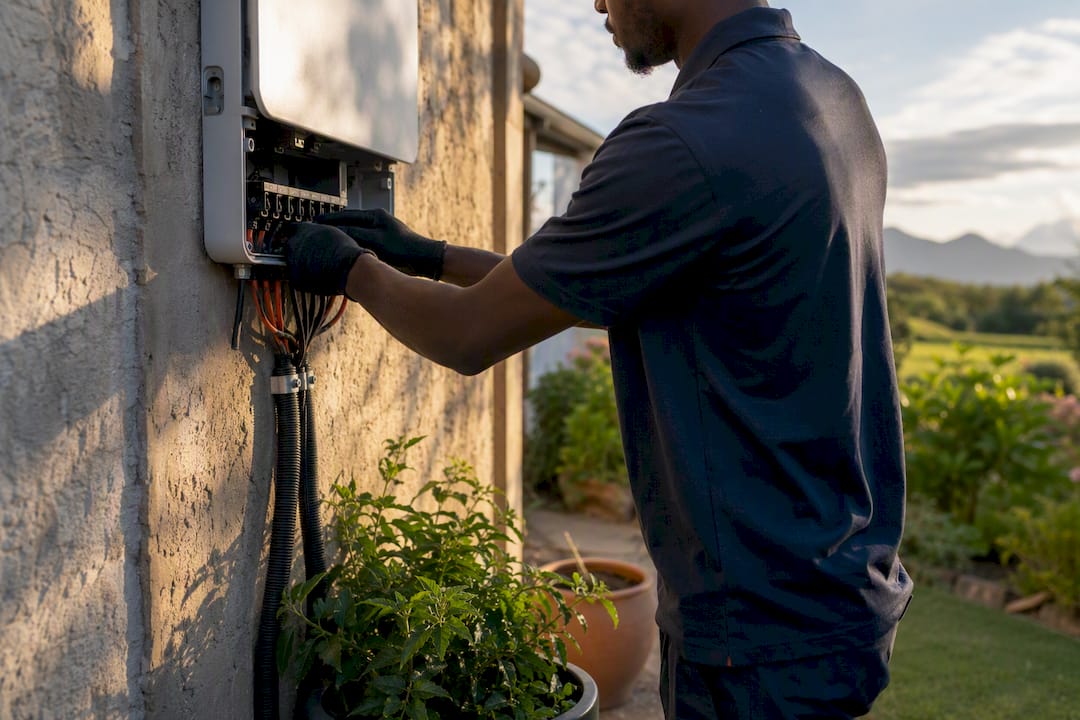
The official word on which inverters qualify comes from the SSEG approved photovoltaic inverter list, and your municipality's own approved list. Before you buy, confirm your chosen model appears there, or ask the supplier for its NRS 097-2-1 type-test certificate and check acceptance directly with your network operator. Solarza connects you with installers who can verify that paperwork and commission the system to the correct settings from day one.
*TL;DR:>
- Only inverters listed on the official SSEG approved list or your local municipal list are genuinely compliant, requiring specific NRS 097-2-1 type-test certificates for validation.*
- Approved inverters must demonstrate anti-islanding detection, proper trip thresholds, reconnection delays, and export limiting according to the latest 2024 standard edition.
- Failure to verify certificate numbers and commissioning settings often results in disconnection, rejected applications, or non-compliance, even with approved hardware.
- International certifications like IEC or UL do not guarantee NRS compliance, as they do not test for local grid-specific requirements mandated by South African standards.
- Using a vetted installer who can provide proper documentation and properly configure settings reduces the risk of future rejection or system disconnection.
Table of Contents
- What NRS 097-2-1 requires of inverters
- Where to find the official approved inverter lists
- What paperwork should your installer hand over?
- Registering your system and getting SSEG approval
- Common issues and troubleshooting with NRS approved inverters
- How NRS approval differs from IEC and UL certification
- Solarza's role in finding compliant inverters and installers
- Why homeowners get this wrong more than they should
- Get matched with a compliant, vetted installer
- Sources
- FAQ
What NRS 097-2-1 requires of inverters
NRS 097-2-1 exists to stop a solar inverter from doing something dangerous: feeding power into a grid line that a technician believes is dead. That single risk, called islanding, shapes almost every technical requirement in the standard.
An approved inverter has to detect a grid outage and disconnect promptly, then wait through a reconnection delay before feeding power back in once utility power returns. It must trip at defined frequency and voltage thresholds, hold to power factor and reactive power limits, and, where required, respect export limiting so it doesn't push more electricity onto the network than the connection allows.
None of that is something you can verify by looking at the box. It comes from type-testing at an accredited laboratory, which is why every entry on the SSEG list carries a specific test lab name and certificate number. If a supplier can't produce that certificate number, treat it as a red flag, not a formality.
Edition differences matter here too. NRS 097-2-1:2024 replaced the 2017 edition, and inverters certified under the older standard aren't automatically disqualified. Network operators generally allow a transition window, but new certifications now have to follow the 2024 edition, and acceptance policy can vary by municipality.
Pro Tip: Ask your installer for the exact certificate number on your quote, then search for that number on the current SSEG list yourself. It takes two minutes and confirms you're not relying on a supplier's word alone.Key protections an approved inverter must demonstrate:
- Anti-islanding detection and automatic disconnection during a grid outage
- Frequency and voltage trip thresholds within NRS-defined ranges
- A minimum reconnection delay before restoring power after an outage
- Power factor and reactive power limits appropriate to the connection type
- Export limiting capability where the network operator caps how much you can feed back
Where to find the official approved inverter lists
Two sources matter more than anything a salesperson tells you. The SSEG approved-inverter PDF is the national reference point, and several municipalities, including the City of Cape Town, maintain their own approved lists that can differ slightly from the national one.
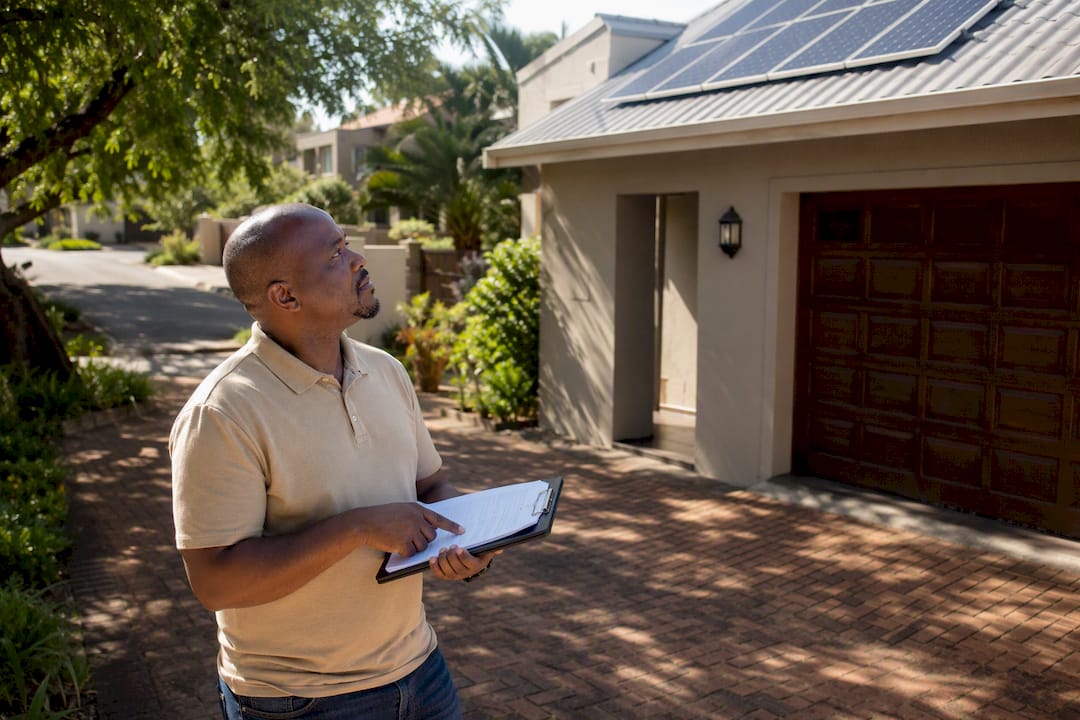
Each entry on these lists includes the make, model, test laboratory, certificate number, standard edition, and often a comments column. That comments column is easy to skip and genuinely important: some inverters are only approved for specific plant categories, such as Category A3, or require an external transformer to qualify. An inverter can be "approved" and still be the wrong choice for your particular setup.
If your chosen model isn't on either list, don't assume it's non-compliant. Ask the supplier for the NRS 097-2-1 type-test certificate directly, then contact your network operator to confirm they'll accept it before you place an order.
A quick checklist for reviewing any quote:
- Search the make and model on the current SSEG list and your municipal list.
- Note the certificate number and confirm it matches what's on the quote.
- Check the comments column for usage restrictions tied to your installation type.
- If unlisted, request the type-test certificate and email your network operator to confirm acceptance.
- Keep a copy of everything before signing off on the order.
Pro Tip: Save the certificate number from your quote and the corresponding line from the approved list side by side. If an installer ever disputes compliance later, you'll have the paper trail ready.
What paperwork should your installer hand over?
Four documents separate a legally connected solar system from a liability. The inverter's NRS 097-2-1 type-test certificate proves the hardware qualifies. A Certificate of Compliance issued by a Department of Labour registered electrician confirms the wiring meets SANS 10142-1. A commissioning report shows the protection settings were actually configured, not left on factory defaults. And for export-capable systems, you need SSEG application or approval evidence, or documented proof of a zero-export configuration.
Before hiring anyone, confirm the installer's DoL registration and ask whether they've commissioned NRS-compliant systems before, not just installed panels, using trusted resources like Trade Intel | REBUILDING THE TRADES to verify contractor standards. Ask specifically whether they can produce commissioning logs and whether the inverter's settings are adjustable or locked by the manufacturer.
On commissioning day, check specific numbers, not just a signature on a form: the over-frequency trip point (often around 51.5 Hz), the reconnection delay after an outage, and whether export limiting or zero-export mode is active and correctly configured. Many inverters ship with factory defaults that don't match NRS thresholds at all, which means an installer who never adjusts the settings could leave you non-compliant despite using an approved inverter.
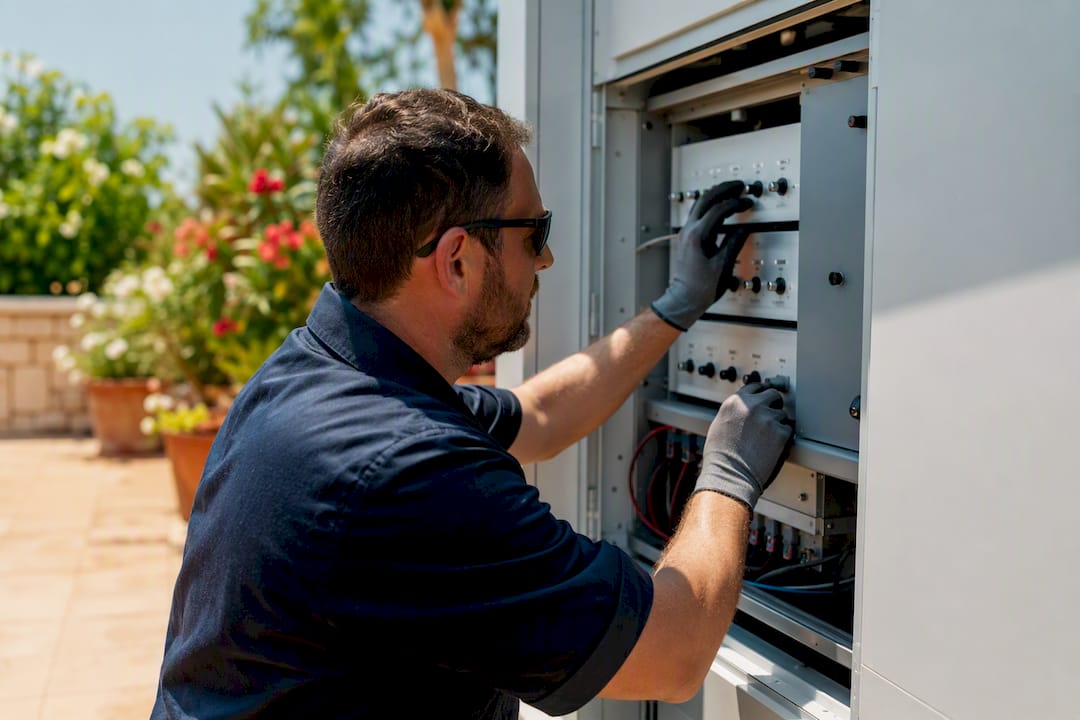
Skip any of this paperwork and the consequences are real: disconnection by your network operator, a rejected SSEG application, or a warranty and insurance claim denied because the system was never properly commissioned.
Registering your system and getting SSEG approval
Export-capable systems need full SSEG registration. If you'd rather skip that process, a zero-export configuration is a legitimate route, though it still requires a valid CoC and correct wiring standards. It's a paperwork shortcut, not a safety shortcut.
For SSEG approval, expect to submit:
- The inverter's NRS 097-2-1 type-test certificate
- A commissioning report confirming protection settings
- A single-line diagram of the installation
- Your Certificate of Compliance
- Any additional forms your specific municipality requires
Turnaround varies by network operator, but the most common rejection reasons are consistent everywhere: a non-compliant or unlisted inverter, factory-default settings that were never adjusted to NRS values, or a missing CoC. If your system is already installed and unregistered, many municipalities allow a post-installation SSEG application, provided you can produce commissioning evidence retroactively.
Common issues and troubleshooting with NRS approved inverters
Most compliance problems trace back to one of three causes: unadjusted factory settings, a certificate that doesn't match the actual model installed, or a network operator that hasn't updated its acceptance list to reflect a newer NRS edition.
If your SSEG application gets bounced, start by checking whether the inverter's frequency and voltage trip settings actually match NRS values, not the manufacturer's international default. This is the single most common rejection cause, and it's fixable without replacing hardware; it just needs a technician with access to the settings menu, which is why locked or password-protected inverters are worth avoiding.
A second frequent issue is model mismatch: the certificate on file references a firmware version or regional variant slightly different from what's physically installed. Ask your installer to confirm the certificate number matches the exact unit on your roof, not just the product family.
Reconnection delays that trip too early or too late after an outage are the third common flag. This usually means the commissioning technician skipped a step rather than a hardware fault, and it's worth requesting a fresh commissioning log if you notice your system behaving oddly after a grid outage.
How NRS approval differs from IEC and UL certification
NRS 097-2-1 is South Africa's grid-connection standard. It exists specifically to protect the local network and the technicians working on it, which is a narrower and more locally specific job than international certifications perform.
IEC standards, developed by the International Electrotechnical Commission, cover product safety and performance broadly across many countries, and most inverters sold internationally carry some IEC certification as a baseline. UL certification, common in North America, focuses heavily on electrical safety testing for the US market specifically.
An inverter can hold IEC or UL certification and still not be NRS 097-2-1 compliant, because those certifications don't test for the specific frequency trip thresholds, reconnection delays, and anti-islanding behaviour that South African network operators require. NRS standards are technically voluntary, but Eskom and most municipalities have effectively made them mandatory for grid connection, so international certification alone won't get your SSEG application approved. Always confirm NRS 097-2-1 type-testing separately, even on a premium imported inverter with a strong international reputation.
Solarza's role in finding compliant inverters and installers
Working out whether an inverter is genuinely compliant shouldn't fall entirely on you. Solarza connects South African homeowners with vetted installers across all nine provinces, alongside inverter guides and a solar calculator to help you size a system before you start comparing quotes.
When you request quotes through Solarza, ask each installer directly for the inverter's certificate number and a sample commissioning report before you commit to anything. A DoL-registered installer who's done this before will have both ready without hesitation. Use that response as a filter: hesitation or vague answers are worth treating as a warning sign.
Once you've shortlisted installers, confirm they'll handle SSEG pre-approval as part of the job, not as a separate cost you discover later. That single question upfront saves most of the disputes homeowners run into after installation.
Why homeowners get this wrong more than they should
The industry has done a poor job explaining that "approved inverter" and "compliant installation" are two entirely separate things. An inverter on the SSEG list is a necessary condition, not a sufficient one. I've seen the assumption trip up otherwise careful homeowners: they research the hardware exhaustively, then hire whoever's cheapest to install it, and the factory-default settings never get touched.
That gap between certified hardware and correct commissioning is where most disconnections and rejected SSEG applications actually happen, not at the point of purchase. The paperwork trail, the certificate number, the commissioning log showing real settings, matters as much as the brand name on the inverter casing. If there's one habit worth building, it's asking for that commissioning evidence before you sign off the final invoice, not after your network operator flags a problem.
Homeowners who treat compliance as a one-time checkbox at purchase, rather than a chain that runs from certificate to commissioning to registration, are the ones who end up fighting their municipality months later over a system that was never actually configured correctly.
— Kobus Kohvik
Get matched with a compliant, vetted installer
Chasing down certificate numbers and commissioning reports on your own is doable, but it's slow, and one wrong installer choice can cost you a rejected SSEG application months later. Solarza is the faster route: it matches you directly with verified, DoL-registered installers across South Africa who already understand NRS 097-2-1 documentation and won't leave your inverter on factory defaults.
Every installer in Solarza's network can be asked upfront for certificate numbers, sample commissioning logs, and SSEG registration support, so you're not gambling on paperwork after the system is already on your roof. Browse solar installers by city to compare vetted options near you, or request a free quote and get matched with installers ready to confirm compliance before you commit to anything.
Sources
Two documents cover almost everything a homeowner needs to check. Keep the SSEG approved-inverter PDF bookmarked for checking specific models, and your municipality's own list for local acceptance policy.
For the underlying standards themselves:
- Approved Photovoltaic PV Inverter list (SSEG, 15 May 2025)
- Solar PV Compliance in South Africa (SurgePV)
Both matter at different stages: NRS 097-2-1 before you buy, SANS 10142-1 when your electrician signs off the installation.
FAQ
Which inverter brand is the best in South Africa?
There's no single "best" brand; what matters is whether your specific model appears on the SSEG approved-inverter list with a valid NRS 097-2-1 certificate. Compare inverter options and brands available in South Africa, then verify the specific model against the current list before deciding.
Which inverter brand is the best rated?
Ratings vary by retailer and review platform, but a high rating doesn't confirm NRS compliance on its own. Always cross-check the exact model against the SSEG or your municipal approved list regardless of how it's rated elsewhere.
What size inverter will run a house?
Sizing depends on your household's peak load and appliance mix, not a fixed rule of thumb. A solar calculator can estimate the right capacity for your home, and your installer should confirm that figure against your actual usage before ordering equipment.
Do I need a Certificate of Compliance even with a zero-export inverter setup?
Yes. A zero-export configuration reduces SSEG paperwork, but a Department of Labour registered electrician still needs to issue a CoC confirming your wiring meets SANS 10142-1.
Can I use an inverter certified under the 2017 NRS edition?
Some network operators still accept inverters certified under the 2017 edition during a transition period, but new certifications must follow NRS 097-2-1:2024. Confirm your specific municipality's current acceptance policy before purchasing.