Load Shedding Backup in South Africa: Budget Paths, COC & Vetted Quotes
For most South African homes, a hybrid solar and battery system delivers the best long-term value, though an inverter and battery setup is the faster, cheaper way to get the lights back on this month. Generators only make sense for high-load rural properties without grid alternatives nearby. Start by calculating your critical load, then request quotes, since Section 12B still offers a first-year tax deduction on qualifying solar installations in 2026.
*TL;DR:>
- A hybrid solar and battery system provides the best long-term value, offering savings in 5 to 7 years, but an inverter and battery setup is faster and cheaper for immediate needs.*
- Entry-level inverter and battery systems start around R35,000 to R57,000, with hybrid systems costing more but offering payback through reduced electricity bills, especially with Section 12B deductions.
- For short outages of two to four hours, a simple inverter and battery can suffice, while longer or more frequent outages favor hybrid solar systems or generators for high loads.
- Homeowners should focus on the system's size through kVA and kWh ratings, and ensure installers provide site assessments, proper warranties, and official compliance certificates to avoid insurance and safety issues.
- Starting with small, low-cost backup options like a portable power station can build up capacity over time, with backup needs tailored to actual outage duration and peak power demands.
Table of Contents
- Understanding your load shedding backup options
- What does a backup system cost in South Africa?
- How do you choose the right backup solution?
- Where should you start if your budget is tight?
- How Solarza connects you with vetted installers
- Load shedding backup: what actually matters vs. what gets oversold
- Get matched with a vetted solar installer near you
- Sources
- FAQ
Understanding your load shedding backup options
Every backup system does one of two jobs: it stores power for when Eskom cuts you off, or it generates power on the spot. That distinction shapes everything else, from noise to running costs to how long a system lasts.
A hybrid solar and battery system uses rooftop panels to charge a battery bank during the day, then draws from that battery when the grid drops or at night. It's the only option that actively cuts your Eskom bill rather than just covering gaps, and it runs silently. Municipal rules around exporting excess power (SSEG registration) apply if you feed power back to the grid, but a self-consumption system that doesn't export usually skips that step.
An inverter and battery system works without solar panels. It stores grid electricity in a battery and switches over automatically during an outage, powering lights, Wi-Fi, a TV, and a fridge for a few hours. It's the quickest way to bridge a typical two to four and a half hour loadshedding block, though it does nothing for your monthly bill since it still relies on Eskom to recharge.
A generator burns petrol, diesel, or gas to produce power on demand. It can carry heavy loads indefinitely as long as fuel keeps flowing, which makes it the right call for farms, workshops, or homes with borehole pumps and no realistic solar footprint. The trade-offs are real: noise complaints from neighbours, fuel storage hassles, and running costs that climb fast.
A UPS or portable power station is the entry point. It keeps a router, laptop, and a lamp or two alive through short outages but has no meaningful reserve for anything with a compressor or motor.
- Solar + battery hybrid: highest upfront cost, lowest running cost, silent, cuts your bill
- Inverter + battery: moderate cost, fast install, no bill reduction, quiet
- Generator: lower upfront cost, highest running cost, loud, unlimited runtime with fuel
- UPS/portable: lowest cost, minimal capacity, ideal as a stopgap
What does a backup system cost in South Africa?
Price bands vary more than most homeowners expect, and the gap between a basic setup and a full hybrid system often comes down to battery chemistry and inverter size rather than brand.
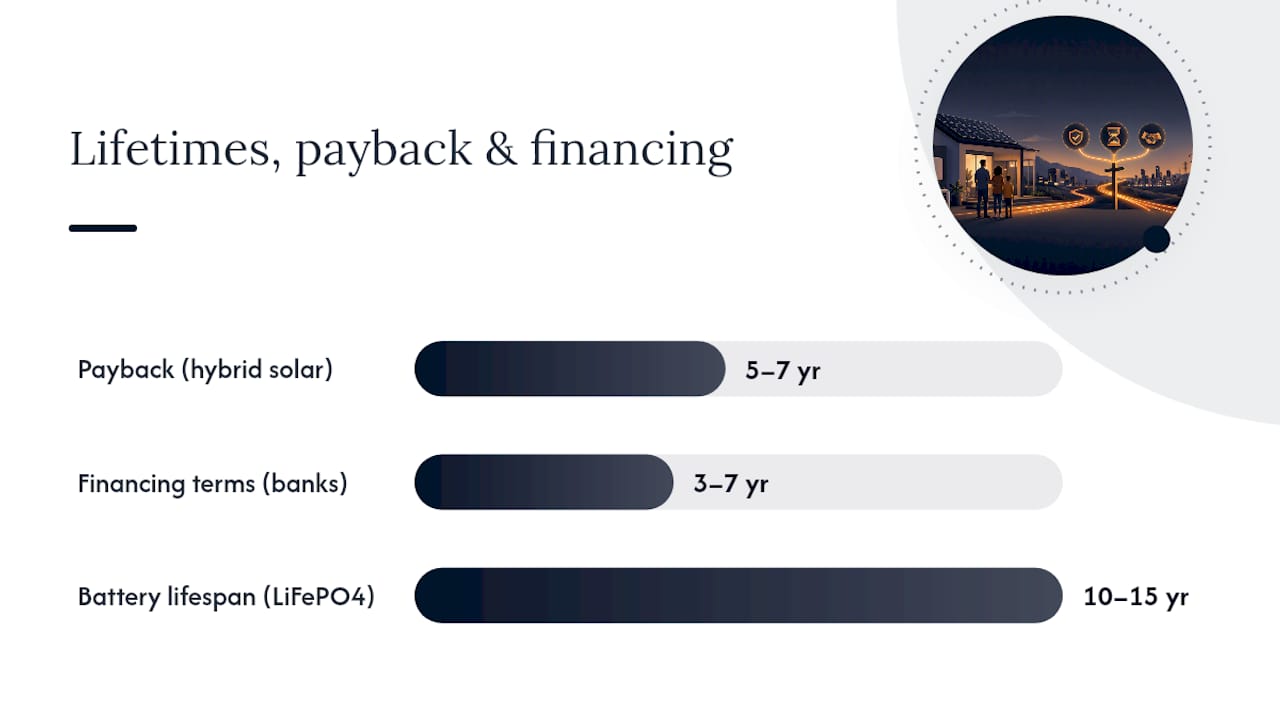
Entry-level installed inverter and battery systems, built around a 3kW inverter paired with roughly 5.12kWh of LiFePO4 battery storage, typically start around R35,000 to R57,000 in current price bands. Step up to a hybrid solar and battery system and you're looking at a much larger outlay, but one that pays itself back in 5 to 7 years at current Eskom tariffs, with Section 12B allowing qualifying installations a 100% first-year deduction in 2026.
Sizing a system comes down to two numbers most quotes will throw at you without explanation:
- kVA (kilovolt-amps) measures the peak simultaneous load your inverter can handle. This matters most for appliances with motors, like fridges or pool pumps, which draw a startup surge two to three times their running wattage.
- kWh (kilowatt-hours) measures how much energy your battery stores, which determines runtime. A 5kWh battery running a fridge, router, TV, and a few LED lights will comfortably cover a four-hour loadshedding block with capacity to spare.
- Critical load planning means wiring only the essentials, fridge, router, selected lights, security gear, onto a separate backed-up circuit rather than trying to power the whole house, which keeps costs down and avoids overloading a smaller inverter.
A 5kVA petrol generator running through extended loadshedding can cost between R3,466 and R6,933 a month in fuel alone, depending on the stage and how many hours it runs. Compare that to a battery system, where the only ongoing cost after installation is occasional maintenance and eventual replacement, and the lifecycle math shifts fast in favour of batteries for anyone facing regular, prolonged outages. Quality LiFePO4 batteries now dominate the local market because they handle heat better and last 6,000 or more cycles, often 10 to 15 years of daily use. Several South African banks, including Nedbank, FNB, and Standard Bank, offer solar financing over three to seven years, which can bring monthly repayments in line with what you'd otherwise spend feeding a generator.
How do you choose the right backup solution?
Four questions decide which category you need, and experts consistently point to the same four factors: how long your outages typically run, how much peak power you draw at once, whether your goal is emergency backup or cutting your bill long-term, and what you can actually afford upfront.
If loadshedding in your area rarely exceeds stage 4 and outages run two to four hours, an inverter and battery system covers you. If you're dealing with stage 6 load shedding backup needs, longer and more frequent cuts, or if you want to stop paying Eskom altogether, a hybrid solar system earns its higher price tag over time. Rural properties running boreholes, workshops, or irrigation pumps usually need a generator's raw, sustained output regardless of solar investment.
Before accepting any quote, ask the installer these questions directly:
- Will you do an on-site assessment, or are you quoting off a phone call?
- What warranty applies to the inverter and separately to the battery, including cycle life and capacity retention?
- Will I receive a certificate of compliance (COC) on completion?
- Are you SAPVIA-registered, and can you show recent similar installations?
- Can you break down exactly which circuits will be backed up and why the system is sized that way?
Walk away from any installer who won't visit your property, refuses to issue a COC, or gives you a one-line quote with no itemised sizing. An uncertified installation isn't just a compliance headache. It can void your home insurance if the system ever causes an electrical fire, so insist on a registered electrician and a proper COC every time. Pro Tip: Ask for the installer's SAPVIA registration number and check it independently before you sign anything. A legitimate installer will never hesitate to provide it.
Where should you start if your budget is tight?
You don't need to jump straight to a full hybrid system. Most homeowners build backup capacity in stages, and each stage should set you up for the next rather than becoming wasted spend.
- Start with a UPS or small portable power station (500 to 1,000Wh) if your only concern is keeping Wi-Fi, a laptop, and a couple of lights running through a typical outage. These cost a fraction of an inverter system and install in minutes.
- Move to an entry-level inverter and battery system once you need the fridge, TV, and more than one or two rooms covered. Choose a "solar-ready" hybrid inverter from the start, even if you can't afford panels yet, so you're not paying to swap equipment later.
- Add solar panels and expand battery storage when budget allows, turning your backup system into a bill-reduction tool rather than just an emergency measure.
- Reserve a generator for situations an inverter genuinely can't handle: sustained heavy loads, borehole pumps, or properties where solar simply isn't viable due to shading or roof space.
Buying solar-ready equipment upfront, even on a tight budget, preserves your upgrade path and avoids paying twice for the same functionality.
How Solarza connects you with vetted installers
Getting a trustworthy quote is often the hardest part of this whole process, which is exactly the gap Solarza was built to close. The platform connects you with vetted, rated solar installers across all nine provinces, matched to your location and the specific service you need, whether that's a full residential solar installation or a standalone battery backup system.
Submit your details once and you'll receive tailored quotes from installers in your area rather than chasing multiple companies yourself. A properly vetted Solarza installer should still follow the same process outlined above: a site assessment, a written scope of work with sizing calculations, and a certificate of compliance once the job is done. Use the platform's solar calculator beforehand to get a realistic sense of system size and savings before quotes start arriving.
Load shedding backup: what actually matters vs. what gets oversold
The advice you'll find most often online treats backup power as a single purchase decision, generator or solar, when it's really a sequencing problem. Most homeowners overspend on their first system because they size for a hypothetical stage 6 blackout instead of the two to four hour cuts they actually experience most weeks.
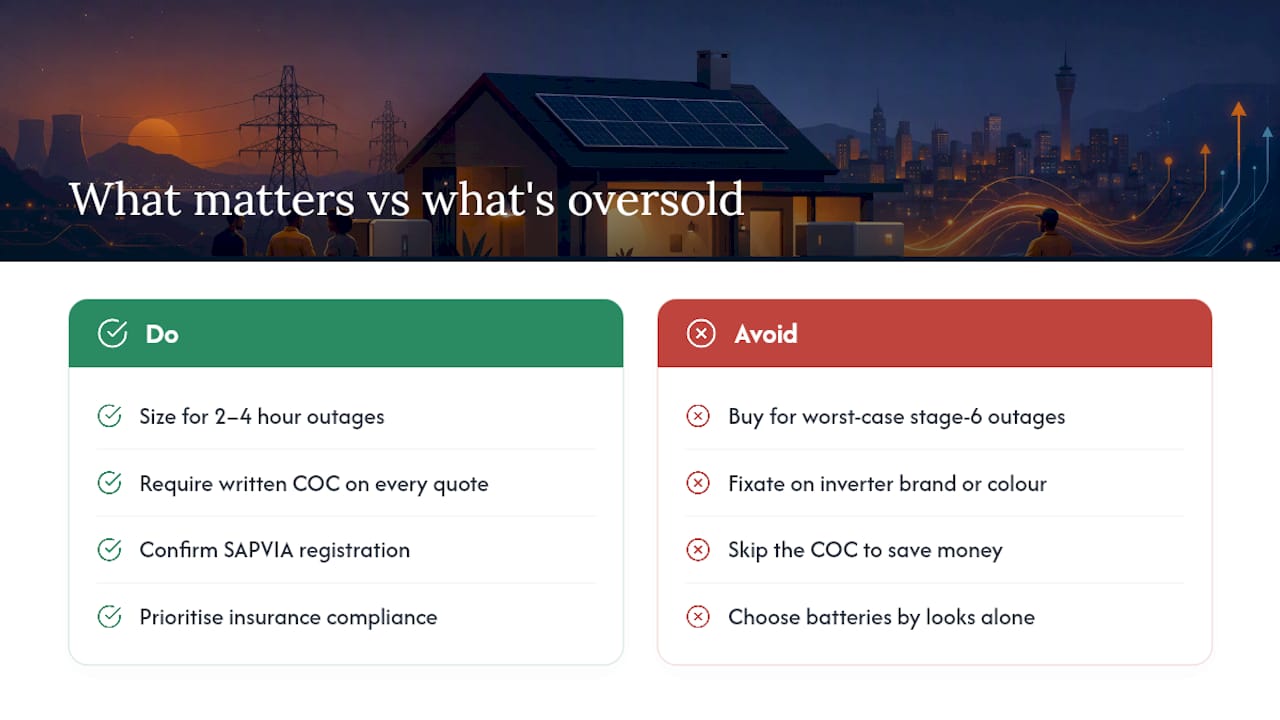
The bigger blind spot is compliance. Homeowners fixate on inverter brand and battery chemistry, and barely ask about the certificate of compliance until something goes wrong with an insurance claim. A COC from a registered electrician isn't paperwork you can skip to save a few thousand rand. It's the difference between a valid insurance payout and a denied one if a fault ever starts a fire.
My honest read: buy for the outages you actually get, not the worst-case scenario, and treat SAPVIA registration and a written COC as non-negotiable line items on every quote, not nice-to-haves. Everything else, brand, panel wattage, battery colour, is secondary.
— Kobus Kohvik
Get matched with a vetted solar installer near you
The platform helps reduce the guesswork of calling around for quotes by matching you with vetted, rated installers in your area who understand loadshedding-driven demand.
Rather than accepting the first quote you receive, request at least two through the platform and compare them side by side, checking specifically that each proposal includes a certificate of compliance and clear warranty terms for both inverter and battery. Start by running your numbers through the solar calculator to get a realistic size and cost estimate, then head to request a free solar quote to get matched with installers who serve your area and can quote on the exact system you need.
This article is general information, not a substitute for advice from a qualified financial advisor. Consult a qualified financial professional about your own circumstances before acting on anything here.
Sources
- Solar/inverter/generator guide (SAPropertyTools)
- Inverters, generators, gas: ultimate loadshedding guide (News24)
- Inverter prices South Africa 2026 | Rand Tools
- Solar and battery backup vs generators — pros and cons (Moneyweb)
FAQ
What is the best electricity backup system for my home?
For most homes, a hybrid solar and battery system offers the best long-term value with payback in 5 to 7 years, while an inverter and battery setup is the faster, cheaper option if you need coverage sooner. Solarza can match you with installers who quote on both.
How much does an inverter cost?
Retail inverter-only units vary widely by capacity and brand, but a fully installed entry-level inverter and battery system, including a 3kW inverter and roughly 5.12kWh of LiFePO4 storage, typically starts around R35,000 to R57,000.
Which country has the most load shedding?
Load shedding severity varies globally and changes yearly based on grid conditions and generation capacity, so no single fixed ranking holds over time; South Africa has experienced some of the most sustained and widely reported outages of any middle-income economy in recent years.
What is the best backup option for Wi-Fi during loadshedding?
A small UPS or portable power station in the 500 to 1,000Wh range is enough to keep a router, laptop, and a light or two running through a typical outage, and it's the cheapest entry point before upgrading to an inverter system.
Do I need a certificate of compliance for a battery backup system?
Yes. Even battery-only systems that don't export power to the grid still require an electrical certificate of compliance (COC) from a registered electrician, and skipping it can jeopardise insurance claims if something goes wrong.