3 SANS Checks SA Homeowners Must Ask About Solar Lightning Protection
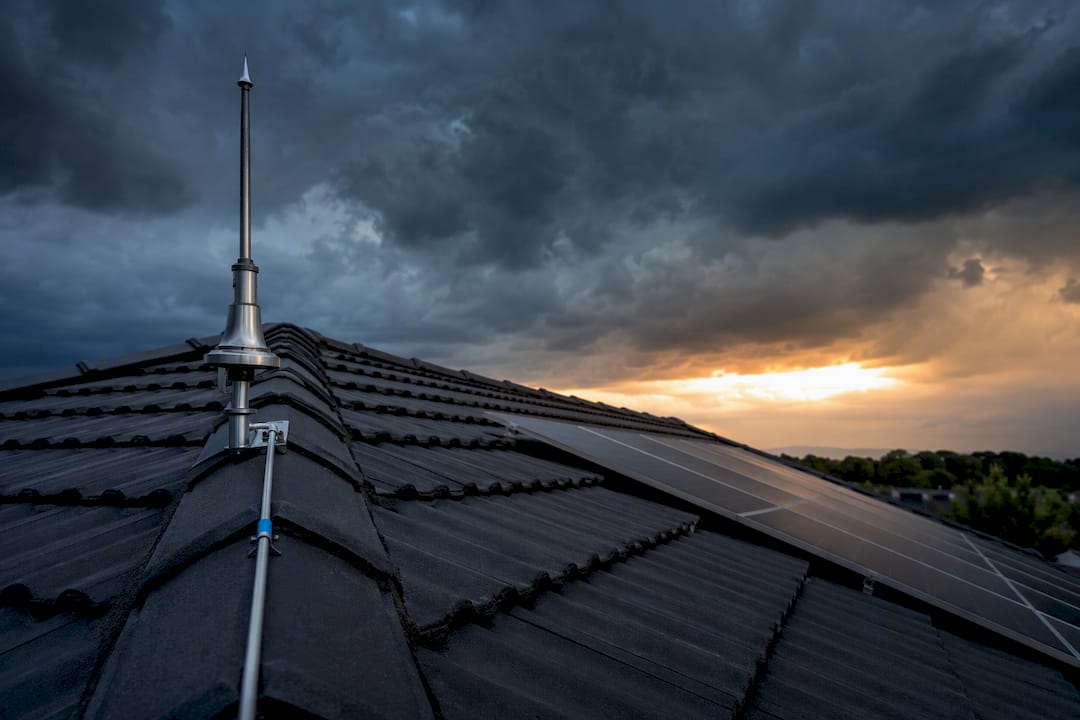
Most residential solar systems benefit from layered protection, and yes, it matters. The three measures worth prioritizing are DC and AC rated surge protection devices, proper earthing with equipotential bonding, and a full lightning protection system where a risk assessment justifies one. No setup stops a direct strike outright, but this combination cuts the odds of a fried inverter or melted combiner box dramatically. Insist on standards-based design and ask for documented earthing and SPD test results before signing off on any installation.
*TL;DR:>
- Proper lightning protection requires DC-rated surge protectors on the photovoltaic array side, with visible end-of-life indicators to ensure ongoing functionality.*
- Grounding and equipotential bonding must connect all system components to a single earth reference and require site-specific testing for low resistance.
- External lightning protection systems become necessary in exposed or tall buildings, with a risk assessment determining the appropriate zones and clearances.
- Questions about SPD specifications, earthing test certificates, and compliance standards should be asked upfront to avoid underprotected or non-compliant installations.
- Routine inspections of surge protection indicators and earthing resistance tests are essential after storms or soil disturbances to prevent unnoticed damage.
Table of Contents
- What does full lightning protection for solar panels actually include?
- Protecting the DC array vs. the AC side: what's different?
- How should grounding and equipotential bonding be designed?
- What should you ask an installer before signing a solar protection quote?
- How often should surge protection and earthing be inspected?
- Where Solarza fits into getting this done right
- Why "the grid earth protects everything" is the most expensive myth in solar
- Get matched with an installer who takes earthing seriously
- Sources
- FAQ
What does full lightning protection for solar panels actually include?
A complete strategy layers three separate defenses, and each one does a different job. Grounding gives lightning current a safe path to earth. Equipotential bonding ties every metal part, frames, rails, inverter casing, distribution boards, to the same electrical reference so a strike doesn't create a dangerous voltage difference between components someone might touch. Surge protection devices (SPDs) absorb transient spikes before they reach sensitive electronics.
SPDs come in three classes, and confusing them is a common and costly mistake:
- Type 1 SPDs sit at the main service entrance and handle direct or near-direct strike energy.
- Type 2 SPDs live in distribution boards and manage the surges that get past Type 1 protection.
- Type 3 SPDs protect individual point-of-use equipment, catching whatever residual transient remains.
On the solar array side specifically, standard AC-rated SPDs won't do the job. Layered surge protection with DC-rated devices on the PV array side is the recommended approach, and those devices need visible end-of-life indicators so a degraded unit doesn't sit silently offering zero protection. A tripped or discolored indicator window means replacement, not a wait-and-see approach.
An external lightning protection system, air terminals and down conductors included, becomes worthwhile when the roof sits exposed, the building is tall relative to its surroundings, or the area has a high keraunic level (frequent thunderstorm activity). A proper risk assessment should decide this, not guesswork. Correctly designed layered protection significantly reduces equipment failure, though nothing removes risk to zero.
Protecting the DC array vs. the AC side: what's different?
The DC side of a solar system and the AC side face lightning differently, and treating them the same is where a lot of installations go wrong. DC-rated SPDs must have a maximum continuous operating voltage (Uc) that stays safely below the array's open-circuit voltage (Voc). Get that wrong and the SPD can misfire under normal operating voltage instead of waiting for an actual surge.
Here's the practical sequence for getting DC-side protection right:
- Confirm the SPD's Uc rating against your array's Voc, with margin, before installation, not after.
- Place DC SPDs as close as possible to the inverter or combiner box, since every extra meter of cable adds inductance that lets more voltage through.
- Match SPD quantity to your MPP tracker count so each independent tracking channel gets its own dedicated protection rather than sharing one device across strings.
- Bond communication and monitoring cables into the same equipotential system as the power conductors, since data lines are just as vulnerable to induced surges and often get overlooked.
On the AC side, Type 2 SPDs in the distribution board and Type 3 protection at the inverter connection point cover the transition from grid to home wiring. Pro Tip: Keep positive and negative DC conductors tightly paired along their entire run. Installer forums report inverter failures traced back to separated DC cable runs acting like antennas, where the gap between conductors forms a loop that amplifies induced voltage during a nearby strike. Tight pairing reduces loop formation and the risk of induced damage.
How should grounding and equipotential bonding be designed?
Equipotential bonding is a system, not a single earth rod hammered into the lawn. Every conductive part of the installation, panel frames, mounting rails, the inverter chassis, distribution boards, needs to connect to one common earth reference. Equipotential bonding exists specifically to prevent dangerous potential differences between components when a transient current is looking for a path.
Getting the earthing itself right involves a few non-negotiable design steps:
- Test soil resistivity at the site before finalizing electrode layout. Sandy or rocky soil behaves very differently from clay.
- Design earth spike placement and, where needed, earth mats around the resistivity result rather than a generic template.
- Target low earth resistance. Guidance figures vary by standard and soil condition, so treat any single number as a starting point your installer should confirm for your site, not a universal pass mark.
- Keep earth conductors as short and straight as possible. Sharp bends add impedance exactly where you need current to flow freely.
The lightning protection zone (LPZ) concept governs how far air termination points need to sit from PV modules to avoid a side flash. Practical rules of thumb suggest a small clearance on the order of half a meter of clearance in many rooftop scenarios, though the exact figure depends on the zoning calculation for that specific roof.
What should you ask an installer before signing a solar protection quote?
Vetting an installer's lightning protection plan comes down to a handful of direct questions, and asking them upfront saves arguments later.
- Ask for a design referencing SANS 62305, SANS 10313, or SANS 10142, along with evidence a risk assessment or LPZ recommendation was actually done for your property, not copied from a template.
- Request SPD datasheets showing type classification, nominal discharge current, Uc rating, and confirmation the DC-side devices are genuinely PV rated rather than repurposed AC units.
- Require an earthing resistance test certificate, plus a written maintenance schedule specifying when it gets retested.
- Confirm insurance and warranty terms explicitly cover lightning and surge damage. Some policies exclude "acts of God" language that lightning can fall under if not spelled out.
An installer who hesitates on any of these four points is worth a second opinion before you commit.
How often should surge protection and earthing be inspected?
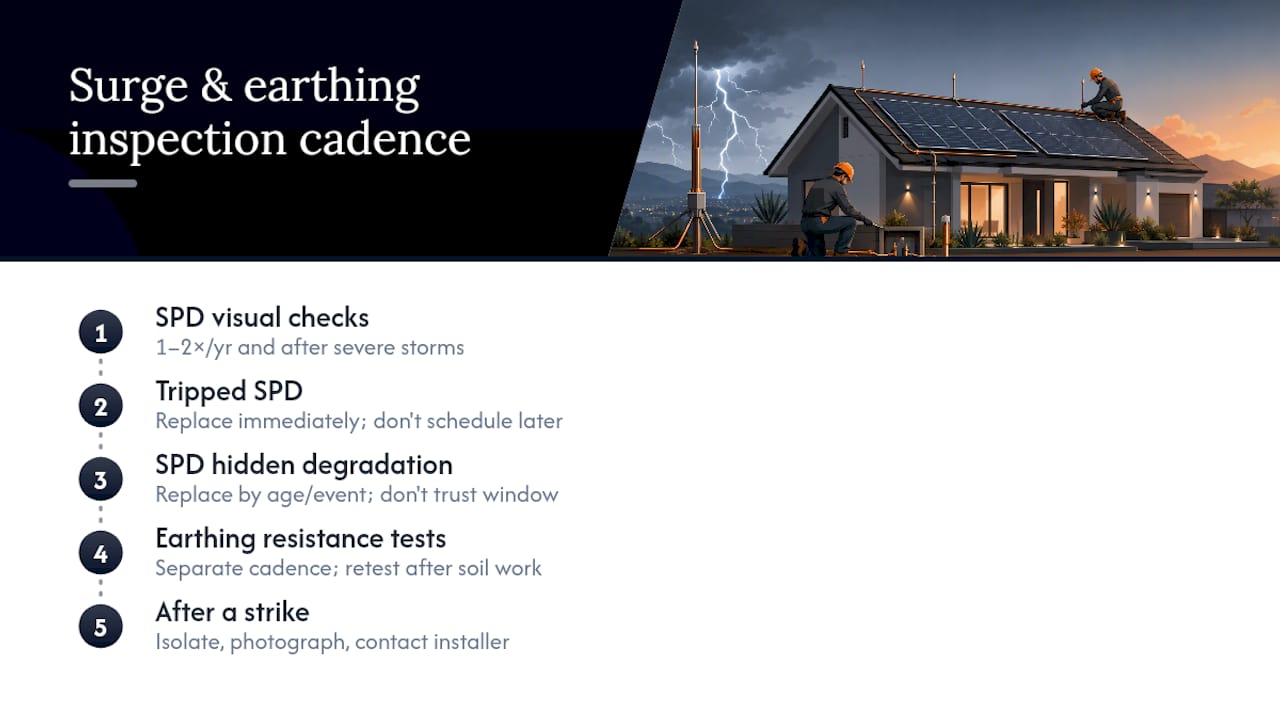
Routine visual checks of SPD status indicators should happen at least once or twice a year, and after any severe storm season. A tripped indicator means immediate replacement, not scheduling it for later.
Earthing resistance testing deserves its own cadence, separate from a general electrical inspection. Testing practices that verify a system still performs to its original specification apply just as directly to solar earthing as to general household wiring, and any groundwork, landscaping, or soil disturbance near the electrodes is a trigger to retest early.
One detail catches people out: an SPD can survive a major surge without tripping its visual indicator, yet its clamping ability degrades anyway. Scheduled replacement based on age and event history matters more than trusting the little window alone. After any confirmed strike, isolate the system, photograph any visible damage, and contact your installer before re-energizing anything.
Where Solarza fits into getting this done right
Getting lightning protection specified correctly starts with finding an installer who treats it as a design decision, not an afterthought. Solarza connects homeowners with vetted, rated installers across residential markets, and its solar calculator helps frame what a properly protected system should cost relative to your setup.
When requesting quotes through Solarza, be specific: ask installers directly for earthing test certificates and DC-rated SPD specifications as part of the proposal, not as an add-on discussed after installation. That single request filters out installers who treat lightning protection as boilerplate from those who actually engineer it for your roof and your region's risk profile.
Why "the grid earth protects everything" is the most expensive myth in solar
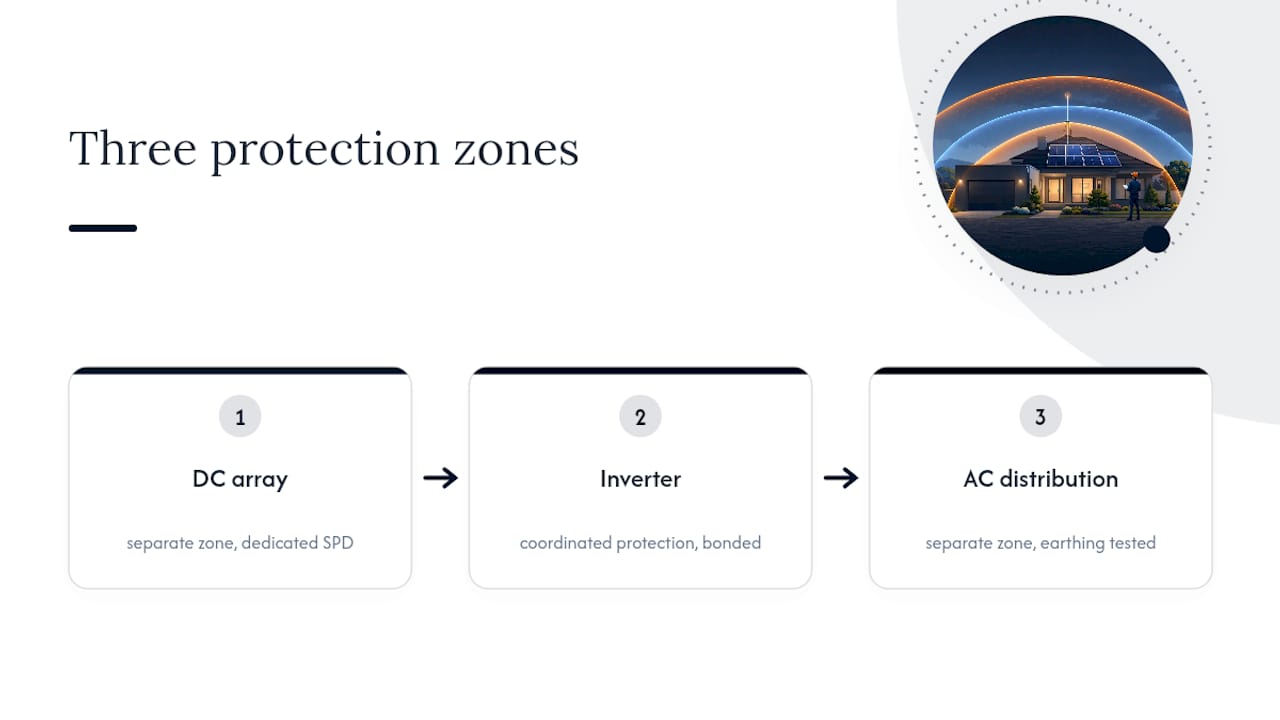
Homeowners assume the building's existing earth connection covers the inverter by default. It doesn't, and that assumption is where most avoidable surge damage originates. A correctly layered system treats the DC array, the inverter, and the AC distribution board as three zones needing coordinated, not shared, protection.
The conventional advice on this topic tends to stop at "get a surge protector installed" without specifying which type, where, or rated for what voltage. That's not protection, it's a checkbox. The SANS and IEC framework exists precisely because generic advice fails on the details that actually determine whether a device survives a nearby strike: Uc versus Voc margins, lead length, bonding continuity.
If there's one priority for a homeowner reading a quote right now, it's this: don't accept "surge protection included" as a line item. Ask what type, what rating, and what the earthing test showed. Standards compliance is verifiable. Vague reassurance is not, and it's usually the gap where corners get cut.
— Kobus Kohvik
Get matched with an installer who takes earthing seriously
A platform is a practical shortcut to finding installers in your area who won't shrug off a question about SPD ratings or earthing test certificates. Instead of researching individual electricians and hoping one understands PV specific surge protection, its directory connects you with installers who handle this work regularly.
Start by requesting a free solar quote and specify that you want lightning and surge protection included in the proposal, not bundled vaguely under "electrical work." If you're still sizing up your system or comparing inverter options before protection planning, the inverter guide is a useful next stop. For homeowners further along, browsing installers by city narrows the search to providers already active near you, ready to quote on the exact earthing and SPD specification your roof needs.
Sources
- Surge protection: Solutions for photovoltaics | OBO (O-line)
- South African lightning protection standards for solar installations | Lightning King
- Earthing and Lightning Protection Standard (Annex/technical spec) — etenders
FAQ
Can solar panels survive a lightning strike?
Solar panels can survive a nearby or indirect strike if the system has DC-rated SPDs, solid earthing, and equipotential bonding in place, but a direct hit to an unprotected array will likely cause serious damage. No setup guarantees survival against a direct strike, only reduced risk and reduced damage severity.
What is the best protection against lightning for a solar system?
A layered approach works best: Type 1, 2, and 3 SPDs matched to DC and AC sides, proper earthing tested to a low resistance value, and equipotential bonding tying all metal components together. An external lightning protection system adds further defense when a risk assessment justifies it.
How do I install a lightning arrestor for a solar system?
Installation should be handled by a qualified installer who confirms the SPD's Uc rating against your array's Voc, places DC-rated devices close to the inverter or combiner box with short leads, and matches SPD count to your number of MPP trackers. Ask your installer, through a platform like Solarza, for datasheets confirming these specifications before installation.
How do I protect my inverter from lightning?
Protect the inverter with dedicated AC-side SPDs in the distribution board, DC-side SPDs positioned close to the inverter's input, and a confirmed bond to the site's common earth reference. Don't assume the building's main earth alone covers inverter protection, since dedicated surge protection for inverter electronics is a separate requirement, not something the general electrical earth handles automatically.