South Africa: Where to Mount Your Solar Inverter, 150mm Clearance
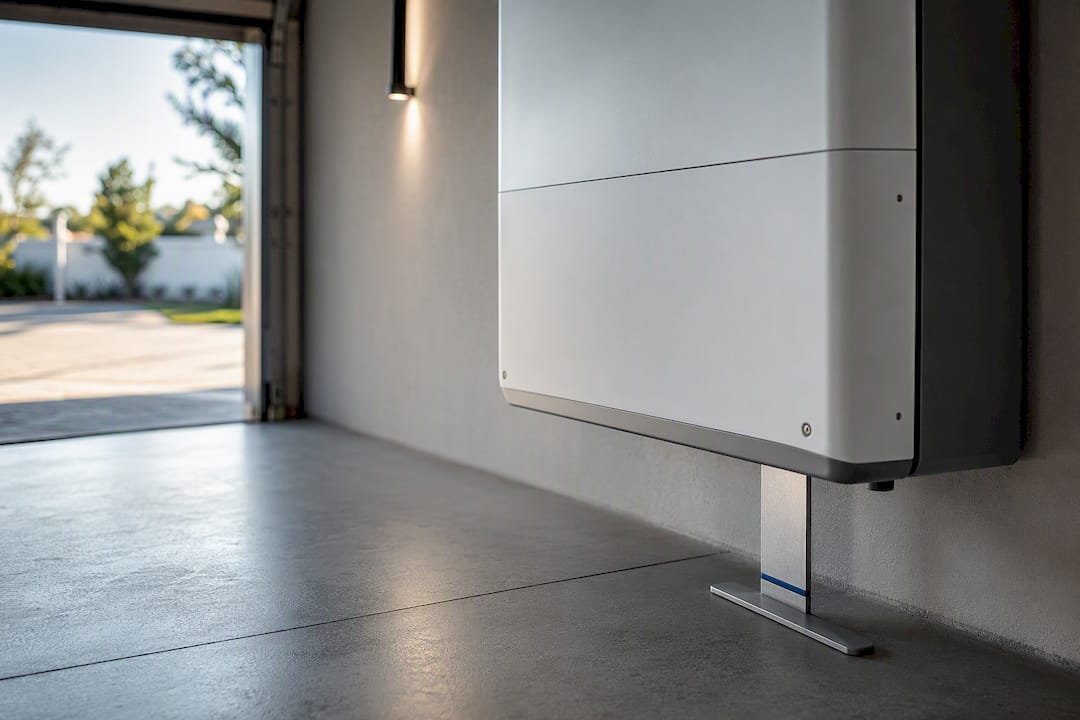
The best inverter location is indoor, shaded, and close to your main distribution board: a garage, utility room, or sheltered cabinet. Outdoor mounting works too, but only when the unit's IP rating, shade, and ventilation are all confirmed against the manufacturer's manual. Get the location wrong and you risk overheating, failed municipal inspections, and a voided Certificate of Compliance.
*TL;DR:>
- Installing the inverter indoors in a garage or utility room near the main distribution board typically offers the best balance of safety, access, and compliance.*
- If outdoor mounting is necessary, the inverter must be IP54 rated, kept in shade, at least 150mm from ventilation openings, and positioned on stable masonry with adequate clearance.
- Avoid placing the inverter in bedrooms, attics, or damp areas, as noise, heat, moisture, and safety hazards can cause operational issues or fail inspection.
- Keeping AC cables around 10 to 15 meters minimizes cost and voltage drop, making proximity to the main board more advantageous than being close to the solar panels.
- Proper documentation, correct earthing, surge protection, and adherence to standards are essential to pass municipal inspections and secure a valid Certificate of Compliance.
Table of Contents
- Where to mount the inverter: garage, utility room, or sheltered wall
- Clearance, mounting height, and noise: the placement rules that matter
- Compliance rules that limit where the inverter can go
- Panels, inverter, and the distribution board: managing the cable run
- Outdoor mounting: what protection level you actually need
- Pre-install checklist for your site visit
- Spotting location-related problems after installation
- Why placement decisions shouldn't chase the lowest quote
- Finding a vetted installer for your compliant inverter setup
- Standards and manuals worth sharing with your installer
- Sources
- FAQ
Where to mount the inverter: garage, utility room, or sheltered wall
Most South African homes have three realistic candidates for inverter location in house planning: the garage, a utility or laundry room, and a sheltered exterior wall. Each has trade-offs, but they're not equal.
Garages tend to win by default. They usually sit close to the main distribution board, they're dry, and they give installers easy access for servicing without walking through living areas. Utility rooms work almost as well, with the bonus of better airflow in some layouts and less dust than a garage that doubles as a workshop.
A sheltered outdoor wall, typically under an eave or roof overhang, is acceptable when three things check out: the wall gets no direct afternoon sun, it's solid masonry or reinforced brick, and there's a minimum of 150mm clearance on all ventilated sides. Indoor placement reduces exposure to weather and shortens the AC run to the switchboard, which is why installers default to it whenever the layout allows.
Some rooms are simply off-limits regardless of how convenient they look:
- Bedrooms and living areas — inverters produce a faint electrical hum and occasional fan noise that becomes irritating close to where people sleep or relax.
- Attics and roof voids — poor ventilation traps heat, and many attics run well above the ambient temperature ceiling most manufacturers specify.
- Rooms with flammable storage — timber stores, paint cupboards, and gas bottle enclosures violate the "no flammable mounting surface" rule in almost every installation manual.
- Damp areas like laundries with poor drainage — humidity above roughly 95% is explicitly flagged against in manufacturer documentation.
If your home doesn't have an obvious garage or utility room, a licensed installer can usually identify a compliant sheltered spot during the site visit rather than forcing a compromise indoors.
Clearance, mounting height, and noise: the placement rules that matter
Precise numbers make inspection day a lot less stressful. Here's what to check before an installer even arrives:
- Clearance around the unit. Manufacturer guidance typically calls for 150 to 300mm of open space on the sides and above the inverter for heat to dissipate properly.
- Mounting height. Most installers work within a 0.5 to 2 metre band above floor level, balancing technician access with protection from dust, splash, and casual bumps.
- Ventilation for enclosed spaces. A closed cupboard or cabinet needs active or passive venting; sealing an inverter into an airtight box is one of the fastest ways to trigger thermal shutdowns.
- Structural mounting. Many hybrid inverters weigh over 20kg, so hollow drywall needs reinforcement, not just anchors.
- Isolation switch access. The DC and AC isolators need to stay reachable without moving furniture or storage boxes, both for daily use and for emergency shutdown.
Noise matters more than people expect. Fans inside hybrid inverters cycle on under load, and placing the unit against a shared wall with a bedroom is a common source of complaints months after installation. Solid brick mounting reduces vibration transfer significantly compared to a lightweight partition wall. Pro Tip: Stand where the inverter will hang and imagine it running at full output on a hot afternoon. If that spot already feels stuffy or warm, ventilation is inadequate before you've even switched the system on.
Compliance rules that limit where the inverter can go
Placement isn't just a comfort or efficiency decision, it's a legal one. SANS 10142-1 requires the work to be carried out by a registered electrician, with correct earthing, isolation, and overcurrent protection documented before the system is signed off.
Municipal inspectors reject installations more often than most homeowners realize.
A poor location choice or an unlicensed installer often leads directly to a voided insurance claim, because the Certificate of Compliance that protects you as a homeowner simply can't be issued for non-compliant work.
That CoC is what your insurer will ask for if there's ever a fire or electrical claim. Local standards call for Type 2 DC and AC surge protection devices plus proper equipotential bonding as part of a safe, insurable installation, and both of those depend partly on where the inverter physically sits relative to your distribution board and earthing system. A location that forces awkward cable routing or skips bonding to save time isn't saving you anything once an inspector or insurer looks closely.
Panels, inverter, and the distribution board: managing the cable run
Here's a trade-off most homeowners don't think about until the quote arrives: should the inverter sit closer to the roof panels, or closer to the main distribution board?
Installers generally favor minimizing the AC run to the main board over minimizing the DC run from the panels, because heavy AC conductors and the switchgear that supports them cost more than extending a DC cable a few extra metres.
- Typical residential jobs aim to keep AC runs to roughly 10 to 15 metres between inverter and distribution board.
- Longer AC runs need thicker cable gauges to control voltage drop, adding real cost to the installation.
- A longer DC run from panels to a well-placed inverter is often cheaper overall than a short DC run paired with an expensive AC cable upgrade.
- Voltage drop on the AC side also affects energy losses over the system's lifetime, not just installation cost.
The practical upshot: don't fixate on getting the inverter as close to the roof as possible. Getting it close to the meter box usually pays off more.
Outdoor mounting: what protection level you actually need
If indoor space genuinely isn't an option, outdoor mounting can work, but the bar is higher than most people assume.
- SAPVIA guidance recommends a minimum IP54 rating for exposed outdoor housings, and a canopy or under-eave position adds a meaningful layer of protection beyond the rating alone.
- Mount the unit 0.5 to 1 metre off the ground to avoid dust ingress, rain splash, and any risk from localized flooding during heavy storms.
- Full shade is non-negotiable. Direct sun accelerates thermal derating and shortens the inverter's working lifespan well beyond what the IP rating alone protects against.
- Check Wi-Fi signal strength at the exact mounting spot; a garden wall or side alley often has weaker coverage than the installer expects.
Pre-install checklist for your site visit
Walk the property with these steps before the installer's first visit, and you'll avoid most of the back-and-forth that delays a job:
- Photograph the proposed mounting wall from a few angles, including the distance to the distribution board and the roof array.
- Note the wall construction, brick, block, or drywall, since that determines whether reinforcement is needed.
- Confirm the Wi-Fi signal strength at the exact spot, especially if the inverter includes smart monitoring.
- Ask whether a dedicated isolation switch can be sited nearby without moving existing fixtures.
- Request confirmation that the installer will supply a CoC, earthing and SPD specifications, and correct labelling on completion.
- Get the expected AC cable run length and gauge in writing before work starts.
Spotting location-related problems after installation
Most inverter faults tied to bad placement show up as one of a handful of predictable symptoms. Output that drops noticeably on the hottest days of the year usually points to thermal derating from poor airflow or direct sun exposure, not a faulty panel.
Watch for these signs during routine checks:
- Musty smells, corrosion, or visible moisture near the casing signal water or dust ingress that needs immediate attention.
- Rattling, buzzing, or a loose feel at the mounting bracket suggests the wall isn't taking the load properly.
- Faded or missing warning labels mean the installation may no longer meet inspection standards.
- Weak or dropped Wi-Fi monitoring often traces back to the same signal issues you should have checked before installation.
A significant number of installations fail their first municipal inspection over documentation and earthing issues rather than equipment failure, a reminder that most "inverter problems" are really location and paperwork problems in disguise.
Why placement decisions shouldn't chase the lowest quote
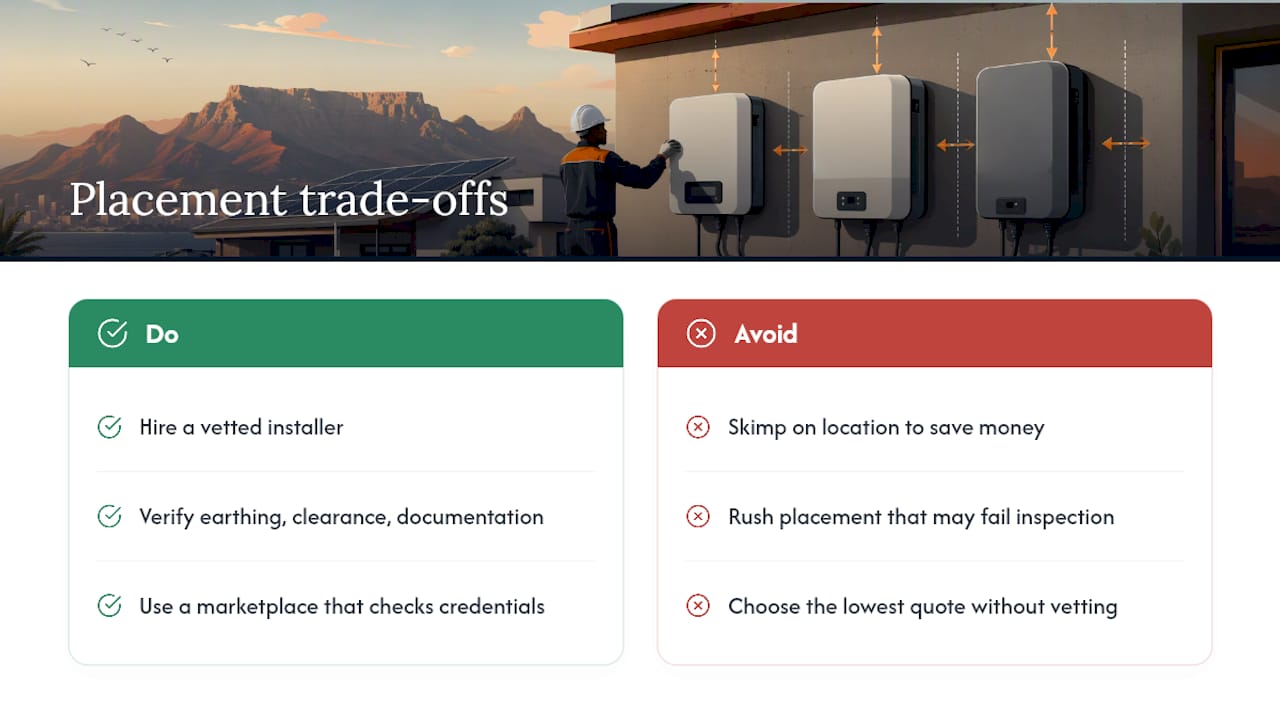
Skimping on location to save a few thousand rand on cable or labor is one of the most expensive mistakes a homeowner can make. A rushed placement that fails inspection means rework, delayed CoC issuance, and in the worst cases, a voided insurance claim after a fire or storm.
Paying slightly more for a vetted installer who gets earthing, clearance, and documentation right the first time isn't an upsell, it's the cheaper outcome over five years. A marketplace that checks installer credentials before matching you saves you from finding this out the hard way.
— Kobus Kohvik
Finding a vetted installer for your compliant inverter setup
Solarza connects you directly with installers who are vetted and rated across every province, so you're not guessing whether the person quoting you actually understands SANS 10142 clearance and earthing rules. Getting the inverter location right the first time means comparing installers who can prove it, not just installers who quote the lowest price.

Through Solarza, you can compare quotes from installers who specialize in inverter installation, check references, and confirm upfront that they'll provide a Certificate of Compliance as part of the job. You can also browse installers by city to find someone who already knows your local municipality's inspection quirks. Run your numbers through the solar calculator first, then request a free quote and ask your shortlisted installers directly how they'll handle placement, earthing, and surge protection before they set foot on your roof.
Standards and manuals worth sharing with your installer
Hand your installer the SANS 10142-1 wiring code and the manufacturer's install manual for your specific inverter model before work begins. These documents, along with general trade installation practices, are what municipal inspectors and insurers will reference if your compliance is ever questioned.
Sources
- SANS 10142-1 (wiring of premises) — archived PDF
- Optimal solar inverter placement for efficiency & longevity — Aforenergy
- SOLAX X-Hybrid install guide (example manufacturer manual)
- Solar PV safety standards and SANS 10142 summary — SolarPowerGuide
FAQ
Where should the inverter be placed in a house?
Indoors is preferred, in a garage, utility room, or sheltered cabinet close to the main distribution board, provided the space meets ventilation, temperature, and clearance requirements from the manufacturer's manual.
How far can an inverter be from the solar panels?
There's no strict cap, but installers generally accept a longer DC run from the panels if it means the inverter sits closer to the distribution board, since minimizing the AC run saves more in cabling and voltage-drop losses than minimizing the DC run.
Can an inverter be placed in a bedroom?
No. Inverters produce fan noise and a faint electrical hum during operation, which makes bedrooms and other living spaces unsuitable regardless of how convenient the wall space looks.
Where is my solar inverter usually located?
In most South African homes, it's mounted in the garage or utility room near the distribution board or meter box, since that location minimizes exposure to weather while shortening the cable run.
What happens if the inverter location fails inspection?
Roughly 40% of installations fail their first municipal inspection over issues like missing surge protection or incorrect earthing, which delays your Certificate of Compliance and can affect insurance coverage until it's resolved.