No Battery, No Backup: When Grid Tied Solar Works for SA Homes
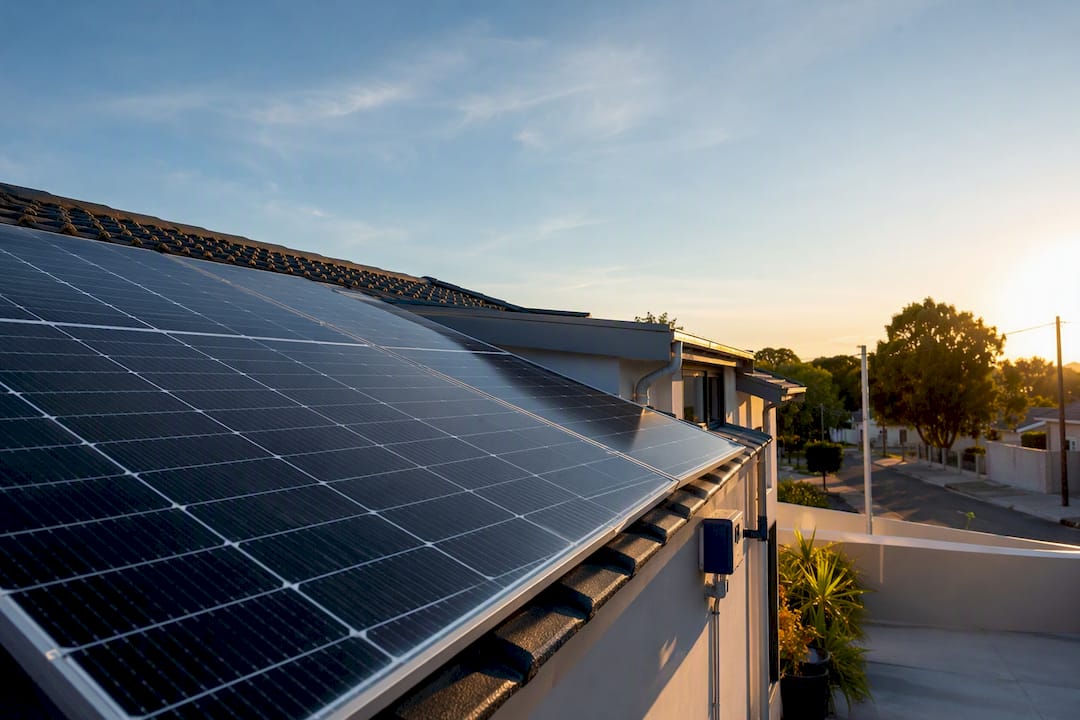
Yes, you can run a grid-tied solar system with no battery at all, and most homeowners do. It cuts your electricity bill by feeding solar power straight into your home during daylight and exporting or offsetting the rest. The catch: anti-islanding protection forces the inverter to shut off the moment the grid goes down. A battery-less system gives you zero backup during outages.
*TL;DR:>
- Without batteries, a grid-tied solar system relies on anti-islanding protection to shut off during power outages, leaving home essential loads unpowered.*
- Properly installed systems must be on the utility’s approved list and meet regulatory requirements, including application submissions and obtaining a Certificate of Compliance.
- Cost savings are significant, as battery-less setups are cheaper; payback depends heavily on local feed-in tariffs, household consumption patterns, and export policies.
- The recommended inverter types for battery-less systems are grid-tie string inverters, which are lighter, cheaper, and designed specifically without charging circuitry.
- For areas with frequent or long outages, adding a battery or backup system can be justified, especially for critical loads like medical or security equipment.
Table of Contents
- Can you have grid tie without battery, and how does it work?
- Why do grid-tied systems shut off during power outages?
- Do you actually need a battery, or can you skip it?
- Which inverter type should you choose for a battery-less setup?
- What does a battery-less system cost, and what's the payback?
- What regulatory steps does a battery-less system still need?
- Solarza's practical tips for battery-less installations
- Author perspective: recommended next steps
- How Solarza gets you matched with the right installer
- Sources
- FAQ
Can you have grid tie without battery, and how does it work?
A battery-less grid-tied system is the simplest form of solar you can install, and it's built around one core relationship: your inverter has to stay in lockstep with the utility grid at all times. Solar panels produce direct current (DC), which is fairly useless for running household appliances. The inverter's job is to convert that DC into the alternating current (AC) your home actually uses, while continuously matching the grid's voltage and frequency down to fractions of a hertz.
This synchronization is what allows self-consumption and export to work seamlessly. When your panels produce more than the house is using, say, midday on a clear day, the surplus flows backward through the meter and onto the grid, where it either earns credit or gets curtailed depending on your utility's net metering rules. When production dips below household demand, the grid quietly fills the gap. There's no switching, no delay, no battery buffer in between.
A typical battery-less setup includes:
- A grid-tie (string) inverter with maximum power point tracking (MPPT) to squeeze the most output from panels as sunlight and temperature shift throughout the day
- An AC isolator switch for safe disconnection during maintenance
- Overcurrent and surge protection devices
- A meter capable of registering both imported and exported energy, where the utility permits export
The Clever Solar Power team notes that this configuration doesn't need battery-charging circuitry at all, which is exactly why it's cheaper and mechanically simpler than a hybrid system.
Why do grid-tied systems shut off during power outages?
Anti-islanding is the safety feature that makes a battery-less system go dark the instant the grid does, and it exists for a genuinely good reason. If your inverter kept pushing power onto a line that utility crews think is dead, it could electrocute a lineworker repairing that same line miles away. Regulators treat this as non-negotiable.
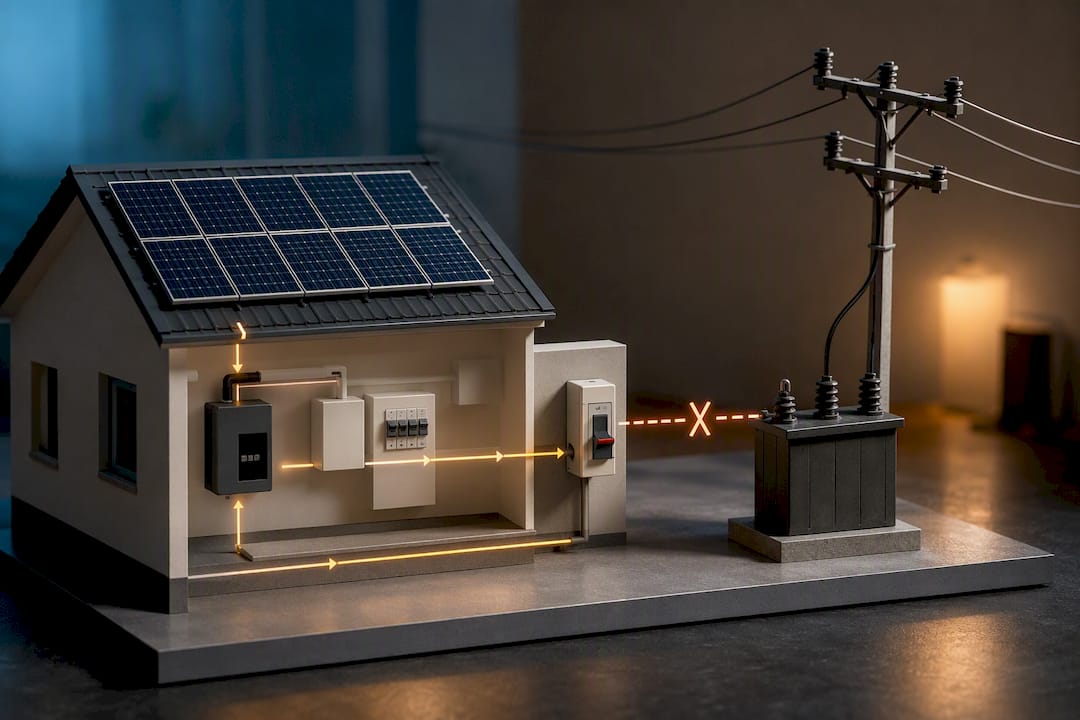
Grid-tied inverters constantly monitor grid voltage and frequency. Detect an interruption, and the inverter disconnects within a fraction of a second to a couple of seconds, well inside the windows required by type-testing standards. It doesn't matter whether the outage is a five-minute blip or a six-hour load-shedding stage. The panels are still making electricity in both cases, but none of it reaches your house.
Quick fact: Solar-panel confirms that a standard grid-tied system switches off automatically during load shedding, so homeowners shouldn't expect solar panels alone to keep the lights on during an outage.The practical fallout is straightforward:
- You lose every kilowatt-hour your panels would have produced during the outage window, even in bright sun
- Fridges, routers, and security gates go dark exactly when you'd want them running
- Frequent, lengthy outages compound this into real annual losses in potential savings
If that bothers you, the fixes are well established: add a hybrid inverter with a battery, wire a small backup circuit for critical loads only, or keep a generator as a stopgap. None of them are required for a grid-tied system to function; they just restore power continuity when the grid drops.
Do you actually need a battery, or can you skip it?
Batteries earn their cost in specific situations, not universally. If your area sees outages that are frequent, long, or unpredictable, a battery-less system will leave you without power at inconvenient moments, sometimes daily. If you run medical equipment, a home office that can't tolerate downtime, or security systems that need constant power, that gap becomes a real risk rather than an inconvenience.
The trade-off is straightforward: batteries add substantial upfront cost, take up wall or floor space, need periodic replacement over their service life, and require slightly more maintenance attention. In exchange, you get continuity when the grid fails, which Green Future Solutions argues often outweighs the extra cost for households in high-outage areas.
A short checklist to decide:
- Track how many outage hours you actually experience per month, not what you assume
- List which loads must stay on (fridge, Wi-Fi router, medical devices) versus which can wait
- Set a firm budget ceiling and see whether it covers even a small backup battery
- Check whether you physically have space for a battery cabinet and ventilation
Pro Tip: Run your fridge, router, and one light off a small backup battery before committing to a whole-home system. Most households discover they only need to protect two or three circuits, which cuts the battery size (and cost) dramatically.
If you're leaning toward backup, it's worth comparing battery backup systems before you finalize your inverter choice.
Which inverter type should you choose for a battery-less setup?
Not every inverter can run without a battery, and the labels matter more than most homeowners realize when comparing quotes.
Grid-tie (string) inverters are built specifically for battery-less operation. They lack charging circuitry entirely, which keeps them lighter and cheaper. Valsa Engineering notes these are the standard recommendation when no backup is required. Hybrid inverters can run without a battery connected on day one but leave the door open. They include battery ports and management logic, so you can add storage later without swapping the inverter itself. This is the more flexible, if pricier, starting point. Grid-forming inverters are a different category altogether. They can create and hold their own voltage and frequency reference during an outage, which is what actually enables islanding. A plain grid-tie unit can't do this regardless of specs.Before buying anything, verify:
- Whether the inverter is on your utility's approved/type-tested list
- Number of MPPT channels relative to your roof's shading and orientation
- Warranty length (10 years is common for quality units)
- Explicit compatibility with battery models you might add later
What does a battery-less system cost, and what's the payback?
Grid-tied systems without batteries cost noticeably less than hybrid setups of the same panel capacity, since you're skipping the battery bank, charge controller logic, and often a chunk of installation labor. Green Future Solutions points out that adding batteries meaningfully raises the installed price of an otherwise identical system.
Rough payback math: multiply your electricity tariff by expected monthly production, then by the share of that production you actually self-consume rather than export at a lower feed-in rate. Systems sized close to daytime household load, with high self-consumption, tend to pay back faster than oversized systems that export heavily into weak or unpaid net metering arrangements.Three factors swing your ROI more than anything else:
- Whether your utility offers export credit at all, and at what rate, since this varies by area
- Your household's daytime consumption pattern (a home office beats an empty house from 9 to 5)
- Local tariff structure and whether time-of-use pricing rewards shifting loads to sunlight hours
Running your own numbers before committing is worth the ten minutes it takes; a solar calculator can model production and payback against your actual usage rather than a generic estimate.
What regulatory steps does a battery-less system still need?
Skipping the battery doesn't skip the paperwork. Regulators classify installations by whether they can operate in parallel with the grid, not by whether they include storage, so a battery-less system faces the same Small Scale Embedded Generation (SSEG) obligations as any other grid-tied setup.
- Submit an SSEG application to your municipality or utility, typically including a single-line diagram and a full equipment list
- Confirm your inverter appears on the approved/type-tested list your utility recognizes
- Have a qualified electrician issue a Certificate of Compliance (COC) once installation is complete
- Arrange installation of a bi-directional meter if your utility permits export and net metering
Centlec's SSEG policy makes the scope explicit: even a zero-export, battery-less system that can operate in parallel with the grid still falls under SSEG registration and anti-islanding requirements. Skipping this step isn't a shortcut, it's a network-code violation that can leave you without insurance cover or utility approval if something goes wrong. Timelines vary by municipality, so build a few weeks of buffer into your installation schedule.
Solarza's practical tips for battery-less installations
A vetted residential solar installation partner will handle most of this paperwork on your behalf, but you should still know what to check before signing anything.
Before committing to a quote, confirm the installer has done: a proper site survey (roof orientation, shading, structural load), a load analysis matching panel capacity to your actual usage, a clear statement of inverter type and whether it's SSEG type-tested, and a written plan for COC handling and warranty terms. Ask specifically whether the quoted inverter supports a future battery upgrade, even if you don't need one now. That single question saves a costly inverter swap later.
Author perspective: recommended next steps
Battery-less grid tie makes sense when your goal is bill reduction and outages in your area are short or rare. It stops making sense the moment losing power for hours at a time becomes a recurring cost, not a rare inconvenience. Don't guess which camp you're in.
Track your actual outage hours for a month, decide which loads genuinely need backup, then request quotes through a vetted platform so you're comparing real numbers, not assumptions, before you commit to either path.
— Kobus Kohvik
How Solarza gets you matched with the right installer
Solarza offers a platform to connect with solar installers familiar with local approval processes, allowing you to obtain quotes for both battery-less and hybrid configurations.
Solarza connects you with verified, rated installers across South Africa, whether you're comparing a simple grid-tied setup or weighing the jump to battery backup. Run your numbers first with the free solar calculator, then submit a request through Request a Free Solar Quote to get tailored quotes from installers vetted for your area. Solarza itself doesn't install anything; it connects you to the people who do, so you can compare real quotes instead of guessing at prices.
Sources
For verification: Centlec's SSEG policy covers registration rules; solar-panel.co.za explains outage behavior; the Wikipedia net metering entry gives general background on export credits.
- Green Future Solutions — Grid tied solar system explained (2026)
- Clever Solar Power — Grid-Tied Solar Systems Without Battery Backup
FAQ
Is it possible to have a grid-tied solar system without a battery backup?
Yes. Panels feed a grid-tie inverter that synchronizes with utility power, and no battery is required for the system to reduce your bill or export surplus energy where permitted.
Can you run off-grid solar without batteries?
No, a true off-grid system needs batteries or another standalone power source, since there's no utility connection to fall back on when the sun isn't shining.
Which inverters can work without batteries?
Grid-tie (string) inverters are built to run without a battery, and hybrid inverters can also operate battery-less while leaving the option to add storage later. Grid-forming inverters require battery or generator support to hold voltage during an outage.
Are solar panels without a battery worth it?
For most homeowners in areas with reliable grid power, yes: the lower installed cost and faster payback usually outweigh the lack of backup, provided your daytime self-consumption is reasonably high.