Can you mount solar panels on a flat roof?
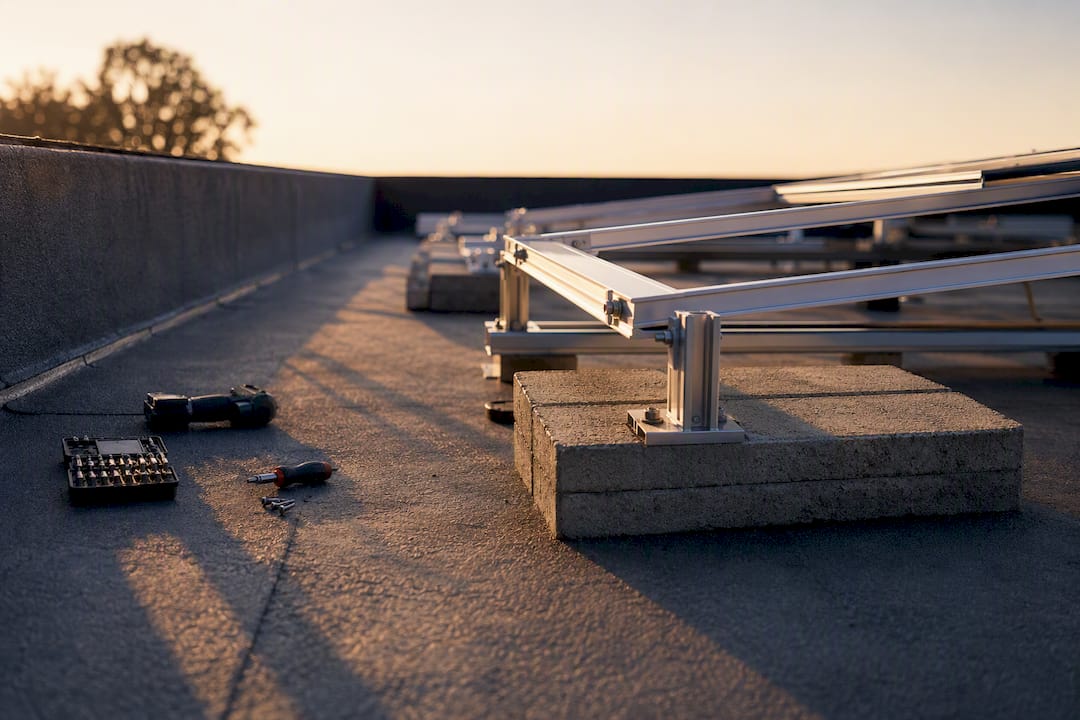
Yes, you can mount solar panels on a flat roof, and it's often easier than a pitched roof job because you control tilt and orientation. Your practical choice comes down to three approaches: ballasted racks that sit on weight alone, mechanically attached anchors that penetrate the membrane, or a hybrid of both. Before anything gets specced, get a structural check done and confirm the mounting plan won't void your roof warranty.
*TL;DR:>
- Roof structural assessment and wind zone verification are essential before selecting ballast, mechanical, or hybrid mounting systems on a flat roof.*
- Higher ballast weight improves stability but requires engineering approval and may impact warranty, especially on older or weaker membranes.
- Proper installation involves careful sequence planning: roof inspection, membrane protection, accurate mounting, and certified flashing to avoid warranty voids.
- Material choices should focus on corrosion-resistant aluminium and stainless steel fasteners, with compliance documentation and membrane compatibility.
- Cost varies significantly based on mounting type, roof condition, and complexity, so obtaining multiple quotes from vetted installers ensures accurate budgeting.
Table of Contents
- Flat roof solar mounting: which system type fits your roof
- What structural and wind loading checks are required?
- How much tilt and row spacing does a flat roof need?
- What's the correct installation sequence for a flat roof mount?
- What materials should your flat roof racking use?
- How does Solarza connect you with a qualified flat roof installer?
- Do flat roof solar mounts need a fire rating?
- What does a flat roof solar mounting system cost?
- Installer's checklist and common mistakes
- Get matched with a vetted installer for your flat roof
- Sources
- FAQ
Flat roof solar mounting: which system type fits your roof
The right flat roof solar racking depends less on preference and more on what your roof can physically carry, and what your local wind zone demands.
Ballasted systems use concrete blocks or trays to hold panels down through weight, with zero roof penetrations. They suit newer membranes with spare structural capacity, since ballasted mounts typically add a moderate dead load, requiring structural assessment that the roof structure needs to absorb without complaint.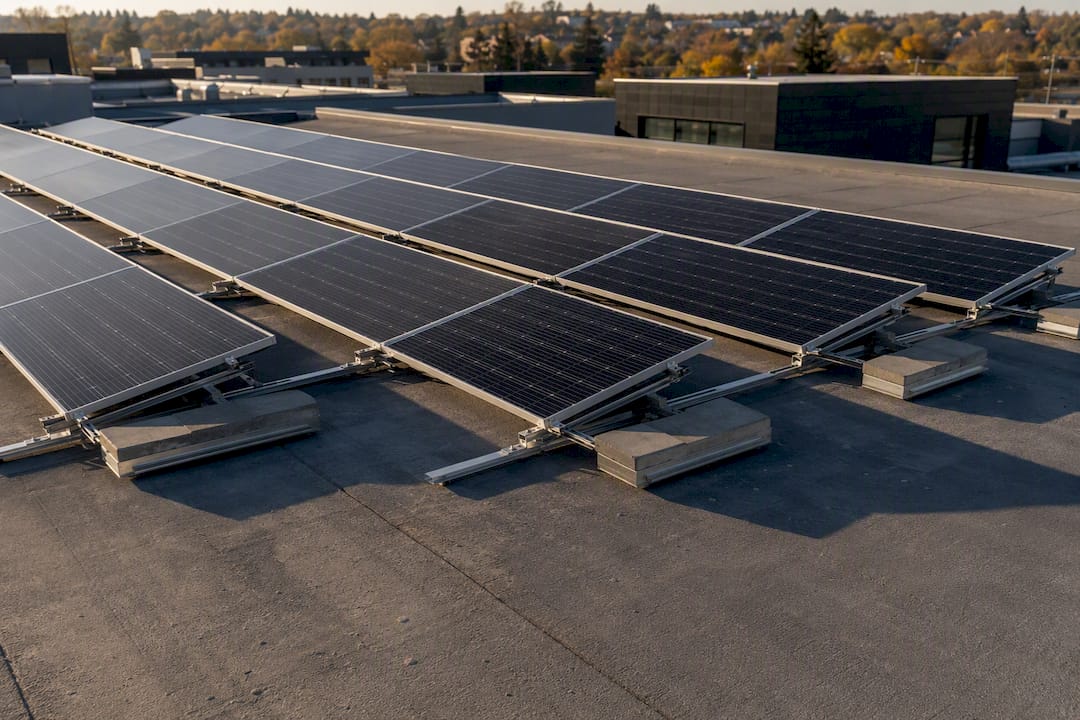 Mechanically attached (penetrating) systems bolt directly through the membrane into the deck. They add far less dead weight, a small amount of added dead load. This makes them the go-to when a roof simply can't take extra load or when wind speeds demand a firmer hold than ballast alone provides. Every penetration needs proper flashing, and that flashing directly affects your roof's warranty status.
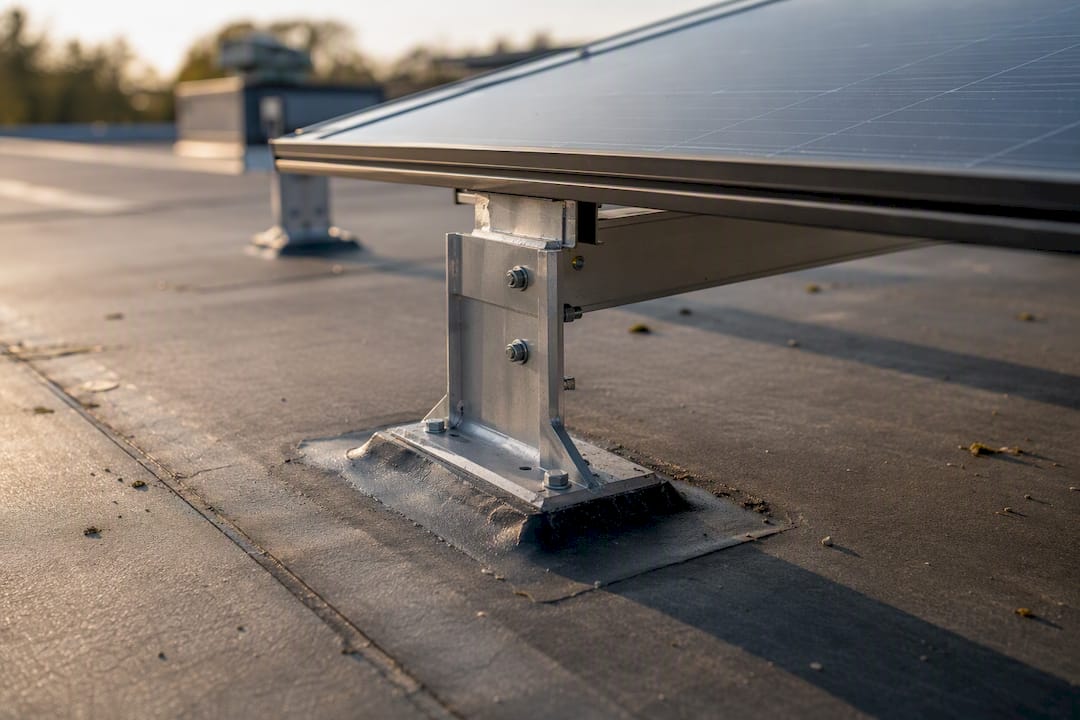 Hybrid systems combine light ballast with a few mechanical anchors, and this is often the pragmatic default in coastal or high-wind zones where full ballast would overload the deck but bare anchors feel risky.
Installers will ask about your membrane type, roof age, and wind zone before recommending any of these, so have that information ready.
- Ballasted: no penetrations, higher dead load, best on strong, newer roofs
- Mechanically attached: light on weight, requires certified flashing
- Hybrid: balances weight and wind resistance on constrained roofs
Pro Tip: Ask your installer for the ballast weight per panel in writing before signing anything. It's the single number that tells you whether your roof structure needs an engineer's sign off.
What structural and wind loading checks are required?
A structural engineer needs to verify your roof can carry the added dead load and point loads before any bracket touches the surface. This isn't a formality. Skipping it risks cracked slabs, sagging trusses, or a mount that lifts in the first serious storm.
South African installers work within SANS wind loading rules, which reference a basic fundamental wind speed for the region, commonly cited around 28 m/s in many areas, to size ballast and anchor points correctly. Mounting components also need to meet SABS material standards, covering everything from aluminium alloys to fastener grades.
Documents worth requesting from your installer:- A structural certificate confirming load capacity
- A wind loading reference showing how the mount was sized for your area
- An installation plan showing anchor or ballast placement
- Proof that penetration flashing was done by a certified roofer
How much tilt and row spacing does a flat roof need?
Flat roof arrays usually sit at a lower tilt than the textbook optimum, and that's a deliberate trade-off, not a shortcut.
A tilt of 25 to 30° captures the most annual irradiation, but it also casts long shadows and catches more wind. Most flat roof solar systems in practice run 5 to 15°, with 10° being a common middle ground that balances energy yield against wind loading and shading between rows.
Row spacing matters more on a flat roof than most people expect. Spacing needs to account for the sun's angle in winter, when shadows stretch furthest. Industry guidance recommends calculating spacing off winter solstice sun angles rather than a rule of thumb pulled from a pitched roof project.
- Lower tilt (5 to 15°): less shading risk, lower wind resistance needed, slightly less annual yield
- Higher tilt (25 to 30°): better yield, more shading and wind exposure to manage
- East-west layouts: useful when you want tighter row packing without heavy shading penalties
Pro Tip: Never let panel edges block a roof drain outlet. Water pooling under a rack is one of the fastest ways to turn a small leak into a structural repair bill.
What's the correct installation sequence for a flat roof mount?
Getting the sequence right protects both the roof membrane and the electrical system, and it also clarifies who does what.
- Inspect the roof and confirm membrane type, age, and drainage paths
- Lay out the array according to the structural and shading plan
- Protect the membrane with slip sheets or approved pads before placing ballast trays
- Install anchors or ballast trays as specified
- Mount rails and panels
- Complete electrical interconnection and commissioning
Mechanical installation, including anchor placement and flashing, is roofing and racking work. Electrical interconnection is a separate job entirely. SAPVIA guidelines are clear that wiring must be planned before modules are fixed in place, since cables become inaccessible once panels are mounted, and final connections must be done by a qualified electrician.
- Slip sheets under ballast trays prevent membrane abrasion and spread point loads
- Penetrations need manufacturer-certified flashing to preserve warranty cover
- Schedule a post-installation inspection within the first year, then annually after that
What materials should your flat roof racking use?
Specify materials with the South African climate in mind, not just the cheapest option on a quote.
Aluminium alloy, commonly 6063-grade, is the standard for racking rails because it resists corrosion without the weight penalty of steel. Fasteners should be A2 or A4 stainless steel, since anything less starts rusting within a few seasons of coastal humidity or industrial air.
- Ask manufacturers for SABS/SANS compliance certificates, not just a data sheet
- Request installation drawings that show anchor spacing and torque values
- Check that ballast tray design distributes weight evenly, not just at corner points
- Consider low-profile or railless systems if you want reduced wind uplift and a cleaner roofline
- Confirm slip pad or protection layer compatibility with your specific membrane (EPDM, TPO, or PVC all react differently to certain plastics)
A mounting bill of materials should list every fastener grade and racking component. If a supplier can't produce compliance paperwork on request, treat that as a red flag rather than a minor gap.
How does Solarza connect you with a qualified flat roof installer?
Solarza matches South African homeowners with vetted, rated installers across all nine provinces, and vetting covers exactly the checks this article walks through: structural competence, SANS-informed mounting choices, and certified flashing work.
Before requesting quotes, gather a few basics:
- Photos of your roof surface and any existing penetrations or drains
- Your membrane type (EPDM, TPO, PVC, or another material)
- Approximate roof dimensions and usable area
- Any known roof age or previous waterproofing work
The solar calculator helps size a system against your usage before you even talk to an installer, so the quotes you get back are realistic rather than generic.
Do flat roof solar mounts need a fire rating?
Yes, mounting systems and the panels themselves fall under fire classification requirements that vary depending on how close the array sits to roof edges, parapets, and adjoining structures. This matters more on flat roofs than pitched ones because access for firefighting equipment and the potential for fire spread across a large, low array both factor into how local fire codes treat the installation.
Racking and mounting hardware generally need to demonstrate they won't contribute to fire spread, and panel assemblies carry their own fire classification from the manufacturer, separate from the mounting structure. Ask your installer or supplier for the fire rating documentation on both the panels and the racking system, not just one or the other.
Regulatory compliance for flat roof solar mounting also touches building codes around setback distances from roof edges and parapets, which exist partly for fire access and partly for wind safety. A structural engineer or certified installer working within SANS and SABS frameworks should already be accounting for these setbacks in the layout plan, but it's worth confirming explicitly rather than assuming it's covered.
If your property falls under a body corporate or has specific insurance conditions tied to fire risk, check whether the policy has separate requirements for rooftop equipment. Some insurers ask for confirmation that the installation followed a recognised standard before they'll extend cover to the new equipment. Getting this in writing from your installer avoids an unpleasant surprise if you ever need to claim.
What does a flat roof solar mounting system cost?
Budgeting for flat roof solar racking means pricing the mounting system separately from the panels and inverter, because the mounting choice itself swings the total more than most homeowners expect.
Ballasted systems tend to cost less in hardware because they skip flashing labour, but they need more ballast material and sometimes a stronger roof structure to carry the extra dead load, which can mean engineering fees you wouldn't otherwise pay. Mechanically attached systems cost more in labour, since every anchor point needs proper flashing by a certified roofer, but they use less material overall and suit roofs where adding hundreds of kilograms of ballast simply isn't an option.
Hybrid systems usually land in between, with moderate ballast plus a handful of anchor points. The exact price also depends on:
- Roof access and whether material needs to be hoisted or craned
- Membrane type and whether extra protection layers are needed under ballast
- Racking material grade (aluminium alloy racking with A2/A4 stainless fasteners generally costs more upfront but avoids replacement costs later)
- Whether a structural engineer's assessment is required before work starts
Getting quotes from multiple vetted installers is the most reliable way to see where your specific roof lands on this spectrum, since two roofs with the same square footage can have wildly different mounting costs depending on membrane condition and wind exposure.
Installer's checklist and common mistakes
Five checks before I quote any flat roof job: roof condition and membrane type, structural capacity, wind exposure, shading from parapets or nearby structures, and roof access for equipment.
The mistakes I see most often: penetrations that void a roof warranty because nobody checked with the manufacturer first, undersized fixings chosen to save a few hundred rand, and racking placed straight over a drainage outlet.
My one-line advice: collect your roof's basic details, membrane, age, dimensions, before you ever request a quote.
— Kobus Kohvik
Get matched with a vetted installer for your flat roof
Solarza is the practical alternative to cold-calling installers one by one and hoping you land on someone who actually understands ballast versus penetrating mounts. You submit your roof details once, and Solarza matches you with vetted, rated installers in your province who already know how to work within SANS wind loading requirements and SABS material standards.

Start by running your numbers through the solar calculator to get a realistic system size for your roof and usage. From there, request a free solar quote and Solarza will connect you with installers who'll handle the structural check, recommend the right mounting approach for your specific membrane and wind zone, and flash any penetrations properly to keep your roof warranty intact. If you're planning a larger commercial flat roof array, the commercial solar installation page covers what changes at scale.
Sources
- Flat roof mount: Systems, Ballast, and Load (2026)
- SAPVIA – industry guidance and rooftop PV resources
FAQ
Is it possible to mount solar panels on a flat roof?
Yes. Flat roofs are mounted using ballasted racks, mechanically attached anchors, or a hybrid of both, chosen based on roof load capacity, membrane type, and local wind zone.
What kind of solar brackets are suitable for a flat roof?
Aluminium alloy racking, commonly 6063 grade, paired with A2 or A4 stainless steel fasteners, resists corrosion and handles the wind loads flat roof installations face without adding unnecessary weight.
What is the best solar panel mounting system for flat roofs?
There's no single best system. Ballasted mounts suit roofs with spare structural capacity and no penetration risk, while mechanically attached mounts suit weight-limited roofs or high wind zones, and hybrid systems balance both concerns.
What is the 33% rule for solar panels?
This isn't a standard referenced in South African flat roof solar mounting guidance from SANS or SAPVIA; definitions of it vary widely, so ask your installer for the specific standard they're applying rather than relying on a generic rule.
Do roof penetrations always void my roof warranty?
Not if they're done correctly. Manufacturer-certified flashing installed by a certified roofer typically preserves the warranty, but unflashed or improperly sealed penetrations are a common cause of voided cover.