Regain Output: Safe DIY Solar Panel Cleaning in SA via Solarza
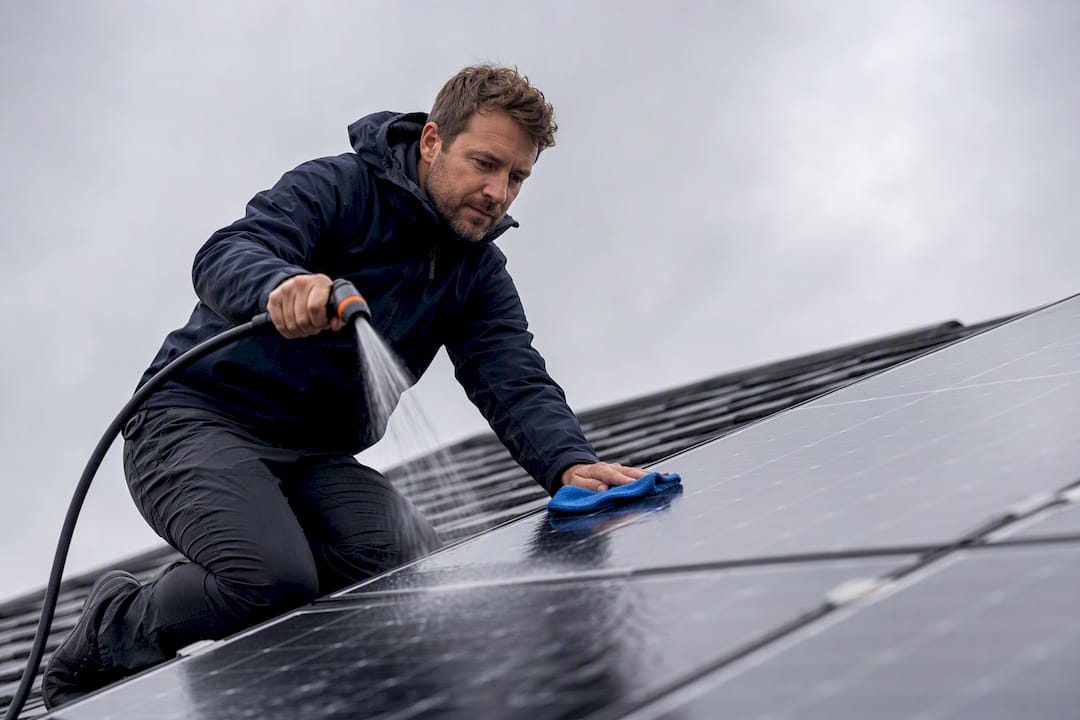
Clean panels with soft water, a soft brush, and impeccable timing, and hire a professional when your roof is steep or tall. Isolate the PV system before you touch anything. Do it every three to twelve months depending on where you live, and expect a noticeable bump in output once the grime is gone.
*TL;DR:>
- Regular cleaning is crucial if you live in arid, coastal, or dusty areas where dirt and salt buildup can significantly reduce solar panel efficiency.*
- Use a soft-bristled brush and purified or deionized water to prevent streaks and scratches during cleaning, avoiding high-pressure washers and abrasive tools.
- Safety is paramount; always turn off the system before cleaning, and opt for ground-based cleaning methods or professional services for steep, high, or hard-to-reach roofs.
- Most residential systems benefit from cleaning every three to twelve months, with frequency increasing in dusty or salt-prone environments.
- Hiring a licensed, insured professional is recommended for heavy soiling, high roofs, or when electrical or safety concerns are present.
Table of Contents
- Why cleaning solar panels matters more than most owners think
- What to check before you touch a single panel
- How to clean solar panels yourself, step by step
- The right tools and water make the real difference
- When hiring a professional makes more sense than DIY
- Building a cleaning routine you can trust
- Finding verified cleaners through Solarza
- A practical take on DIY versus professional cleaning
- Get matched with a verified solar cleaning professional
- Sources
- FAQ
Why cleaning solar panels matters more than most owners think
Dust, pollen, bird droppings, and salt spray form a film that blocks sunlight before it ever reaches the cells. In dry, dusty regions or coastal areas battered by salt, losses stack up faster than most homeowners expect. Rain helps but does not solve the problem. It often just relocates dirt to the panel edges or leaves mineral deposits behind, according to CCM Cleaning's analysis of rain's limits.
A few conditions push cleaning frequency up sharply:
- Low annual rainfall, especially in arid inland regions
- Nearby construction or gravel roads kicking up dust
- Overhanging trees dropping sap, leaves, or bird droppings
- Coastal proximity, where salt film builds a stubborn haze
You do not need to guess. Two signs tell you it is time: a visible layer of grime or streaking on the glass, and a drop in generation that does not match the day's sunlight. If your inverter app shows output falling while irradiance stays steady, that gap points to soiling rather than weather.
What to check before you touch a single panel
Safety comes before technique. A cracked panel or a fall from a roof costs far more than any efficiency gain from a clean array. Work through this before you pick up a brush:
- Switch off the inverter and isolate the PV circuit at the breaker or isolator switch.
- Confirm the system is de-energized. Never touch the underside of a panel or open a junction box.
- Choose ground-based cleaning with an extension pole whenever the layout allows it.
- Call a professional if your roof has more than one storey, a steep pitch, or awkward access.
- If you must go up, use a spotter, proper fall protection, and non-slip footwear.
- Avoid cleaning in strong midday sun, heavy wind, or wet conditions underfoot.
- Clean early in the morning or late in the afternoon, when the glass has cooled down.
That last point is not a nice-to-have. Splashing cold water on a panel that has been baking at 60°C or more risks thermal shock, and the water evaporates so fast it leaves mineral streaks behind, as Kärcher's cleaning guide points out. Pro Tip: Check the forecast the night before. A cool, overcast morning with no wind is the ideal cleaning window, and it means you will not be rushing the job before the sun climbs.
How to clean solar panels yourself, step by step
Cleaning panels safely is less about scrubbing hard and more about sequence. Skip a step and you risk streaking, cracking, or a shocked cell. Here is the order that actually works, whether you are working from the ground or from a ladder.
- Check your baseline. Note current output on your inverter app on a clear day before you clean, so you have something to compare against.
- Isolate the system. Turn off the inverter and confirm the PV circuit is de-energized.
- Clear loose debris. Sweep leaves, twigs, and dried droppings off with a soft brush before any water touches the glass.
- Rinse gently. A garden-hose spray on a low, gentle setting loosens dust and grime without shocking the surface.
- Scrub stubborn spots. Use a soft brush or microfiber cloth with purified or deionized water, adding a small amount of mild, non-abrasive soap only if needed.
- Squeegee dry, top to bottom. This step prevents the mineral streaks that ruin an otherwise clean panel.
- Restart and measure. Switch the system back on and compare output at similar sunlight levels to your baseline reading.
This sequence, turning off the system, brushing off debris, rinsing, scrubbing gently, and squeegeeing dry, mirrors the process Bob Vila's cleaning guide recommends, and it holds whether you are on solid ground or balanced on a ladder.
What to avoid is just as important as what to do. Never use a high-pressure washer. The force can crack the glass or force water past seals, and Kärcher warns it can also void your manufacturer warranty outright. Skip abrasive scouring pads, harsh chemical cleaners, and standing directly on the panels, which flexes the frame and risks micro-cracks you will not spot until output drops months later.
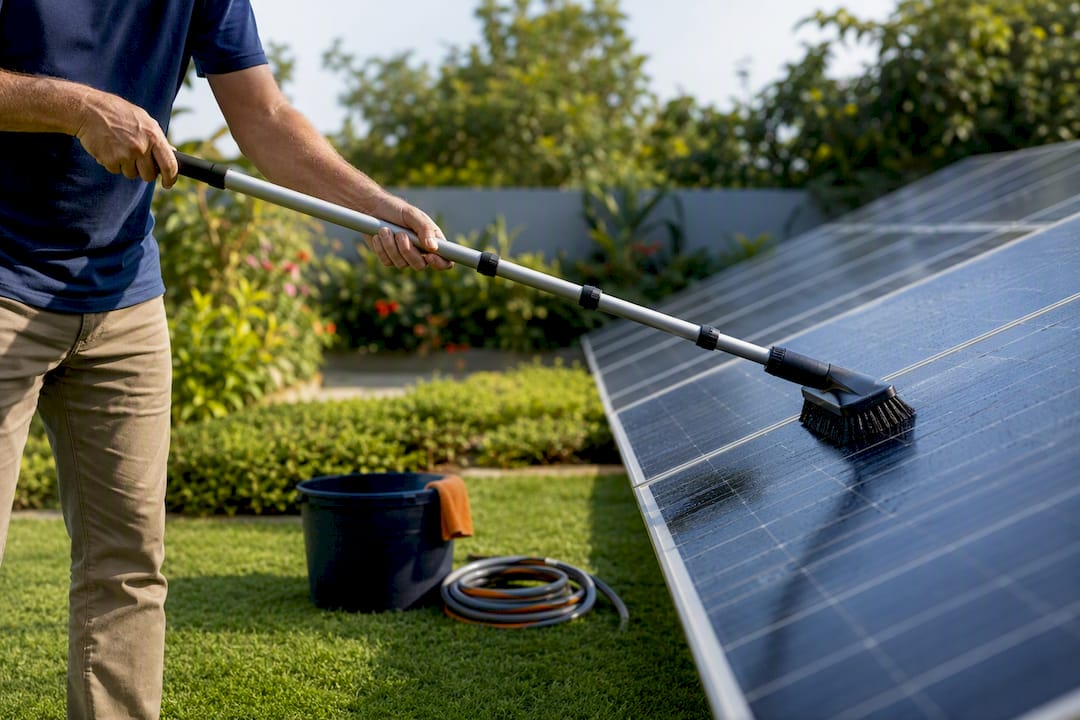
For ground-level arrays, a telescopic pole brush with an inline water filter does most of the work in under 20 minutes. For roof arrays, this is where two-person ladder discipline, a harness, or simply booking a professional starts to make more sense than saving a small amount of money.
The right tools and water make the real difference
The equipment list for DIY cleaning is short: a soft-bristled solar brush, an extension pole, a couple of microfiber cloths, a squeegee, a bucket, and ideally a TDS meter to check your water quality. A total dissolved solids meter tells you how "hard" your tap water is in parts per million; anything above roughly 50 ppm starts leaving visible streaks once it dries.
That is why purified or deionized water is worth the extra step. It dries clean, with no mineral residue to dull your panels' output over repeated cleans, a point Bob Vila's guide makes directly. If your municipal water runs hard, a small reverse-osmosis unit or a filtered garden-hose attachment pays for itself after a few cleaning cycles.
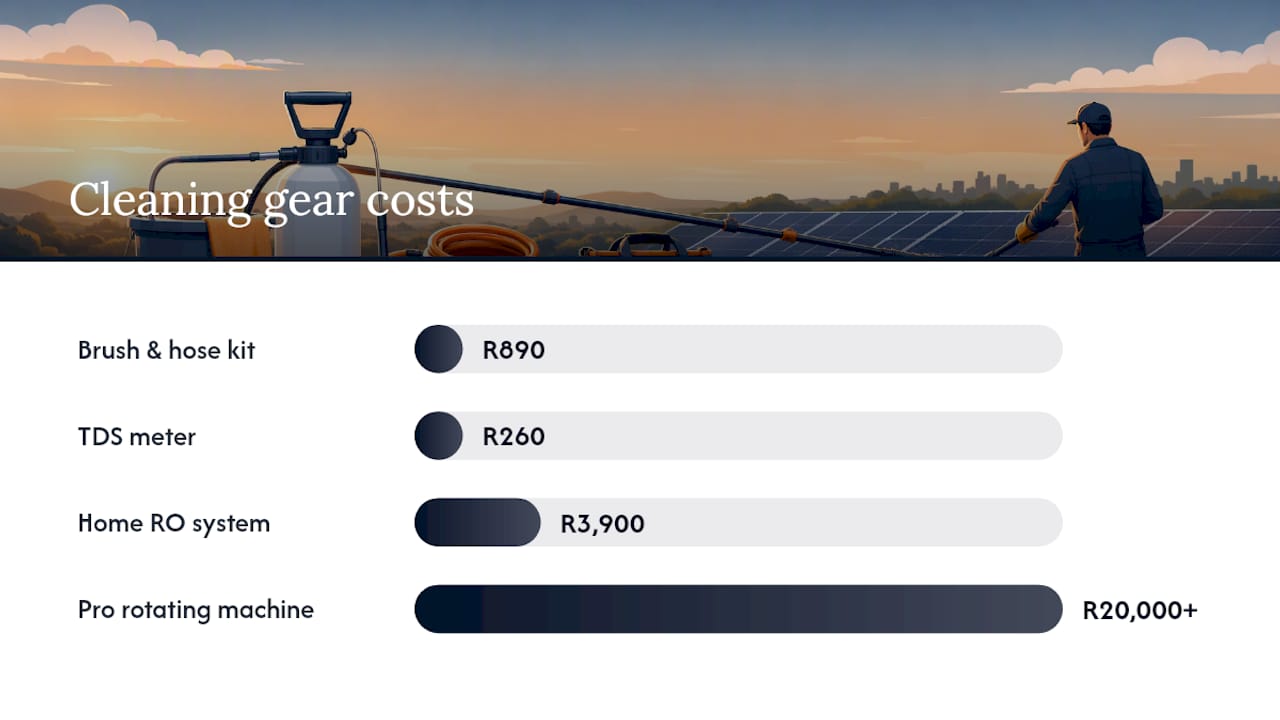
On cost, EcoFlow's South African maintenance guide puts basic brush-and-hose kits at around R890, with TDS meters closer to R260. Home reverse-osmosis systems run near R3,900, while the rotating professional-grade machines commercial cleaners use can top R20,000, well beyond what a household setup needs.
When hiring a professional makes more sense than DIY
Height, safety risk, and heavy soiling are the three reasons to stop reaching for the pole brush and pick up the phone instead. A double-storey roof, a steep pitch, or a system caked in months of dust after a dry spell all tip the balance toward a paid visit, especially if you are worried about anything electrical near the panels.
South African cleaning services commonly price the job per panel or per visit. Expect roughly R50–R150 per panel, or R600–R2,000 for a typical 8 to 20-panel residential system, according to Window Cleaning Equipment's cost breakdown. Roof height, access difficulty, and whether the crew brings its own purified water all push quotes up or down.
Before booking, ask any contractor:
- Do you carry liability insurance for roof work?
- What water treatment do you use, and is it deionized or filtered?
- Does the service preserve my panel warranty?
- Can you provide references or recent customer ratings?
- What exactly is included, brushing, rinsing, and a post-clean inspection?
Building a cleaning routine you can trust
Most residential systems do well on a cleaning cycle of every three to twelve months. Dustier inland regions and coastal homes exposed to salt spray sit at the shorter end of that range; wetter, greener suburbs can often stretch toward the annual mark.
- Log baseline output on a clear day before any clean.
- Take a short run of readings, several days if possible, comparing generation against irradiance rather than a single snapshot.
- Clean, then compare post-clean output at a similar irradiance level.
- Flag any drop greater than 10% that cleaning does not fix. That points to a wiring or component issue, not soiling.
- Book an electrical inspection if you notice cracked glass, discoloration, or moisture inside a panel.
Finding verified cleaners through Solarza
Solarza lists vetted installers and cleaning services across South Africa's provinces, each carrying ratings from real customers. That gives you a shortlist you can trust before a single phone call. Before booking through any listing, ask about insurance, their water-purity approach, and the equipment they bring. Comparing two or three quotes side by side, checking verification badges and star ratings as you go, is the fastest way to avoid an overpriced or underqualified crew.
A practical take on DIY versus professional cleaning
DIY works well for reachable, single-storey arrays with light to moderate soiling, using a soft brush and purified water on a cool morning. Once height, heavy grime, or anything electrical enters the picture, a professional protects both your safety and your system's long-term output.
— Kobus Kohvik
Get matched with a verified solar cleaning professional
Solarza is the direct route to a vetted cleaning crew instead of a cold search through unranked local listings. Every installer and service provider on the platform is verified and rated by real customers, so you can compare price, water treatment method, and warranty terms before you commit to anyone.

If your roof calls for professional attention, or you would simply rather not spend a Saturday on a ladder, browse solar installers by city to see who services your area and what past customers say about them. You can also check the maintenance and cleaning service listings to compare what each provider actually includes in a visit. Ready to move faster? Request a free quote and get matched with two or three verified professionals who will quote your specific system, roof height, and location, no guesswork on price, no unranked search results to sort through yourself.
Sources
Cleaning technique and safety guidance in this article draws on EcoFlow's maintenance tips, Kärcher's DIY cleaning guide, and Bob Vila's step-by-step method. South African pricing figures come from Window Cleaning Equipment's cost analysis, and thermal-shock context on temperature swings comes from this partner overview of cold-weather solar equipment care.
- Solar panel maintenance tips (EcoFlow South Africa)
- How to clean solar panels yourself (Kärcher South Africa)
- How to Clean Solar Panels—and How Often You Should Do It (Bob Vila)
- Solar Panel Cleaning Cost SA: Service vs DIY (Window Cleaning Equipment)
FAQ
What's the best thing to clean solar panels with?
A soft-bristled brush and purified or deionized water handle most jobs without streaking or scratching the glass. Add a small amount of mild, non-abrasive soap only for stubborn grime, and always dry with a squeegee afterward.
How much does it cost to clean solar panels in South Africa?
Professional cleaning typically runs R50–R150 per panel, or R600–R2,000 per visit for a standard residential system. DIY equipment costs far less upfront, with basic brush kits starting around R890.
Can I clean my solar panels myself?
Yes, if your array is reachable from the ground or a single-storey roof with safe access. Isolate the PV system first, use only soft tools and gentle water pressure, and call a professional for steep roofs or hard-to-reach installations.
Do solar panels actually need to be cleaned?
Yes. Dust, pollen, and salt film block sunlight and reduce output, and rain alone often just shifts dirt around rather than removing it. Regular cleaning, every three to twelve months depending on your local conditions, protects your system's generation and its return on investment.