Best Home Solar Systems in South Africa: 2026 Guide
What are the best home solar systems in South Africa?
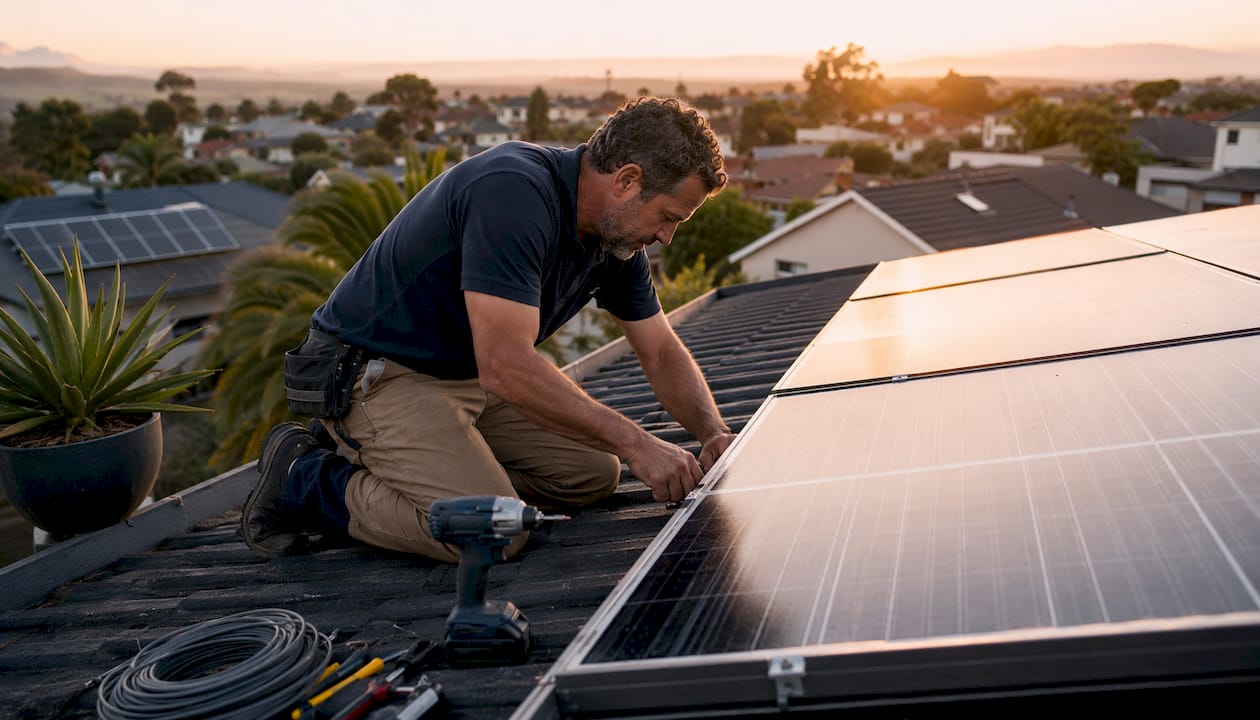
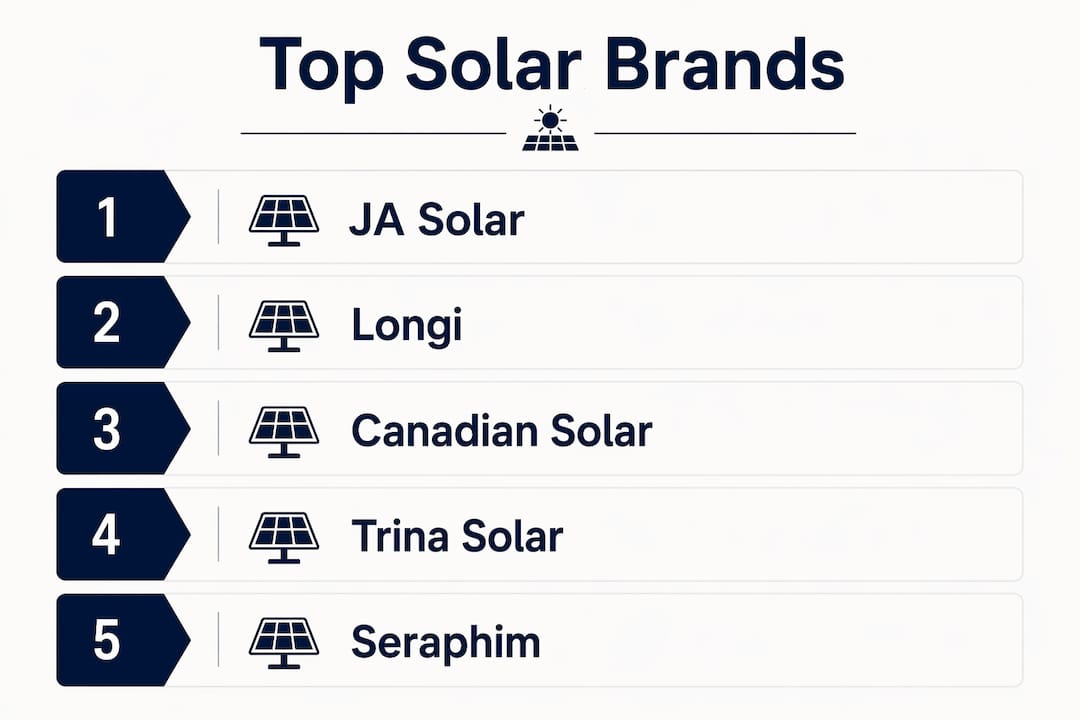
The best home solar system in South Africa pairs high-efficiency panels from a proven manufacturer with a quality hybrid inverter, battery storage sized for your load, and an accredited installer who stands behind the work. For most households, that means choosing from Canadian Solar, JA Solar, Trina Solar, Longi, Seraphim, or Jinko Solar, with Solarza as the platform that lets you compare verified proposals across all of them side by side.
Solar can reduce electricity bills by up to 90%, according to research from the University of Pretoria, and adds measurable value to your property, making it one of the strongest financial decisions a South African homeowner can make right now. The table below gets straight to the comparison.
| Brand | Efficiency | Durability | Warranty | Pricing | SA Climate Fit | Residential Suitability |
|---|---|---|---|---|---|---|
| Solarza | Varies by installer | High (vetted network) | Installer-backed | Competitive quotes | All provinces | Best for: comparing verified proposals |
| Canadian Solar | Up to 22.5% | Excellent | 25-yr product + performance | Mid-range | Excellent | Best for: reliable all-round performance |
| JA Solar | above 23% | Excellent | 25-yr linear performance | Mid-range | Excellent | Best for: tight roof space |
| Trina Solar | Up to 22.8% | Very good | 25-yr performance | Mid to premium | Very good | Best for: bifacial/reflective surfaces |
| Longi | up to 23% | Very good | 25-yr performance | Budget-friendly | Very good | Best for: cost-conscious buyers |
| Seraphim | Up to 21.5% | Good | 10–25-yr product | Affordable | Good | Best for: harsh weather durability |
| Jinko Solar | up to 23% | Excellent | 25-yr linear performance | Mid-range | Excellent | Best for: wide product range |
Table of Contents
- How do the top solar panel brands compare for South African homes?
- How to choose the best solar system for your South African home
- Why solar energy is vital for South Africa's energy future
- What tools and insights does Solarza offer South African homeowners?
- What does solar maintenance actually cost?
- What system size does your home actually need?
- Solarza makes finding the right installer straightforward
- FAQ
- Key Takeaways
How do the top solar panel brands compare for South African homes?
Understanding what separates these brands matters more than picking the one with the most marketing spend. Here is what each actually delivers.
Canadian Solar
Canadian Solar has been manufacturing panels since 2001 and holds a strong track record in South Africa's residential market. Efficiency tops out around 22.5% on their HiKu and BiHiKu series. Their 25-year product and linear performance warranty is among the most straightforward in the industry, covering both manufacturing defects and power degradation. Pricing sits in the mid-range, making them accessible without sacrificing quality. For a homeowner who wants a proven, no-surprises panel that performs consistently through Highveld summers and Cape winters alike, Canadian Solar is a dependable choice.
Pros: Strong global supply chain, widely stocked by SA installers, solid warranty terms. Cons: Not the absolute efficiency leader; bifacial options are fewer than Trina.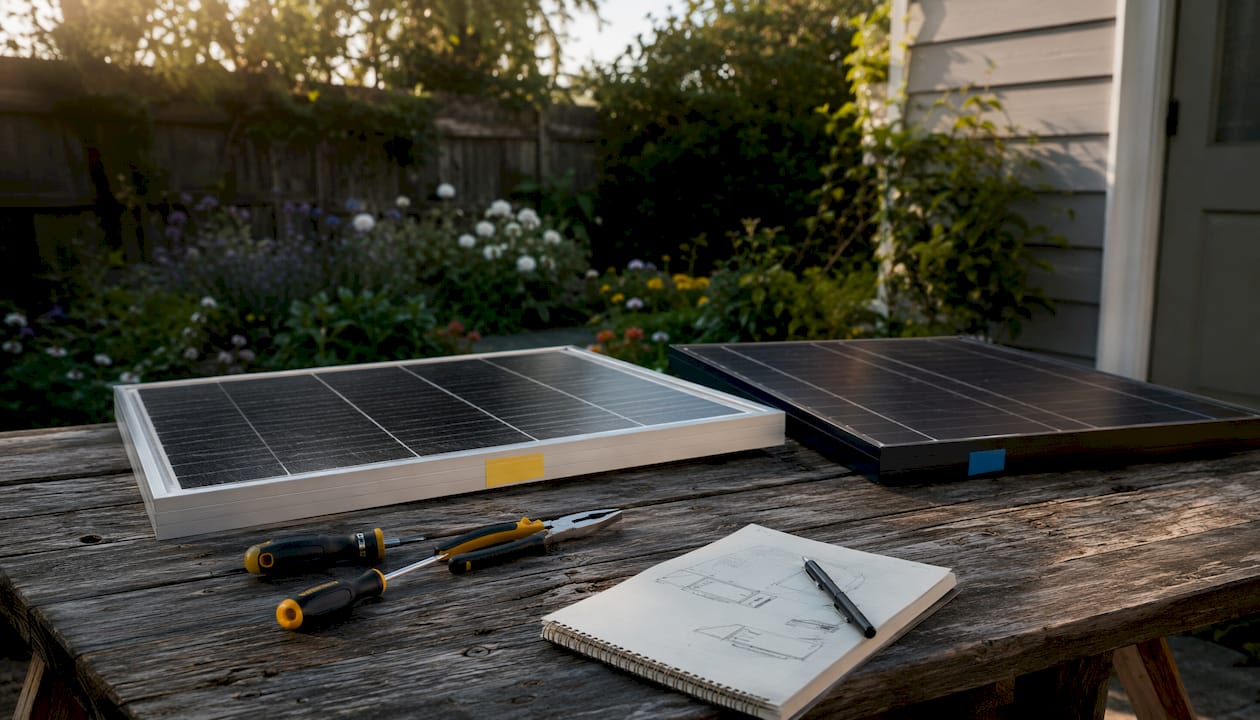
JA Solar
JA Solar's monocrystalline PERC and TOPCon modules regularly hit industry-leading efficiency above 23%, which matters most when your roof space is limited. A 10-panel system with JA Solar can generate meaningfully more power than the same footprint with a lower-efficiency brand. Their 25-year linear performance warranty is standard, and their durability in high-UV environments has been well-documented. If you have a small roof or want to maximize output per square meter, JA Solar is the strongest technical pick.
 Pros: Top-tier efficiency, excellent for space-constrained roofs, strong durability.
Cons: Premium efficiency models carry a slight price premium over Longi.
Pros: Top-tier efficiency, excellent for space-constrained roofs, strong durability.
Cons: Premium efficiency models carry a slight price premium over Longi.
Trina Solar
Trina's bifacial panels generate power from both the front and the rear surface, capturing light reflected off rooftops, light-colored walls, or gravel. In South Africa's high-irradiance conditions, that rear-side gain can add 5–15% to total output depending on installation angle and surface reflectivity. Their Vertex series pushes efficiency past 22.8%. Trina suits homeowners who want to extract every kilowatt-hour from their system and have a roof or ground-mount setup that can take advantage of bifacial technology.
Pros: Bifacial advantage in high-irradiance SA conditions, strong efficiency, reputable manufacturer. Cons: Bifacial gains depend on installation setup; not all SA installers are familiar with optimal mounting.Longi
Longi is the world's largest solar manufacturer by volume, and that scale translates directly into pricing. Their Hi-MO series offers efficiency up to 23% at a price point that undercuts most competitors without cutting corners on the 25-year performance warranty. For budget-conscious homeowners who still want a Tier 1 panel with a credible warranty, Longi is the most logical starting point. Performance in South African conditions has been consistent across residential installations.
 Pros: Most competitive pricing among Tier 1 brands, strong warranty, proven reliability.
Cons: Less differentiation in premium features compared to JA or Trina.
Pros: Most competitive pricing among Tier 1 brands, strong warranty, proven reliability.
Cons: Less differentiation in premium features compared to JA or Trina.
Seraphim
Seraphim has built a following in the South African market specifically because their panels handle harsh weather well, including the hail, dust, and temperature swings common across the Gauteng plateau and the Northern Cape. Efficiency sits around 21.5%, which is lower than the leaders, but their build quality and local market recognition make them a practical choice for homeowners in areas with demanding weather. Warranty terms vary by product line, so confirm the specific coverage with your installer.
Pros: Solid weather resistance, recognized locally, affordable entry point. Cons: Lower peak efficiency than JA, Longi, or Jinko.Jinko Solar
Jinko is consistently among the top three panel manufacturers globally by shipment volume. Their Tiger Neo series reaches efficiency above 23% and carries a 25-year linear performance warranty. The breadth of their product range means installers can spec a Jinko panel for almost any budget or roof configuration, from a basic 400W module to a premium 580W+ TOPCon unit. That flexibility makes Jinko particularly useful when you are sizing a system that needs to hit a specific output target within a fixed budget.
Pros: Huge product range, top efficiency on premium models, strong warranty, widely available. Cons: Quality perception varies across product tiers; specify the exact model series when comparing quotes. *How to choose the best solar system for your South African home
Price is the wrong starting point. Two quotes for a "5kW system" can differ by tens of thousands of rand while delivering completely different long-term value, because solar proposals vary significantly in system size, battery inclusion, warranty depth, and installer credentials.
Key criteria to evaluate
- Installer accreditation: Only use installers holding a SAPVIA PV GreenCard. This accreditation confirms the installer meets industry standards, which is often a condition for manufacturer warranties to remain valid.
- Certificate of Compliance (COC): A professional installation includes a COC issued by a registered electrician. Without it, your system may not be insurable and could void your home insurance.
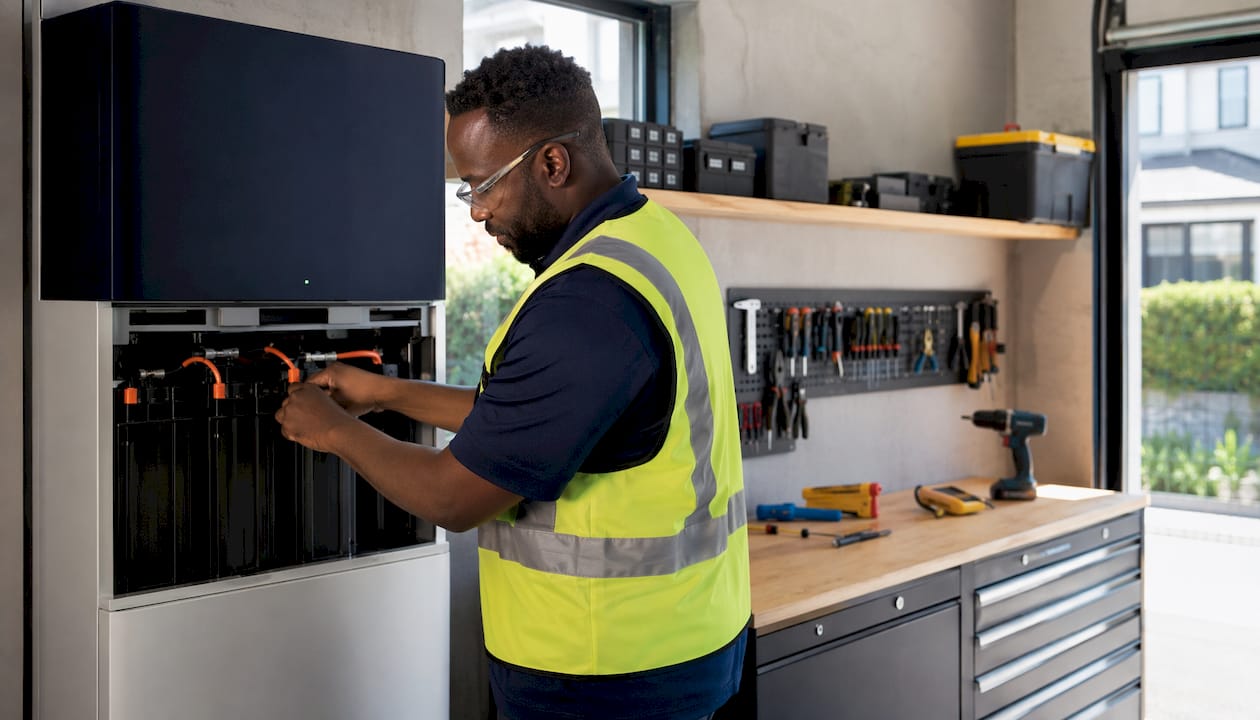
- Battery storage: For load shedding protection, lithium battery storage is now the standard. A 5kWh battery supports most households through a 2–4 hour outage without drawing from the grid.
- System sizing: Match the system to your actual daily consumption, not a round number. An undersized system leaves you grid-dependent; an oversized one wastes capital.
- Financing options: South Africa's Section 12B tax incentive allows individuals to deduct a portion of qualifying solar installation costs. Eligibility depends on system specifications and registered installers, so confirm with your installer before signing.
- Cost per watt: Divide the total installed cost by the system's watt-peak rating. This single metric lets you compare solar quotes fairly across different system sizes.
Why solar energy is vital for South Africa's energy future
Load shedding has cost South African businesses and households billions of rand in lost productivity and spoiled goods since Eskom's supply challenges intensified, making energy independence a vital goal for many homeowners. For homeowners, the answer has shifted from generator noise and diesel costs to solar with battery backup, which is quieter, cleaner, and increasingly cheaper per kilowatt-hour over a 10-year horizon.
A well-sized residential solar system can cut electricity bills by up to 90%, as confirmed by research from the University of Pretoria, and the property value uplift is real and growing as buyers increasingly factor in energy independence when making purchase decisions. Beyond the household budget, South Africa's solar irradiance levels are among the highest in the world, making the country one of the best natural environments for solar energy generation anywhere.
Emerging technologies are accelerating the value proposition further:
- Hybrid inverters now manage grid, solar, and battery simultaneously, automatically prioritizing the cheapest available source and switching to battery during outages without interruption.
- Bifacial panels (Trina, Jinko, Canadian Solar) capture rear-side irradiance, adding output in high-reflectivity environments.
- Battery management systems (BMS) in modern lithium packs extend cycle life and prevent overcharge, making 10-year battery warranties increasingly common.
- Smart monitoring apps let homeowners track real-time generation, consumption, and battery state of charge from a phone.
South African government incentives supporting residential solar adoption include:
- Section 12B individual tax deduction for qualifying solar PV installations
- Municipal net metering programs in Cape Town, Johannesburg, and other metros, allowing excess energy to be fed back to the grid for credit
- Government rebate eligibility tied to system size and use of registered installers
South Africa's residential solar market has grown sharply in recent years, driven by worsening load shedding and falling panel prices. The combination of high irradiance, rising Eskom tariffs, and improving battery technology means the payback period for a well-specified home system has shortened considerably, making the near future financially compelling for investment. *
What tools and insights does Solarza offer South African homeowners?
Choosing a solar system is not a single decision. It is a sequence of decisions about brands, system size, battery chemistry, installer credentials, and financing, and getting any one of them wrong costs money. Solarza's marketplace model is built around that reality.
Rather than locking you into one installer's product range, Solarza connects you with verified installers across all nine provinces, each vetted for accreditation and rated by previous customers. You submit one request and receive multiple proposals covering different brands, system sizes, and price points, which you can compare directly.
The platform's core tools include:
- Solar calculator: Estimates your ideal system size and projected savings based on your monthly consumption and location.
- Installer directory: Searchable by province, city, brand, and service type, so you can filter for installers who work with your preferred panel brand.
- Pricing guides: Up-to-date reference pricing for panels, batteries, and inverters to help you spot an overpriced quote immediately.
- Verified reviews: Real customer ratings on installers, not manufacturer marketing copy.
The single most common mistake Solarza sees homeowners make is choosing the lowest quote without checking what is actually included. A quote missing battery storage, a COC, or an accredited installer is not a bargain; it is a liability. Evaluating proposals holistically, including warranties, equipment quality, and installer credentials, is what separates a system that pays for itself from one that causes problems within three years. Pro Tip: Use Solarza's solar calculator before requesting quotes. Knowing your estimated system size in advance makes it much harder for an installer to oversell you on capacity you do not need. *
What does solar maintenance actually cost?
Solar panels have no moving parts, which keeps maintenance costs low. A typical residential system in South Africa requires panel cleaning a few times per year, more frequently in dusty inland areas like the Northern Cape or Limpopo. Professional cleaning costs vary depending on system size and location, though many homeowners handle it themselves with a soft brush and water.
Inverters are the component most likely to need attention. A quality hybrid inverter carries a warranty for several years, but operating in high-temperature environments without adequate ventilation shortens its lifespan. Annual system checks by an accredited installer catch loose connections, degraded cells, and battery health issues before they become expensive. Battery replacement is the largest long-term cost; lithium iron phosphate (LFP) batteries typically last many years of daily use before capacity drops significantly.
*What system size does your home actually need?
System sizing comes down to your daily kilowatt-hour consumption, not the number of bedrooms.
A small home using 15–20 kWh per day typically needs a 3–5 kW system with 5–10 kWh of battery storage. That covers lights, a fridge, TV, and a laptop through a standard load shedding window. A medium household consuming 25–40 kWh daily is better served by a 5–8 kW system with 10–15 kWh of storage, which handles the above plus a geyser on a timer and intermittent air conditioning. Large homes above 40 kWh per day generally require 10 kW or more, often with multiple battery units and occasionally a three-phase inverter.
A hybrid solar system like the Deye 5kW paired with a 5.12kWh battery is a practical entry point for medium households, covering most 2–4 hour outages without grid support. For homes with electric geysers, pool pumps, or underfloor heating, sizing up is almost always worth the additional capital outlay, since the payback period barely changes while the daily comfort improves significantly.
*Solarza makes finding the right installer straightforward
Picking a panel brand is only half the decision. The installer determines whether that panel performs as promised, whether your warranty remains valid, and whether your system is legally compliant. That is where most homeowners lose money, not on the panel choice itself.
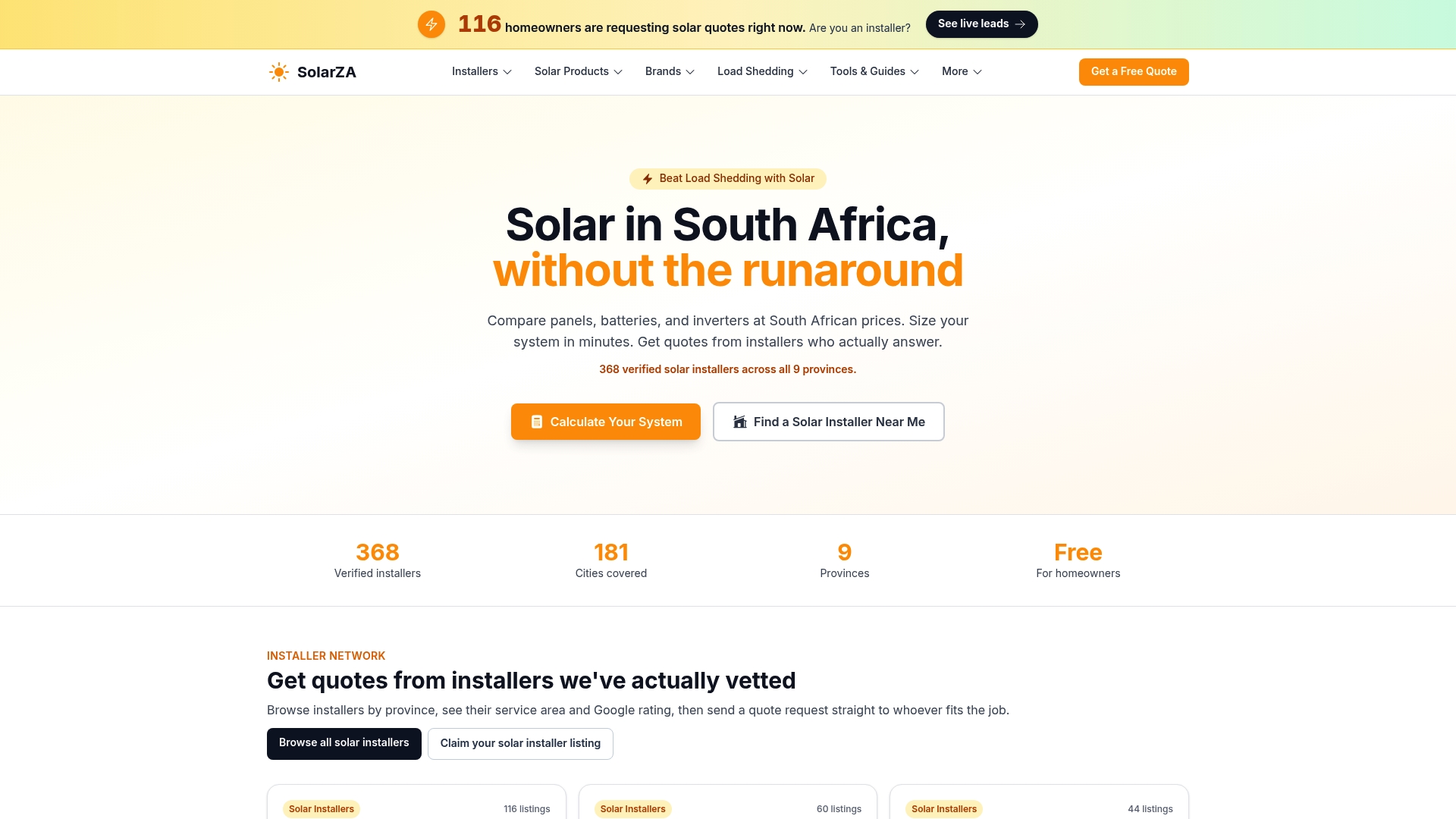
Solarza removes that risk by connecting you only with accredited, rated installers who have been verified across all nine provinces. You get competing proposals from multiple installers in one place, with transparent pricing on panels, batteries, and inverters so you know what fair looks like before you sign anything. There is no obligation and no single-installer lock-in. Find accredited installers in your city, request tailored quotes, and compare them side by side. The process takes minutes; the savings last decades.
*FAQ
Which solar company is the best in South Africa?
No single company is universally best. The strongest choice depends on your location, budget, and system requirements. Solarza's marketplace lets you compare proposals from multiple accredited installers simultaneously, which is the most reliable way to find the best fit for your specific home.
What is the best solar system for home use in South Africa?
A hybrid system combining monocrystalline panels (JA Solar, Longi, or Canadian Solar), a quality hybrid inverter, and lithium battery storage sized to your daily consumption covers most South African households well, providing both bill savings and load shedding protection.
How much does a 10kW solar system cost in South Africa?
Pricing varies by brand, battery inclusion, and installer, and is not publicly standardized. Use Solarza's free quote tool to get current, location-specific pricing from verified installers in your area.
Is solar cheaper than Eskom in the long run?
Yes, for most homeowners. With electricity bills reducible substantially after installation, and Eskom tariffs continuing to rise annually, a well-specified solar system often pays back its cost within several years and generates effectively free electricity for a long lifespan thereafter.
*Key Takeaways
The best home solar system in South Africa combines high-efficiency panels, a quality hybrid inverter, lithium battery storage, and an accredited installer to deliver reliable energy independence and electricity bill reductions of up to 90%.
| Point | Details |
|---|---|
| Bill reduction potential | A well-sized residential solar system can reduce electricity bills by up to 90%, according to research from the University of Pretoria. |
| Installer accreditation matters | Only use SAPVIA PV GreenCard-accredited installers to protect your warranty and ensure legal compliance. |
| Compare proposals holistically | Evaluate cost per watt, battery inclusion, warranty depth, and installer credentials, not just the total price. |
| System sizing by consumption | Match system size to your daily kWh usage: 3–5 kW for small homes, 5–8 kW for medium, 10 kW+ for large. |
| Solarza simplifies the process | Solarza connects South African homeowners with verified installers across all nine provinces for side-by-side proposal comparisons. |