Go Solar South Africa: 2026 Homeowner's Guide
Going solar in South Africa means installing a photovoltaic (PV) system with battery storage that replaces grid electricity with sunlight. With Eskom tariffs rising 12.7% annually, a R2,000 monthly electricity bill could reach R6,500 within a decade. Solar power South Africa homeowners adopt today locks in energy costs, protects against load shedding, and adds measurable value to property. Solarza connects homeowners across all nine provinces with verified installers who size, supply, and commission systems built for local conditions. The decision to go solar in South Africa is no longer about convenience. It is a financial strategy.
How to go solar in South Africa: sizing your system correctly
The right system size determines everything: your savings, your payback period, and how well you survive load shedding. Getting this wrong is the most expensive mistake South African homeowners make.
A home consuming 600–900 kWh per month typically needs a 5–8 kW system with 10–15 solar panels and roughly 5 kWh of battery capacity. That figure covers most medium to large South African homes running geysers, fridges, lighting, and basic appliances. Smaller homes using under 400 kWh per month can often manage with a 3–5 kW system.
South Africa averages about 5 peak sun hours per day, but real-world system efficiency runs at roughly 75% of ideal output due to shading, panel orientation, and inverter losses. That efficiency factor directly affects how many panels you need. A 5 kW system in Johannesburg produces less usable power than the same system in the Northern Cape, where sunlight is more intense and consistent.
Your solar inverter rating must match your system's peak output. A hybrid inverter handles both solar input and battery charging simultaneously, which is the standard choice for South African homes that need backup power during load shedding. Undersizing the inverter creates a bottleneck that wastes panel capacity.
| Home size | System size | Panels | Battery | Est. cost | Payback |
|---|---|---|---|---|---|
| Small (under 400 kWh/month) | 3–5 kW | 6–10 | 2.5–5 kWh | R60,000–R90,000 | 4–6 years |
| Medium (600–900 kWh/month) | 5–8 kW | 10–15 | 5–10 kWh | R80,000–R150,000 | 5–8 years |
| Large (900+ kWh/month) | 8–12 kW | 15–22 | 10–15 kWh | R150,000–R250,000 | 6–9 years |
What are the installation steps to install solar panels in South Africa?
Installing solar panels in South Africa follows a defined process. Knowing each step prevents delays and protects you from substandard work.
Prerequisites before you start
Before any installer visits your property, you need to confirm three things:
- Roof suitability: Your roof must be structurally sound, ideally north-facing, and free from significant shading between 9 AM and 3 PM.
- Energy usage data: Pull three to six months of Eskom or municipal electricity bills. Installers use this to size your system accurately.
- Financing readiness: If you plan to finance, have recent payslips, three months of bank statements, and your ID ready for the credit application.
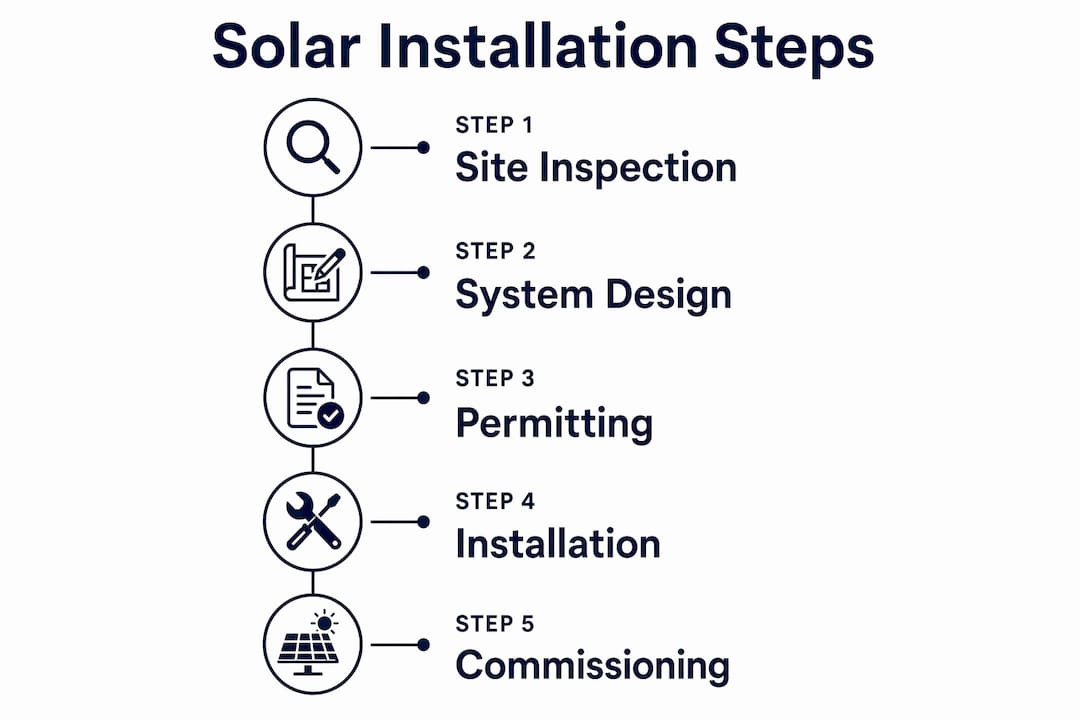
The installation process, step by step
- Consultation and quote: You describe your energy needs and budget. The installer proposes a system and provides a written quote.
- Site inspection: A certified technician visits to assess roof structure, cable routing, and switchboard capacity.
- System design: The installer produces a technical design drawing that specifies panel placement, inverter location, and battery setup.
- Installation day: A qualified electrician and team mount panels, install the inverter and batteries, and connect the system to your distribution board.
- Compliance certification: Every grid-tied installation requires a Certificate of Compliance (CoC) issued by a registered electrician. This is non-negotiable.
- Commissioning and handover: The installer powers up the system, tests output, and walks you through monitoring tools and basic maintenance.
Typical installations take one to three days on site. The full process from first quote to commissioning usually runs two to four weeks, depending on installer availability and municipal approval requirements. Eskom's rooftop solar program also requires grid-tied systems to be registered before connection, so factor that into your timeline. Pro Tip: Use Solarza to find verified solar installers in your area. Every installer on the platform is vetted and rated by homeowners who have completed real installations.
What financing options are available for solar in South Africa?
Upfront cost stops many homeowners from switching to solar. Financing removes that barrier entirely, and in most cases, your monthly loan repayment costs less than your current electricity bill.
Major South African banks including FNB, Standard Bank, Nedbank, and Absa all offer dedicated solar finance products. Loan terms typically run 3–7 years, with interest rates from prime plus 1% to prime plus 3%. A full 5 kWp system with 10 kWh battery costs around R145,000 installed, with monthly repayments of approximately R3,200 at prime plus 2% over five years. Many homeowners currently paying R3,500 to R5,000 per month on electricity find that the loan payment is lower than their existing bill from day one.
The financial logic is straightforward. Your electricity bill rises 12.7% every year. Your loan repayment stays fixed. The gap between what you would have paid Eskom and what you pay the bank widens every year in your favor.
What you need to qualify for solar financing
- A South African ID and proof of residence
- Three months of recent bank statements
- Payslips or proof of income (last one to three months)
- A formal quote from a registered solar installer
- A credit record in good standing (most banks require no defaults)
The solar savings calculator on Solarza lets you model your specific bill, system size, and loan term to see your projected monthly savings before you commit.
How do you maintain a solar system and fix common problems?
A well-maintained solar system runs reliably for 20–25 years. Neglect shortens that lifespan and reduces your return on investment.
Routine maintenance tasks
- Panel cleaning: Dust, bird droppings, and pollen reduce output. Clean panels every 4–8 weeks with water and a soft cloth. Avoid abrasive materials.
- Battery health checks: Monitor your battery's state of charge and cycle count through your inverter's app or display. Consistently low charge levels signal a problem.
- Inverter status: Check the inverter display or app weekly. Error codes appear before failures become serious. Log any recurring faults.
- Cable and connection inspection: Have a qualified electrician inspect all connections annually. Loose connections cause heat buildup and fire risk.
"The biggest maintenance mistake South African homeowners make is ignoring the inverter's warning lights. Most modern hybrid inverters flag faults days or weeks before a failure. Catching them early costs almost nothing. Ignoring them can mean replacing a R20,000 inverter."
Never attempt to repair inverter internals or battery packs yourself. These components carry lethal voltages. Call your installer or a registered electrician for anything beyond cleaning and monitoring. Smart inverter systems from brands like Deye, Sunsynk, and Victron Energy send real-time alerts to your phone, making remote monitoring practical for any homeowner.
Key Takeaways
Solar power in South Africa delivers the strongest financial return when systems are correctly sized, professionally installed, and financed to replace electricity costs rather than add to them.
| Point | Details |
|---|---|
| Size for bill reduction | Match your system to your monthly kWh usage, not just your load shedding needs. |
| Finance beats waiting | Monthly loan repayments often cost less than current electricity bills, creating savings from day one. |
| LiFePO4 is the right battery | Choose LiFePO4 chemistry for 10+ year lifespan and heat tolerance in South African conditions. |
| Tariff inflation makes solar urgent | Eskom tariffs rise 12.7% annually, so every year you delay increases your total cost of waiting. |
| Use verified installers | A Certificate of Compliance and a vetted installer protect your investment and your home's safety. |
Why I think most South African homeowners underestimate solar's financial case
Most people I speak with frame solar as a load shedding solution. That framing leads to undersized systems and missed savings. The real case for solar in South Africa is financial, and it is stronger than most homeowners realize.
Eskom's tariff trajectory is not slowing down. A homeowner who locks in their energy cost today with a correctly sized PV system is effectively hedging against 12.7% annual inflation on one of their largest household expenses. That is a better return than most savings accounts or unit trusts offer over the same period. South Africa's solar market added 1.6 GW of new capacity in 2025, confirming that this is a mature, reliable technology with a deep local supply chain.
The mistake I see repeatedly is homeowners buying the smallest system they can afford rather than the right system for their consumption. A system that covers 40% of your bill pays back slowly. A system that covers 80% or more pays back fast and generates genuine long-term wealth through property value and bill elimination.
My advice is direct: use a platform like Solarza to get multiple quotes, use their solar sizing guide to understand what your home actually needs, and treat the financing decision the same way you would a bond. The numbers work. The technology is proven. The only real risk is waiting too long.
— Nkosi
How Solarza connects you with the right solar installer
Solarza is South Africa's platform for matching homeowners with verified solar installers across all nine provinces. Whether you need a full grid-tied system, a battery backup solution, or a hybrid setup, Solarza lets you compare quotes, read verified reviews, and select an installer who has been rated by real homeowners.
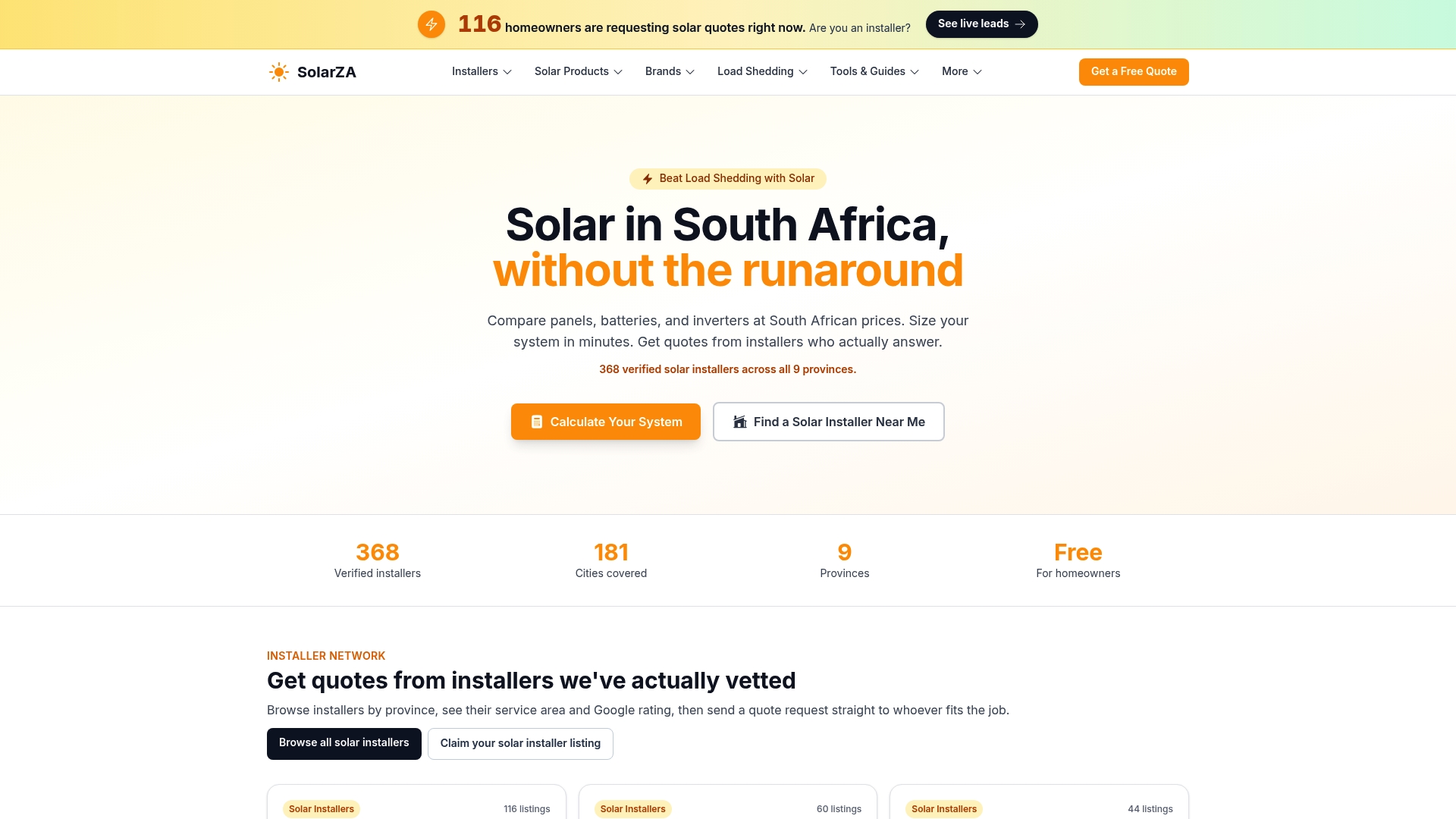
You can search solar installers by province or filter by city, system type, or brand preference. Every installer listed on Solarza holds the required certifications and has been screened for compliance with South African electrical standards. The free quote tool connects you with up to three local installers who respond with tailored proposals based on your actual electricity usage. Getting matched takes minutes. Making the right choice takes the right information, and Solarza provides both.
Request a free solar quote and see what a correctly sized system costs for your home.FAQ
How much does it cost to go solar in South Africa?
A medium-sized home system (5–8 kW with battery) costs between R80,000 and R150,000 installed. Financing spreads this across 3–7 years, with monthly repayments that often fall below your current electricity bill.
What is the payback period for solar panels in South Africa?
Most South African homeowners recover their solar investment in 5–8 years. Homes in municipalities with higher tariffs or greater sun exposure see faster payback.
Do I need permission to install solar panels in South Africa?
Grid-tied systems require registration with your municipality or Eskom and a Certificate of Compliance from a registered electrician. Off-grid systems have fewer requirements but still need a CoC for the electrical installation.
Which battery type is best for South African solar systems?
LiFePO4 batteries are the best choice for South African conditions. They last 10 or more years, handle heat better than other lithium-ion types, and deliver 4,000 or more charge cycles before significant degradation.
Can I finance solar panels through a South African bank?
Yes. FNB, Standard Bank, Nedbank, and Absa all offer solar loan products with terms from 3 to 7 years and interest rates from prime plus 1% to prime plus 3%. You need a formal installer quote and proof of income to apply.